
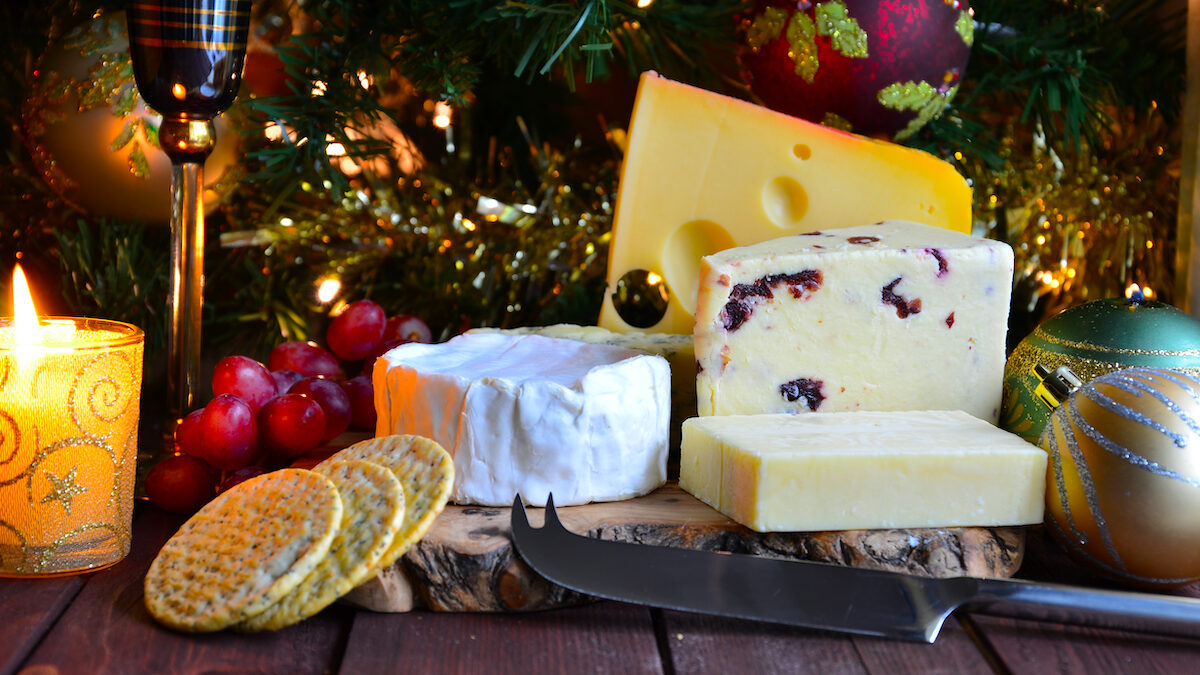
It’s impossible to imagine a festive meal without a generous cheese platter. It is an essential, almost a symbol. But after the aperitif, the starter and the main course – not to mention the drinks that accompany everything – our stomachs are sometimes already on the verge of saturation. Good news: it is entirely possible to create a platter that is as tasty as it is light!
“The idea is not to deprive yourself of cheese, especially not during the holidays,” reassures Orlane Fagnoni, dietician-nutritionist. “For this, oWe can choose cheeses that respect our digestion a little better, by playing on textures, families and even the order of tasting”.
Start gently: fresh cheeses
To avoid making an already dense meal even heavier, Orlane Fagnoni therefore recommends opening the ball with fresh or lightly aged cheeses.
“Fresh goat cheese, ricotta or even a good mozzarella are perfect to start with”she explains. “These cheeses are naturally less fatty, less salty and richer in water, which makes them much easier to digest.
These light cheeses prepare the palate without creating heaviness: ideal for starting a party platter.
Soft dough: yes… but young!
Then come the soft cheeses, stars of our platters: brie, camembert, reblochon… But pay attention to the degree of maturation.
“The more mature a cheese is, the more concentrated it is in lipids, because the water evaporates”recalls the nutritionist.
She therefore advises favoring a young Brie, a slightly less matured Camembert or a farmhouse Reblochon of the year. The aroma is present, but the cheese remains more digestible than a very runny and long-aged version.
Hard pasta: digestible allies (provided you choose them carefully)
Contrary to what one might believe, hard cheeses can be digestible partners during the holidays.
“Pressed pasta cooked like a 12-month-old Comte cheese brings a lot of flavor, while containing very little lactose,” explains Orlane Fagnoni. “It’s interesting because lactose is often the problem in adulthood.”.
She recommends avoiding very matured versions, sometimes beyond 30 months, which become richer, denser and saltier. A young Comté or a “mild” Beaufort will be more pleasant at the end of a meal.
And the bruises? In moderation
Blue or very mature cheeses (bleu d’Auvergne, Stilton, etc.) are certainly delicious, but more powerful, salty and fatty.
“These are wonderful cheeses… but not at the best time after an already hearty festive meal,” advises the nutritionist. “We can save them for another time of year, when we will appreciate them more.”
The idea is not to ban, but to be strategic.
Accompaniments that lighten (and enhance) the platter
A digestible cheese platter is not just about the choice of cheeses: the accompaniments also count.
“Fresh fruits like pears, apples or grapes help digestion thanks to fiber”explains Orlane Fagnoni. “A few nuts provide satiety, and lightly toasted seed bread is much better tolerated than white bread.
A spoonful of fig jam can also be welcome: it enhances the taste without being heavy, and adds a pleasant fruity touch.
And for the wine? It’s not what you think
Finally, if you spontaneously combine cheese and red wine, the expert will have a little surprise for you. “A dry white wine like a Chablis or a Riesling supports digestion much better.”she says.
“Very tannic reds weigh down the stomach at the end of a meal.
A small change that makes a big difference. Of course, alcohol should be consumed in moderation.
Finally, if we only had to remember one thing: a fresh cheese, a young soft cheese, a soft hard cheese, accompanied by fresh fruit, a few nuts and toasted wholemeal bread… and here you are with a platter that you won’t regret at log time!