
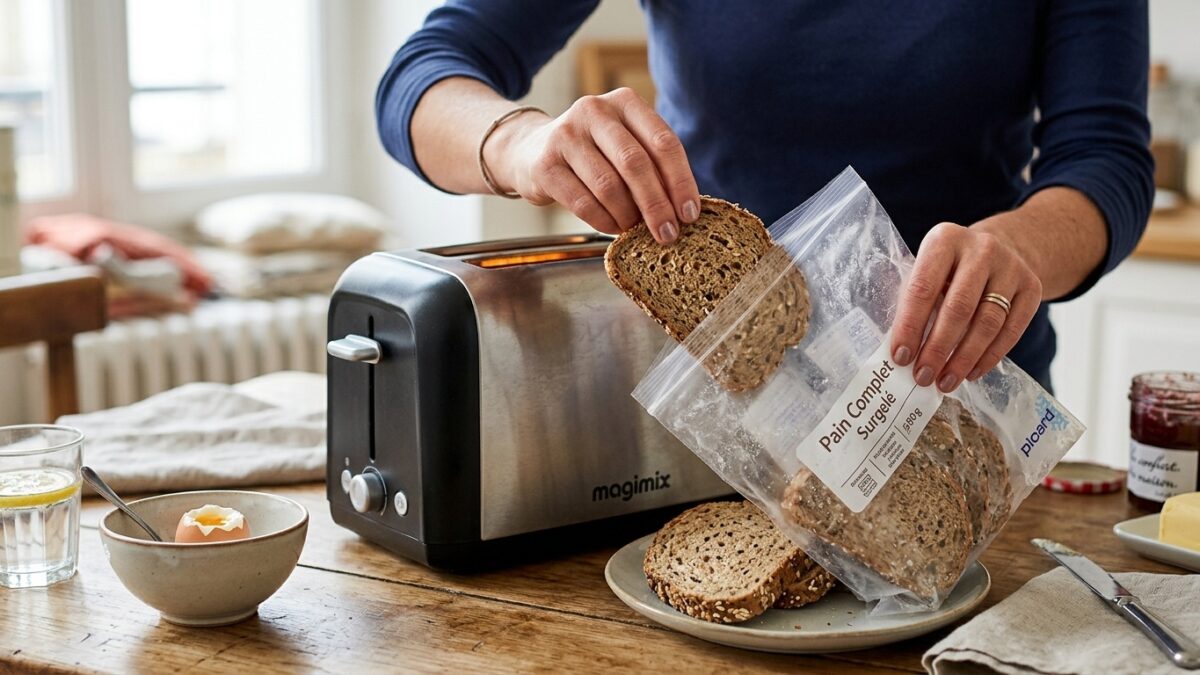
On the breakfast table, bread remains an essential. However, its high glycemic index, especially when it is white and fresh, can cause sugar peaks followed by bouts of fatigue. A question then arises: can we continue to eat it without impacting our blood sugar levels? A simple tip could be a game-changer.
Why does bread raise the glycemic index so much?
Bread is rich in starch, a complex carbohydrate that transforms in the oven. Under the effect of heat, this starch gelatinizes: the crumb becomes soft, but also easier to cut into sugar by our body. As a result, blood sugar levels rise quickly after a meal, especially with very refined white bread.
Not all loaves are equal. Breads made from wholemeal or rye flours, those made with sourdough or those enriched with legumes such as chickpeas or lentils have a lower GI thanks to their fiber, which slows down digestion. But in real life, many continue to fall for the local baguette.
The trick that lowers the glycemic index
This is where the famous gesture of conservation comes in. A clinical study published by the National Library of Medicine had 10 adults test four versions of white bread: fresh, frozen then thawed, simply toasted, or frozen, thawed then toasted. In all participants, the glycemic response was lower with toasted bread, and even more so with the freezing plus toasting duo, with a drop of around 25 to 40% compared to fresh bread.
The magic doesn’t come from the toaster, but from what the cold does to the starch. During freezing, part of the starch chains reorganize and become resistant starch, less digested in the small intestine. Once toasted, the bread retains its taste, but the rise in blood sugar is gentler.
Tips for getting the best out of your bread
Digestively, this modified starch behaves a bit like fiber. It slows down the absorption of glucose, limits glycemic peaks and nourishes the intestinal microbiota. The proportion of resistant starch increases from around 1% to almost 3% after freezing, which remains modest but is already enough to lighten the impact of a piece of toast taken alone.
To enjoy it at home, freeze the sliced bread in an airtight bag. Fresh bread will keep for about three months in the freezer. Then let the slices defrost for around thirty minutes at room temperature, then place them in the oven or toaster at around 160°C to brown without burning. Never refreeze thawed bread and keep in mind that this tip complements the choice of a more wholemeal or sourdough bread and reasonable portions.