
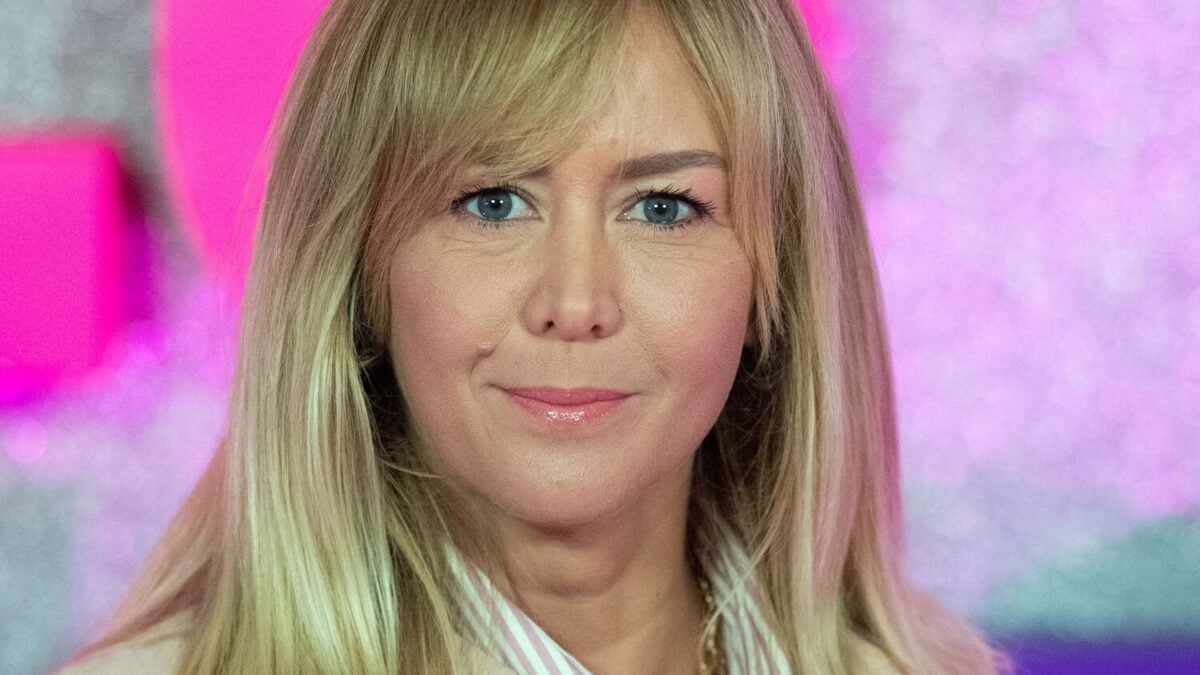
If we are no longer in 1950, but in 2026, the injunctions around motherhood are tough. Enora Malagré, actress and director of the documentary “Why don’t you have children?” knows this better than anyone, she who fought for years to become a mother. In this interview, she tells us about her journey, her difficulties and this mourning of motherhood that she tries to tame, enlightened by the analysis of a psychologist.
To be a mother or not to be: a status still widely commented on
Like so many other women, Enora Malagré had to answer, again and again, the question: “Why don’t you have children?“. However, whether it is an intimate choice or an imposed reality (the actress suffers from endometriosis, a common cause of infertility), no woman should have to justify herself.
“These sentences revive the pain of journeys like mine, where we feel obliged to justify ourselves, when above all we should stop commenting on women’s bellies. This is what I wanted to highlight in my documentary,” confides the actress.
Very real injunctions, which Amélie Boukhobza, clinical psychologist, also denounces.
“We are told that we are free. Free of our bodies, free of our choices. And at the same time, public discourse speaks of “demographic rearmament”. Loved ones always ask: “So, when is it due?” And childlessness continues to be judged. As if being a childless woman was a fault“, she denounces.
And when the “limit” age is reached – and the whole of society reminds us that it is too late – incomprehension sets in. How can she do without this family life? Isn’t that suspicious? Wouldn’t she be too careerist, even selfish? Or not maternal enough? The absence of children is disturbing. And if this discomfort can weigh heavily on a life, it can be explained:
“For centuries, being a woman and being a mother were almost synonymous. In other words, motherhood remains a symbolic pillar of female identity” deciphers Amélie Boukhobza.
“And if society has changed, the model has evolved, the collective unconscious advances more slowly. Not becoming a mother means escaping an assignment… And any departure from the framework creates discomfort.”
Such discomfort that the government likes to send us little reminder “shots”, in particular by sending a letter to all French people aged 29 to make them aware of fertility. But according to the host and columnist “Infantilizing women doesn’t do much good. We know if we want to have children or not.” she whispers.
“And if the birth rate drops a little, nothing alarming, especially since the world is already overpopulated. Perhaps we should ask the question in reverse: why don’t they want children? The lack of nursery places, global warming, war… Perhaps we should instead ask ourselves how to enable women to welcome these children in the best possible system. There, they are probably saying that this is not the right time to have children.“, assures Enora Malagré.
Amélie Boukhobza, for her part, also recalls that there is a form of suspicion around maternity. “It reassures, guarantees continuity, transmission, the established order. Not having children here undermines this evidence… and sends everyone back to their own questions.”
Mourning over maternity, another big taboo
After the desire – or non-desire – for a child, sometimes comes the time of mourning for motherhood. Because if some have made the choice not to carry life, others come up against this impossibility. This is the case of Enora Malagré who, for ten long years, increased the number of PMA courses and natural terminations of pregnancy. Now aged 45, the actress is gradually mourning the loss of this dream child. But she regrets only one thing from this long fight: not having said stop sooner.
“What is needed, and what I missed in these grueling PMA journeys, is that at some point – after my second PMA attempt which didn’t work for example – someone would say to me: “You don’t have to keep trying.” confides the actress. “Because this medical journey, obsessive in nature (daily injections, reports scheduled at fixed times, waiting for results, etc.) is exhausting. We are very damaged, physically and psychologically. And yet, we are pushed to continue, whatever the cost. It leaves traces. We never fully recover from it.” she specifies.
The columnist therefore invites each woman to “allow herself” to get out of this obsessive loop.
“I might have gained more life if I had been allowed, at one point, to think differently,” admits the director.
Amélie Boukhobza, clinical psychologist, recalls here that the violence is double: the body is put to the test and is accompanied by a guilt that sets in: that of not “functioning”, that of not being “up to the task”. “In consultation, this feeling predominates. And despite this, the social gaze continues to evaluate”, she denounces.
Without children: what next?
Enora Malagré insists on this point: talking about your story with other women who have the same journey, the same problems, does the greatest good.
“Even if we are accompanied by a psychologist during a PMA journey, we sometimes want to be confronted with words that resemble us, with journeys that resemble us. These support groups are necessary, although too rare (in Paris, the HAPPY moi association helps all these people who have had to give up being parents)”, believes the radio presenter. These meetings and discussions remind everyone of something often forgotten: no, you are not alone. “We’re a whole army!”
jokes the host.
And if Enora Malagré now admits to being at peace with her life (on stage every evening, she feeds on these shared moments but also on the “family she chose for herself”,
in other words, her friends), she wants to send a strong message: “You have the right to give up, everything will be fine, a life without children can be very rich and wonderful!“, she concludes.
Yes, motherhood can be a deep desire… or it may not be. It can also be impossible, despite all the love in the world. “But none of these situations say anything about the value of a woman,” concludes Amélie Boukhobza.