
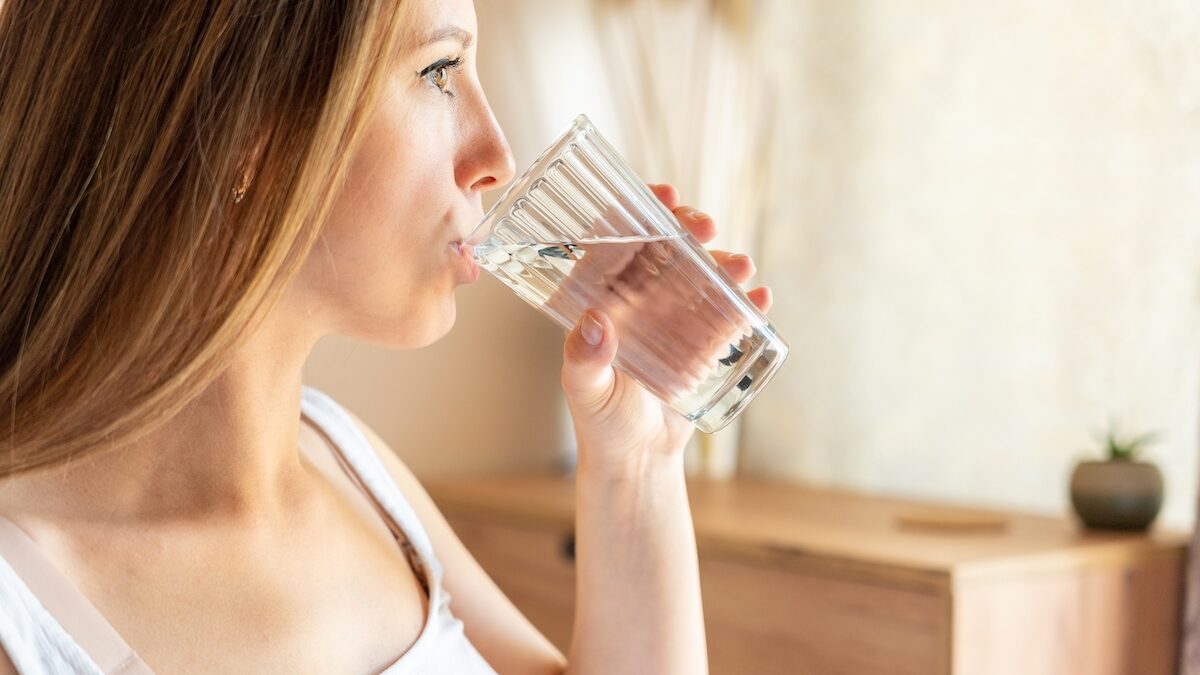
Between the bottle at the office, the flask in transport or the glass of water swallowed hastily in the kitchen, many of us drink without really paying attention. However, a detail as trivial as posture could have repercussions on our digestion and our perception of satiety. If drinking while standing is not dangerous for the stomach, several experts believe that this habit encourages faster and less conscious consumption, with some consequences. Better to know.
Drinking while standing: a harmless gesture, but not always ideal
Let’s admit it, in our daily lives often punctuated by emergencies, it is common to drink standing up, while walking or between two tasks. No needless worry. This reflex does not damage the stomach, contrary to certain preconceived ideas widely relayed on social networks. A Lead Stories investigation published in 2021 also showed that there is no scientific evidence to support that drinking while standing damages the digestive organs.
On the other hand, posture can influence digestive comfort. Standing up, we tend to drink faster, sometimes in large gulps, without taking the time to listen to our sensations. In sensitive people, this habit can promote feelings of heaviness, bloating or heartburn. Sitting, the body is more relaxed, the abdominal muscles less contracted and drinking is generally slower, which can make digestion more comfortable.
A posture that also influences satiety
Beyond digestion, drinking while standing could also affect our eating behavior. When we down a glass of water while working, cooking or moving around, we pay less attention to what we consume. This “autopilot” consumption is known to reduce the perception of satiety signals.
Conversely, taking a few moments to sit and drink quietly promotes more mindful hydration. We drink in small sips, we feel more easily that our thirst is diminishing and we are less tempted to continue sugary drinks or snacks. In the long term, these small actions can help limit unnecessary calorie intake.
Should you always drink sitting down?
This is obviously not a question of prohibiting drinking while standing. During a sports session, in transport or during an outing, the main thing is to hydrate sufficiently.
The important thing is to avoid drinking very large quantities of water in a few minutes. The National Agency for Food, Environmental and Occupational Health Safety (ANSES) recommends a daily intake of approximately 1.5 to 2 liters of water per day for adults, to be adapted according to heat, physical activity or state of health. The kidneys can eliminate approximately 0.8 to 1 liter of water per hour in a healthy adult. Exceeding this capacity significantly in a short period of time can cause digestive discomfort and, in rare cases, lead to water intoxication (hyponatremia).
On a daily basis, there is no need to transform each glass of water into a ritual. But when possible, sitting down for a few moments, putting down your phone and drinking slowly in small sips is a simple habit that can improve digestive comfort, promote a better perception of satiety and contribute, over time, to more mindful eating.