
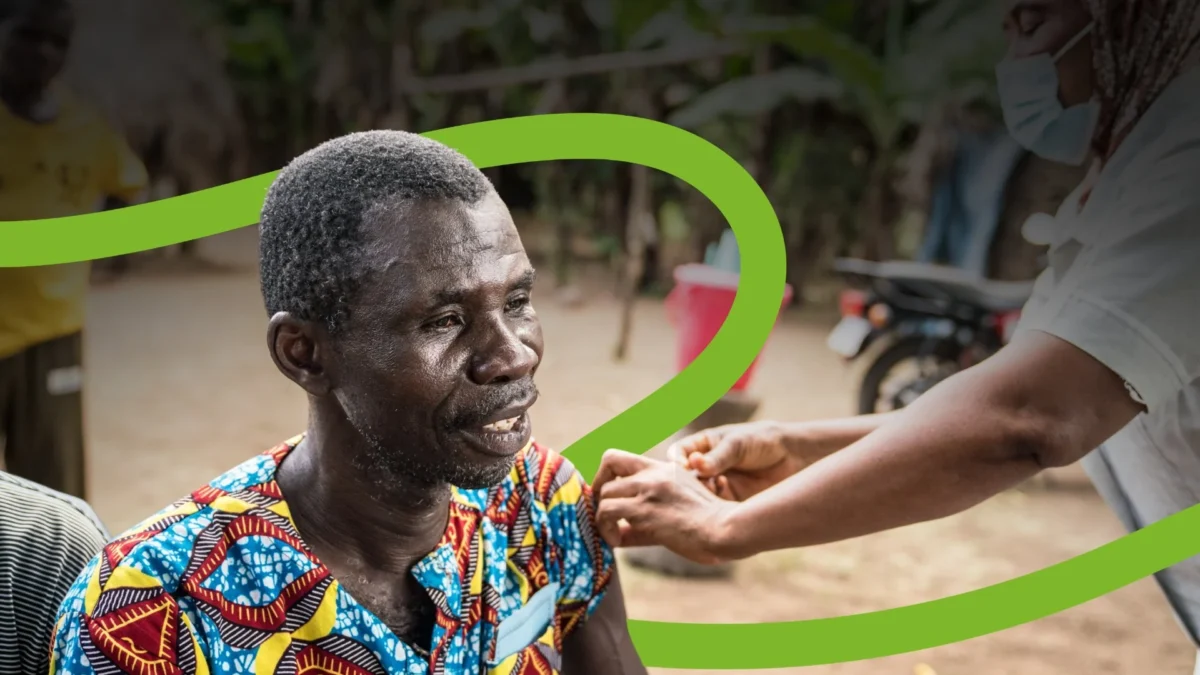
With the slogan “Let’s unite for health. Let’s support science”the WHO’s global campaign intends to rebuild a damaged link: that between scientific knowledge, political decisions and public trust.
Finding the fragile thread of trust
In a world affected by crises – pandemics, climate change, emergence of new diseases – science has never been in greater demand. And yet, she has never been so questioned. It is in this context that the WHO is placing World Health Day 2026 under the sign of coming together. “Let’s unite for health. Let’s support science“: the slogan sounds like an injunction, but also like an emergency.
The objective is clear: “generate support for science everywhere“, recalling how it remains an essential pillar for protecting human health, but also that of animals, plants and ecosystems. Because science is not limited to producing knowledge. It guides decisions, directs public policies, and, in the most critical situations, saves lives. The WHO insists: “Prioritize factual data. Trust the facts. Support science-based health”.
Behind these words, an often invisible reality: each recommendation, each protocol, each treatment is based on years of research, trials, sometimes errors. A slow and fragile construction, which today needs to be explained, shared, and above all, understood.
Science, a collective work at the heart of life
What the WHO stands for in 2026 is not just science as a discipline. It is a vision of the world: that of global, interconnected health. The so-called “One health” stands out as the common thread of this campaign. It is based on a simple but essential idea: human health cannot be dissociated from that of animals and the environment.
Concretely, this means thinking differently about health policies. Anticipate zoonoses, understand the impact of climate on diseases, integrate food and ecosystems into prevention strategies. And this approach requires unprecedented cooperation. The WHO calls it “governments, scientists, health workers, partners and the general public” to mobilize together.
In Lyon, at the beginning of April 2026, the international Summit “One health” will bring together stakeholders from around the world. A few days later, the Global Forum of WHO Collaborating Centers will bring together scientific institutions from more than 80 countries.
A mobilization of unprecedented scale, which reflects a strong conviction: contemporary health challenges can only be met on a collective scale.
Making science readable, human, and accessible
But science, no matter how solid, cannot act alone. It must be transmitted, explained, embodied.
This is one of the major challenges of this World Health Day: bringing science closer to citizens. The WHO emphasizes the need to “make science accessible and understandable“, bringing “clear explanations of factual data” and in dialogue with the public.
This mediation work is essential. Because behind the figures and publications, there are human trajectories. Patients awaiting a diagnosis, families faced with uncertainty, caregivers who arbitrate on a daily basis between scientific recommendations and realities on the ground. The WHO calls on everyone to become an actor in this dynamic: “Show patients and communities how science guides care, and why evidence saves lives.”
An invitation to reconnect and restore meaning. Remember that science is not an abstraction, but a concrete promise: that of a fairer, more enlightened, and, perhaps, more serene future.
Collective responsibility, beyond borders
Ultimately, this global campaign asks a simple, almost intimate question: what do we choose to believe when our health is at stake? By calling for “restore confidence in science and public health“, the organization does not only seek to convince. It invites a dialogue.
Because science is certainly moving forward, but it also has doubts. She fumbles, corrects herself, evolves. And it is precisely this ability to question oneself that is its strength.
In a world saturated with information, sometimes contradictory, supporting science means accepting this complexity. It means choosing the long term, rigor, and nuance. And perhaps, at the end of the road, rediscover what is the very heart of public health: shared trust, in the service of all.