
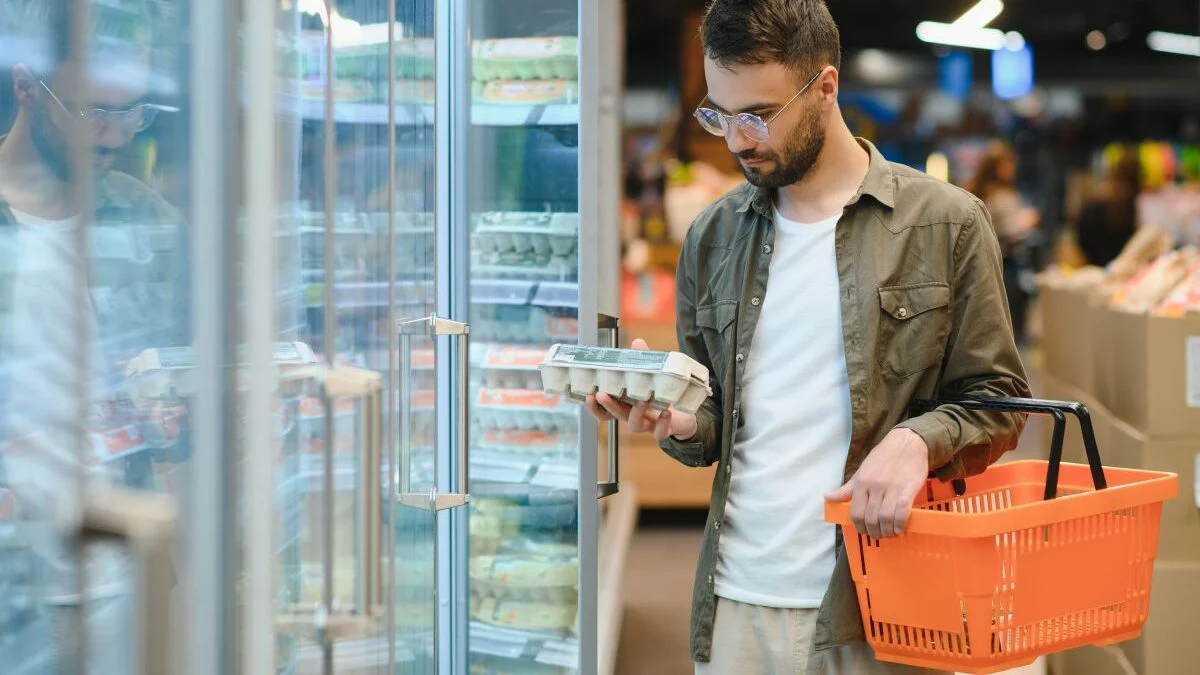
In the egg section of a supermarket, many look at the color of the box or the word “farmer”. But they also miss the most reliable information: the code printed on the shell.
This marking, controlled by the Directorate General for Competition, Consumption and Fraud Control (DGCCRF), summarizes the breeding method, the country of origin and the exact breeding behind each egg.
In short, this little sequence of numbers and letters allows you to know in a few seconds whether an egg comes from organic, free-range, floor or cage farming. The DGCCRF recalls that this code constitutes “the distinctive number of the producer and allows the identification of the breeding method”. Understanding this language means regaining control over your purchases, between animal welfare and budget constraints.
Read the code on the eggshell at the supermarket
The code is directly on the shell. It always starts with a number between 0 and 3, followed by two letters for the country according to the ISO standard, such as FR for France or ES for Spain. Next comes a breeding site identifier and, in France, the building number. A “1 FR 85 8” marking indicates, for example, an open-air farm located in Vendée.
In this marking, the most decisive remains the first number:
- 0 for organic eggs;
- 1 for the outdoors;
- 2 for floor breeding;
- 3 for furnished cages.
The box displays the size, the minimum durability date (DDM) and the packaging center number, but in the event of a contradiction, it is the shell which is authentic for the method of rearing category A eggs.
0, 1, 2, 3: what the egg code changes for the hen and for the price
The number 0 indicates eggs from organic farming, regulated by Regulation (EU) 2018/848, with access to the outdoors and organic food. The number 1 designates the outdoors. “Outdoors, the hens have access to the outdoors and are provided with food without GMOs or antibiotics. This gives better shell quality. Animal welfare is undeniable“, assures the quality manager of a poultry farm in Pontorson. Some free-range farms also carry the Label Rouge.
With the number 2, the hens stay in the building, on litter, without ever going out. The number 3 corresponds to furnished cages, where standards require nests, perches and scratching areas on an area barely larger than an A4 sheet.
The L214 association denounces that chickens “live locked in cages that don’t even leave them room to spread their wings without disturbing each other.” These differences in conditions explain why organic and free-range eggs are more expensive.
Egg freshness and shell code limits
The code indicates the origin and method of breeding, not freshness or taste. To do this, we look at the DDM on the box: an egg remains “fresh” until 28 days after laying, but “extra-fresh” only until the ninth day. In direct sales or on markets, the marking can be simplified, but the seller must display at least the breeding method and the country.