
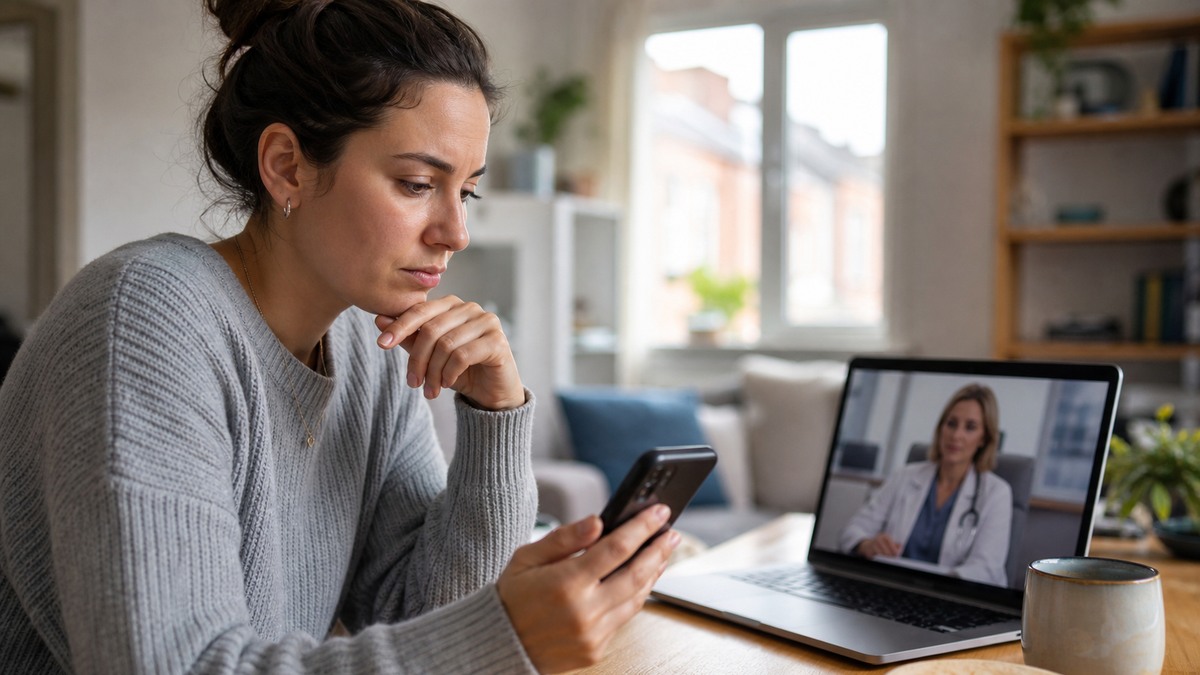
A UK survey has put a striking figure on a familiar habit: nearly six in ten young women reportedly turn to social-media influencers for health advice. The result matters because short videos and personal stories can shape choices about symptoms, diets, contraception, mental health and treatment — often before someone reaches a clinic.
It should not, however, be read as proof that most young women follow such advice, or that every influencer is unreliable. A poll captures what a particular group said at a particular time. The useful question is not whether health content belongs online, but how viewers can separate helpful signposting from claims that are unsupported, incomplete or commercially motivated.
What the headline figure can — and cannot — show
“Getting advice” can mean many things: watching a clip, searching for lived experience, saving a post or actually changing behaviour. Unless the survey defines the phrase clearly, those actions should not be treated as equivalent. The wording of questions, the age range, sample size, recruitment method and whether respondents reflect the wider UK population all affect what can reasonably be concluded.
Self-reported surveys also depend on memory and interpretation. People who volunteer for an online poll may use social media differently from those who do not. A percentage alone cannot show whether the advice was accurate, whether it caused a decision, or whether respondents also consulted a pharmacist, GP or another qualified professional.
Readers should therefore look for the original survey report rather than relying only on a headline. A credible publication should identify who commissioned and conducted the research, provide dates and sample details, reproduce the questions, explain any weighting and disclose funding. If those basics are unavailable, the finding is best treated as an interesting signal, not a population-wide fact.
A quick credibility check for health posts
Popularity, confidence and polished production are not evidence. Before acting on a claim, it helps to pause and check:
- Qualifications: Is the creator registered in the relevant profession, and can that registration be verified with the appropriate UK regulator?
- Source: Does the post link to original guidance or peer-reviewed research, rather than another video, a press release or an unexplained screenshot?
- Context: Are limitations, uncertainty, side effects and the people for whom the advice may not apply explained?
- Conflicts: Is there a paid partnership, affiliate link, gifted product, clinic, course or supplement being promoted?
- Cross-check: Does the claim agree with information from the NHS or a recognised professional body?
A title such as “doctor” may not reveal a person’s speciality, current registration or whether they are discussing an area within their competence. UK registers — including those of the General Medical Council, Nursing and Midwifery Council and General Pharmaceutical Council — offer a more reliable check than a profile badge.
Why personal stories need extra context
Lived experience can reduce isolation and help people find language for a difficult symptom. But one person’s improvement does not establish that a product or treatment caused it, and a recommendation that was harmless for them may be unsuitable for someone with another condition, pregnancy, allergies or prescribed medicines.
Warning signs include promises of a cure, claims that one remedy works for everyone, instructions to stop medication, conspiracy-based explanations and pressure to buy immediately. Testimonials, before-and-after images and follower counts cannot replace comparative evidence. Even a study described accurately may concern animals, a small group or an outcome that does not translate into a meaningful health benefit.
Use social media as a starting point, not a diagnosis
Online content can prompt useful questions, but symptoms cannot safely be assessed from a general post. The NHS services directory can help people find appropriate care, while a pharmacist, GP or other regulated healthcare professional can consider personal history, medicines and risk factors.
Anyone worried about a symptom, treatment interaction or mental health concern should seek advice from an appropriate professional rather than delay care because of a creator’s reassurance. For urgent or life-threatening situations, follow NHS guidance on urgent and emergency care. The survey’s most constructive message is not to distrust every voice online, but to make verification part of the scroll.