
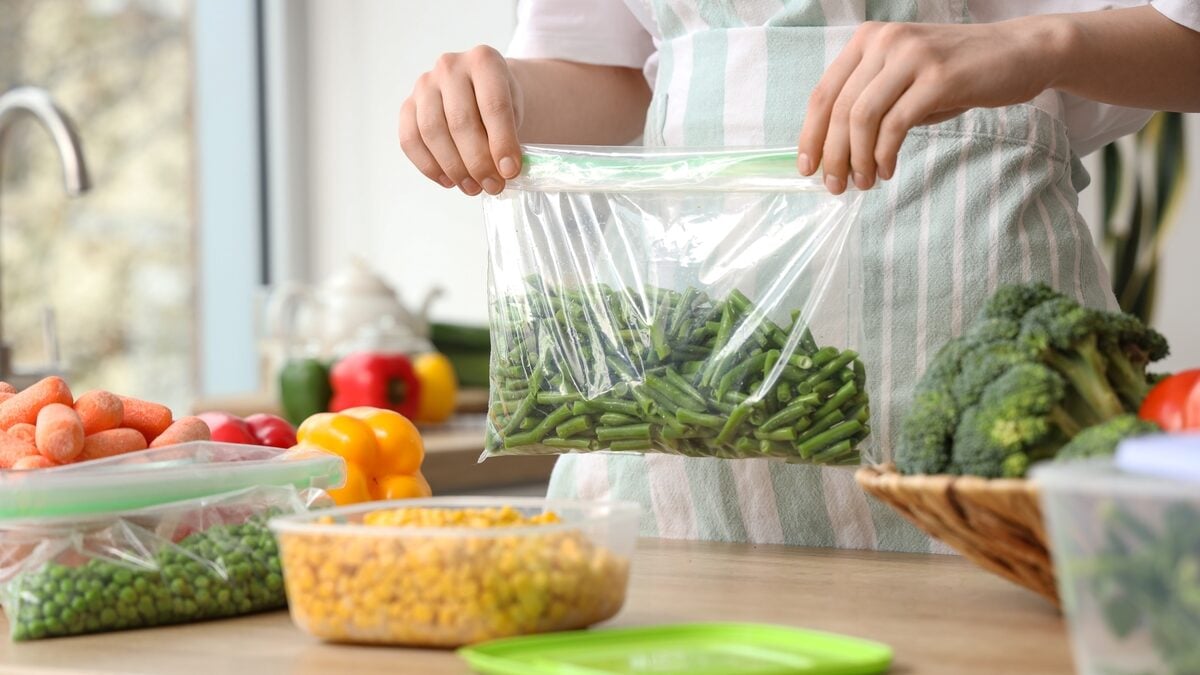
You often ask yourself if you can freeze this meat or this fish? This vegetable or this cheese? The question is relevant, since all foods do not support freezing. Vanessa Bedjaï-Haddad, dietician-nutritionist, sheds light on this subject.
Water -rich vegetables (cucumber, lettuce, radish, celery)
“Cucumber, lettuce or even celery contain a lot of water in their cells. However, when freezing, water forms ice crystals that burst the cell walls. Result: after defrosting, these vegetables become soft, aqueous, without crunch. They also lose part of their vitamins (like vitamin C). therefore favor fresh or used soup after freezing “, underlines the dietician.
Cooked potatoes
“In puree or in pieces, they do not support freezing: starch changes and gives a grainy, floury texture, sometimes sweet to potatoes. This also alters their taste. Also, I often advise to freeze preparations made from already transformed potato (gratin, soup, chopped) which hold better”, Assures Vanessa Bedjaï-Haddad.
Fresh cheeses and dairy products (mozzarella, ricotta, blanc cheese, yogurt, crème fraîche)
“The cold separates water and fats. We therefore obtain a grainy and shot texture, unpleasant: the flavor of the cheeses remains but their appearance changes”, warns the expert. “On the other hand, hard cheeses (Parmesan, Comté, Emmental) can freeze grated or in pieces without problem. I often do it personally!”
Cream -based sauces
“Béchamel type sauces, carbonara sauce or cream gratins do not keep their smoothness: after freezing, they become lumpy because water and fat separate. We can bypass this problem by thickening the sauce or preparing it at the last moment”, advises the expert.
Whole eggs in their shell
“”Under the effect of the cold, the water contained in the white swells and the shell can burst. At the defrosting, the texture of the eggs becomes rubberous“Warns the specialist. “”My tip? COngeler beaten eggs (mixed yellow and white), or only whites, in small containers.“”
Very aqueous fruits (melon, watermelon, whole citrus)
“As with vegetables full of water, the fruit rich in juice lose their texture and become spongy. Their taste remains present, but the consistency is disappointing. My advice: freeze these mixed fruits in the form of coulis, smoothie or homemade sorbet “, recommends the dietician.
Fried preparations (already cooked fries, donuts, nuggets)
“Their crisp disappears completely after freezing and defrosting, giving way to a soft texture, sometimes oily. To remedy it, only one solution: freeze the food preceded in the oven or the fryer, then finish them when cooked after defrosting”, underlines Vanessa Bedjaï-Haddad.
Foods already thawed
“This is the golden rule: we do not reconstruct a raw or cooked food already defrosted, as this greatly increases the risk of bacterial development. In addition, each freezing/defrosting cycle degrades its texture and its nutritional qualities. The only exception: a deconked raw food then cooked can then be reconngeled”, concludes the expert.