
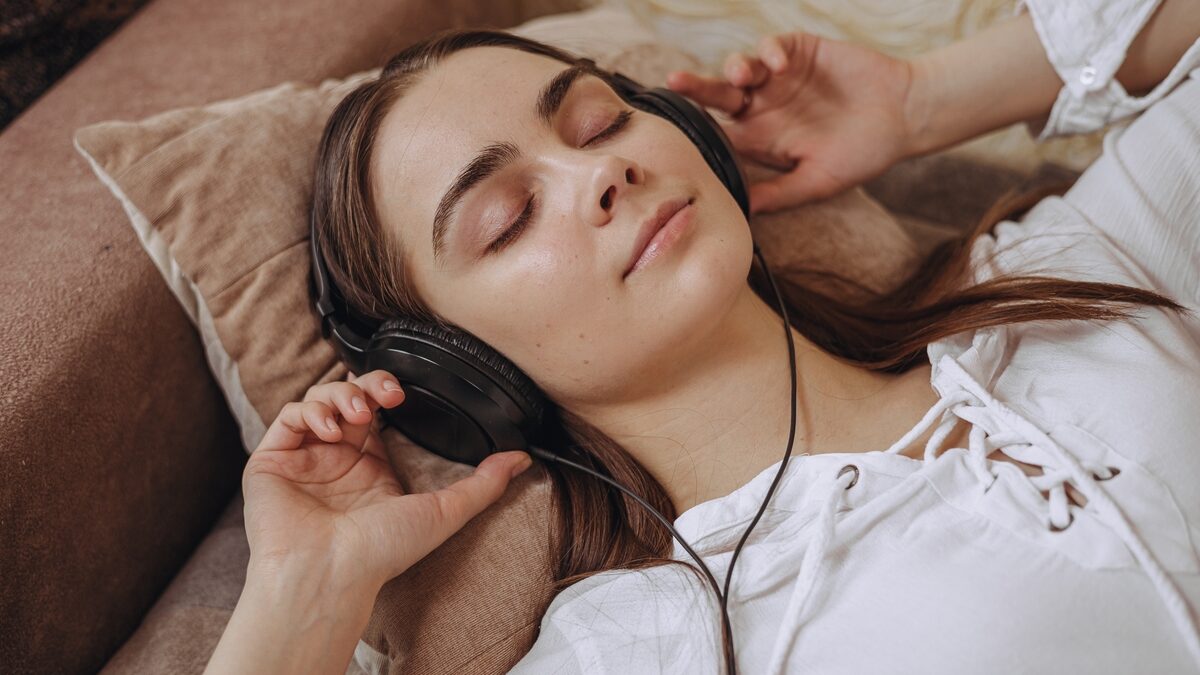
Every night, millions of French people count sheep without being able to sleep. Insomnia affects nearly one in three adults, and increases with age. Faced with this disorder, as invisible as it is exhausting, a team of Chinese researchers is putting forward an unexpected avenue: music. According to a recent meta-analysis published in the journal PLOS Onelistening to certain songs could improve sleep quality in adults over 50.
When science agrees on the power of sounds
To reach this conclusion, the researchers screened ten studies — including six randomized clinical trials — conducted on 602 participants aged over 50 years. Their objective: to measure the effect of regular musical listening on the quality of sleep.
Result: an effect judged “moderate to significant”, reflecting statistically tangible better sleep. But the authors remain cautious. The analysis reveals “considerable variability between studies, probably due to the heterogeneity of intervention protocols, their application and the type of music used”. In other words, not everyone falls asleep to the same notes.
This diversity takes nothing away from the promise: unlike sleeping pills, music is non-invasive, without side effects and accessible to all. Enough to appeal to many seniors, often looking for gentle alternatives to medicinal treatments.
No miracle melody, but very real effects
So, is there a “perfect melody” to fall asleep to? Not really. The researchers did not identify any type of music that was superior to the others, although most of the pieces tested were slow (60 to 85 beats per minute)often instrumental and soothing.
It would therefore not be the song that counts, but rather its rhythm: a slow tempo promotes physiological relaxation, brings breathing and heart rate closer to a state of rest, and helps the brain to slow down.
Music could also act on an emotional level. By modulating the brain circuits of affective regulation, it would help to soothe anxiety and ruminating thoughts which delay falling asleep. “Music activates the parasympathetic nervous system… reducing cortisol levels while promoting melatonin production “, write the authors of the study.
Music therefore seemed capable of reducing the level of cortisol (the stress hormone), the heart rate and the respiratory rate of people over 50, thus promoting relaxation of the body and mind. In other words: these sounds would have a tranquilizing effect. For the researchers, “these musical interventions therefore constitute a promising non-drug approach to improve the quality of sleep in the elderly, particularly in view of the risks associated with long-term drug treatments.“.
Notes of hope, but still gray areas
These results open up an exciting perspective, but far from being definitive. The researchers themselves call for caution: the level of proof of this work remains weaknotably due to the small number of studies and the diversity of protocols. They invite us to carry out new clinical trialswith objective measures of sleep, such as polysomnography, to confirm these effects.
In the meantime, there’s no point looking for the miracle soundtrack: the main thing is to listen to music that relaxes, in a calm atmosphere, turning off screens and notifications. The experience is risk-free, gentle and perhaps already effective.
Because deep down, the idea is beautiful: getting back to sleep without pills, simply by letting yourself be rocked. Close your eyes, breathe slowly, and let a few notes draw the line between waking and daydreaming.