
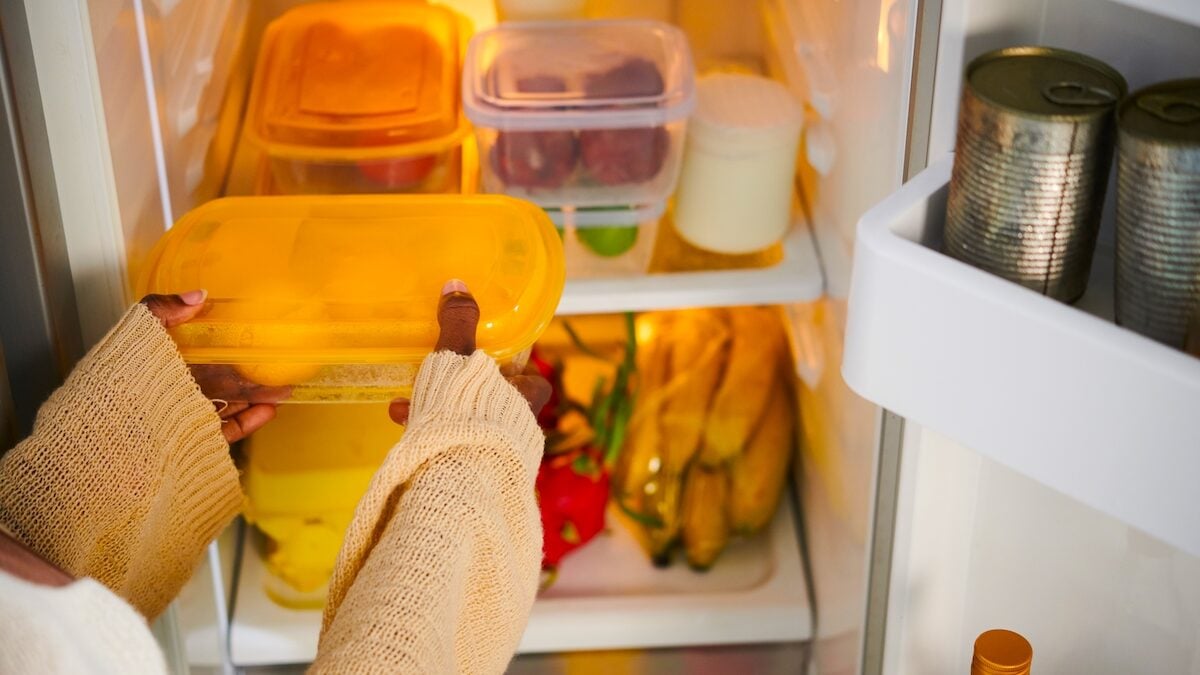
In our refrigerators, some leftovers seem to be able to wait several days without worrying. But for some, don’t be fooled by appearances! According to dietician-nutritionist Julie Boët: “The simple act of leaving a cooked dish for a few hours at room temperature, or storing it without paying attention, can accelerate invisible chemical and microbial processes that deteriorate nutrients and encourage the proliferation of microorganisms.
In other words, not all foods can be kept for several days. And some deteriorate much faster than we imagine. Here are a few to particularly watch out for.
The cooked rice
Cooked rice is one of the most sensitive leftovers. Once prepared, it may contain Bacillus cereusa bacteria capable of producing heat-resistant toxins when left at room temperature for too long. Even vigorous reheating is not enough to eliminate these toxins, which can lead to severe food poisoning.
To avoid risks, it is essential to cool the rice within an hour of cooking and quickly place it in the refrigerator, where it should not stay for more than 24 hours. Before consumption, it is recommended to reheat it to a temperature of at least 74°C.
Homemade sauces
Sauces, whether intended for everyday meals or large tables, are among the preparations that deteriorate the fastest. Their high water content constitutes an ideal breeding ground for pathogenic bacteria.
While leftovers of a dish can often be consumed within three or four days, a sauce alone has a much shorter shelf life and should ideally be consumed within a day. Freezing remains an interesting option when the quantity exceeds what can be eaten quickly, even if the texture may then be slightly altered.
Whipped cream
Airy and sweet, whipped cream is also extremely fragile. As soon as it is exposed to air or temperature variations, it becomes a favorable environment for bacterial multiplication. It should be consumed within 24 hours of preparation or opening. At the slightest doubt (unusual odor, trace of mold, grainy texture, etc.), it is better to throw the pot away. And yes! Whipped cream is one of the fastest turning dairy products.
Mayonnaise-based salads
Contrary to popular belief, it is not commercial mayonnaise that poses a problem: it is pasteurized and slightly acidified, which naturally slows bacterial growth. Rather, it’s the ingredients that accompany it — potatoes, chicken, hard-boiled eggs, tuna — that go bad quickly. Once mixed, these elements become more vulnerable, and the salad should not stay in the refrigerator for more than three days.
A sour odor or changing texture should be a warning, even if the appearance still appears okay.
Pasta dishes
Like rice, cooked pasta may contain spores of
Bacillus cereusalthough the risk is lower due to lower humidity. This does not mean, however, that they can be kept indefinitely. After three or four days in the refrigerator, they may develop an acidic smell or a viscous texture, sure signs that they should no longer be consumed. Here again, rapid cooling after cooking limits the risk of microbial proliferation.
Soft cheeses
Brie, ricotta, cottage cheese: these cheeses rich in water deteriorate significantly faster than hard cheeses. Once the original packaging is opened, their shelf life does not exceed 5 to 7 days. They should be stored in the coldest part of the refrigerator, ideally at 4°C or below. The appearance of mold on the surface is a clear sign of deterioration, but even without visible signs, a bitter or excessively acidic taste should lead to throwing them away.
Forgotten leftovers at room temperature
This is the golden rule in food safety. Food should never remain in the “danger zone”, between 4°C and 60°C, for more than two hours. In this interval, the bacteria responsible for poisoning —
Salmonella,
E.coli, Clostridium perfringens — multiply at an impressive speed, potentially doubling every twenty minutes. Once a dish has cooled to room temperature, it should be refrigerated promptly. And preferably in shallow containers that allow uniform and rapid cooling.
Why do these foods turn so quickly?
Julie Boët reminds us that food deterioration is not just a matter of bacterial contamination. Chemical processes also play an important role. “Certain nutrients, notably vitamins C and B, are very sensitive to oxidation and heat. Poor storage therefore leads to a progressive loss of nutritional quality.”
In addition, even if macronutrients (proteins, lipids, carbohydrates) remain largely present, their quality can change: lipids can oxidize, changing the taste and generating potentially harmful compounds.
At the same time, the bacteria that grow produce compounds that alter the texture, aroma and flavor. And transform a tasty dish into an uninteresting, even risky leftover.
She also emphasizes the importance of reheating. If heat does not penetrate evenly, some areas may remain at insufficient temperature to destroy microorganisms.
A simple principle: cool quickly, keep for a short time
Cooling dishes quickly, respecting the cold chain and consuming leftovers within a reasonable time frame are the most effective actions to avoid unpleasant surprises. If in doubt (change in odor, color or texture), it is best to give up. It’s better to have a heartache over food waste than a stomach ache for two days.