
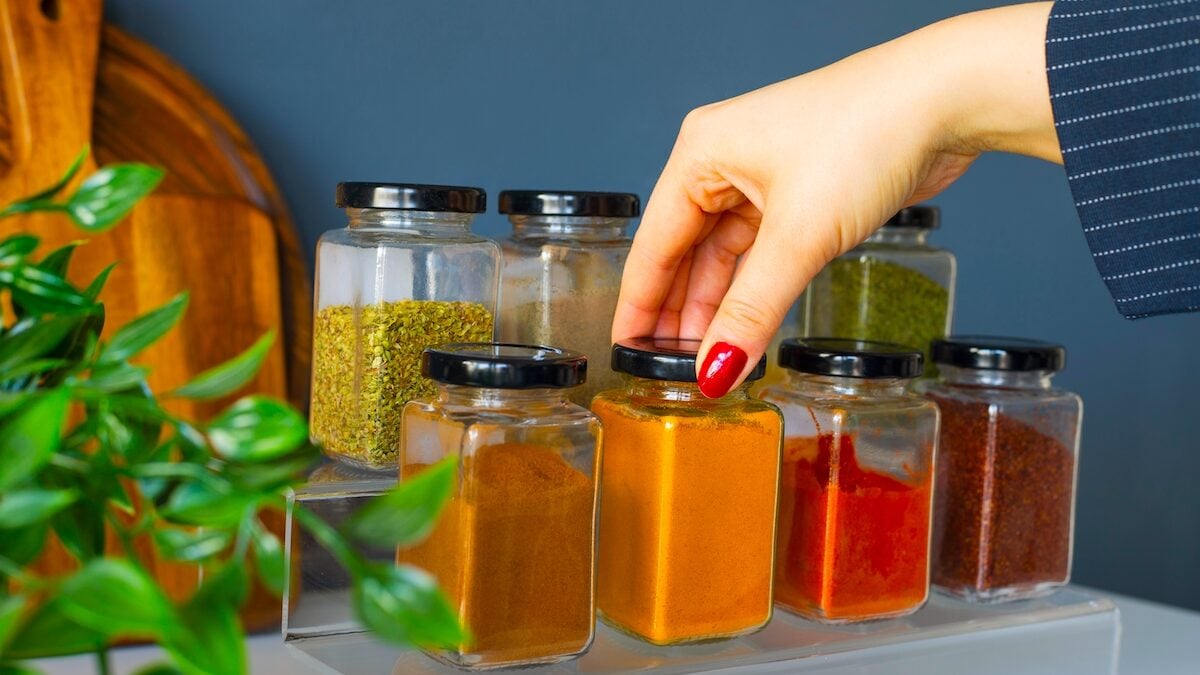
Curry, paprika, nutmeg… In many kitchens, small jars of spices have sometimes been sitting for months (or even years?) in our cupboards. But is it risky for our health? What happens when our spices “pass” and oxidize? Recently, a video raised doubt among millions of Internet users. In it, a microbiologist explained that our spices can put us in danger because of bacteria. A point that is nuanced by virologist Océane Sorel, by returning to the principles of preserving spices. Are we worried or not?
They “perish”, or not? The essential nuance
First good news: no, your spices do not “stale” like yogurt. The date written on the pot is a DDM – Minimum Durability Date, recognizable by the mention “Best before…“.
This means that beyond this date, the spice may lose flavor, color or intensity… but it does not become dangerous if it has been properly stored.
In short: don’t throw away your paprika just because it’s two years old. On the other hand, once the jar is opened, the aromas weaken more quickly, and some unpleasant surprises may appear.
The real risk? Humidity, not date
Although spices do not become toxic when they age mechanically, they can become toxic if they are stored incorrectly.
Like all dried plants, they naturally contain mold spores. As long as the environment remains dry, no problem. But humidity awakens these spores, which can then produce mycotoxins, including the dreaded aflatoxins.
These toxins often give no immediate symptoms, but their effect can build up silently in the body with repeated exposure. This is where the real health risk lies.
Research shows that repeated exposures, even at very low doses, can eventually affect the body — particularly the liver and kidneys. Certain well-identified mycotoxins, such as aflatoxins, are also associated with an increased risk of certain cancers.
In short: a pinch of contaminated spice will not make you sick, but it is the repetition over time that can pose a problem.
Signs that a spice needs to go in the trash
It is not always easy to spot a spice that is unfit for consumption — but certain clues should alert you:
- Visible mold. Greenish spots, white down, filaments… This is immediate trash. Mycotoxins diffuse easily in powders.
- Lumps, blocks, sticky texture. This is often the first sign of moisture, even without visible mold. Better not to use it anymore.
- Weird smell…or no smell at all. A note of mustiness, humidity, or an absence of aroma indicates an old or degraded spice.
- Dull or pale color. Not always dangerous, but it indicates strong oxidation: the spice has lost almost all culinary interest.
- Small insects or larvae. Rare in Europe but possible, especially after a trip. In this case: trash + cleaning the closet.
But once again, don’t panic: using a questionable spice once does not mean that you have absorbed poison. It is regular exposures that are the problem, not an isolated accident.
How to avoid problems? Good reflexes to adopt
The good news is that the risks are easy to prevent. For the scientist, a few gestures are enough:
- Choose whole spices (pepper grains, nutmeg, cinnamon sticks): they keep better;
- Buy small quantities, more often;
- Store in airtight, clean and dry jars, ideally opaque. ;
- Keep the spices in a cool, dry place, away from light: especially not above the hob or the oven;
- Never pour directly over a saucepan: the steam will enter the pot;
- Use a clean, dry spoon, or take the quantity into a cup;
- Do a little sorting every 3 to 6 months.
And let’s stay clear: spices do not suddenly become carcinogenic because we forgot to renew them every three months. But yes: poorly stored, they can really cause problems. It’s up to you to sort it out now.