
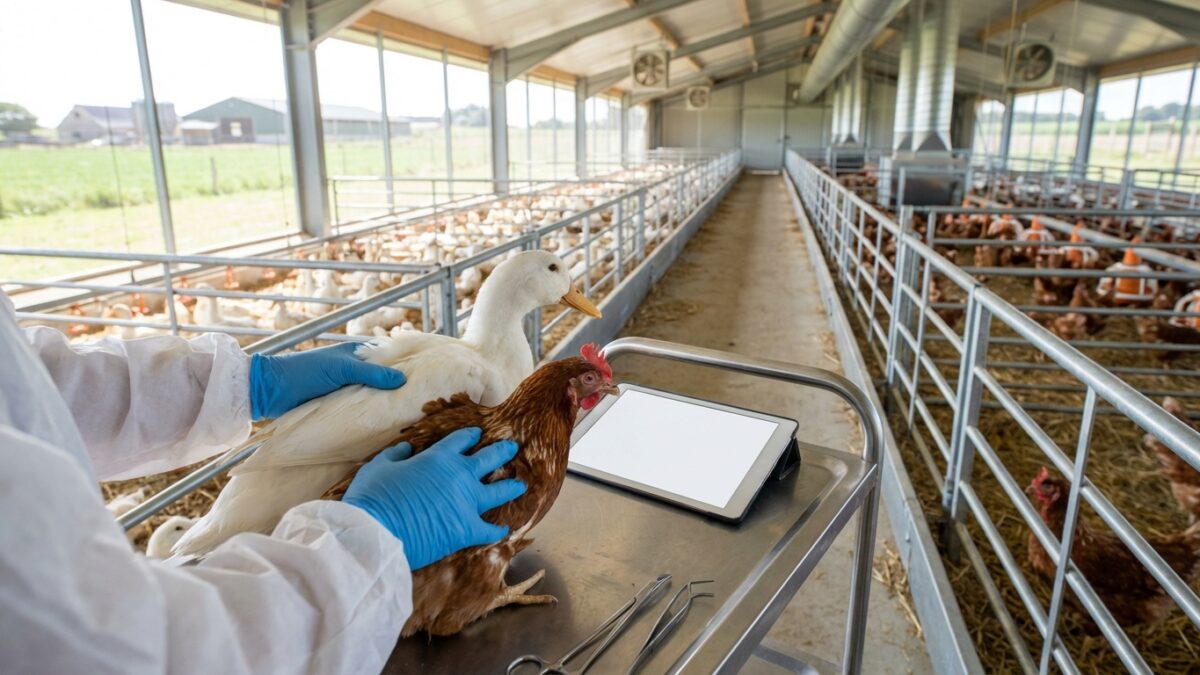
The homes ofhighly pathogenic avian influenza are multiplying in France, especially on the Atlantic coast, in a context of strong circulation of the virus among wild birds and poultry. Four foxes and an otter have already been found infected, a sign that this virus sometimes crosses the barrier between animal species. Enough to raise questions about the risk to human health.
At the same time, human cases of bird flu are recorded abroad, with around a thousand people testing positive worldwide over the last twenty years, and a first death linked to a new strain reported in the United States. Experts, like the Pasteur Institute or the World Health Organization, even raise the possibility of a future pandemic, potentially more serious than Covid-19. So, what is the population in France really at risk, and how can they protect themselves on a daily basis?
Avian influenza: mainly an animal virus, but possible human infections
Viruses avian influenza have been circulating internationally for several years, mainly among wild birds and domestic poultry. When one of these viruses infects a person, it is called
bird flu. In recent years, several hundred human cases have been reported worldwide. In France, on the other hand, no cases have yet been identified, and no human-to-human transmission has been observed to date.
With the recent increase in outbreaks on livestock farms, the Ministry of Health, the Ministry of Agriculture, Public Health France and ANSES have reassessed the risk posed by animal viruses.highly pathogenic avian influenza (HPIA) for the population. Their analysis concludes at a “low” level of risk for the general population, and “low to moderate” for the most exposed people, in particular those who work on poultry farms. The challenge is therefore to contain circulation in animals to avoid the appearance of occasional human cases, or even the adaptation of the virus to humans.
Avian flu: a risk considered low, but monitored very closely
Currently, avian influenza viruses are actively circulating internationally and in Europe. In France, more than 60 farms were affected as of November 27, at a level higher than that observed at the same period in the two previous years. Migratory birds play an important role in the spread of the virus, which has also infected wild mammals. “The more the virus replicates, the greater the risk of human cases“, says Didier Lepelletier, the Director General of Health, during a press conference cited by the press.
This concern is shared by virologists. For the Pasteur Institute, the bird flu represents a potentially more serious pandemic risk than Covid-19, because humans do not have antibodies against H5 viruses, and flus can also kill healthy people, including children. “What we fear is an adaptation of the virus to mammals, and in particular of the virus to humans, which would be capable of being transmitted from human to human, or even of circulating in the human population, that it would then become a pandemic virus.“, Marie-Anne Rameix-Welti, medical head of the respiratory infections center at the Pasteur Institute, told Reuters. The World Health Organization, however, reminds: “We must be ready to react early enough. But for now, you can continue walking in the forest, eating chicken and eggs and enjoying life. The risk of a pandemic is a possibility. But in terms of probability, it remains very low“.
Preventive measures: what the authorities are doing and what actions to take
Faced with this situation, the level of risk with regard to HPAI on farms was placed at its highest level on October 22. This classification makes it possible to impose measures of
biosecurity reinforced, such as sheltering poultry. Additional measures have been deployed in the most affected departments (Vendée, Loire-Atlantique, Maine-et-Loire and Deux-Sèvres) in order to limit the spread of the virus in duck and turkey farms. Since October 2023, compulsory vaccination of farms with more than 250 ducks aims to reduce the number of outbreaks of HPAI in these animals, but also to reduce overall viral pressure and, in turn, the risk for other species of poultry and for humans.
At the same time, the authorities are strengthening human health surveillance. The protocol of active surveillance of avian influenza (SAGA) is extended to the entire territory for people exposed to viruses, in order to confirm possible human cases early and quickly apply appropriate management measures. All health professionals have been made aware to detect a suspected case without delay. For people in contact with infected animals or a contaminated environment, it is recommended to wear protective clothing, a respiratory protection mask, goggles or visor, impervious gloves, and to wash their hands thoroughly after each contact. If symptoms appear (fever, headache, muscle pain, cough, shortness of breath, conjunctivitis) within 10 days following exposure, the action to take is as follows:
- Immediately contact a doctor, telling him that you have been in contact with infected animals or suspected of being infected, so that he can prescribe a PCR flu test;
- While waiting for the results, rigorously apply barrier gestures: wearing a mask, frequent hand washing, regular ventilation of enclosed spaces, disinfection of surfaces, to avoid possible contamination.
Vaccination against seasonal flu is strongly recommended and supported for professionals exposed to animals. It limits the risk of co-infection between an avian virus and a human influenza virus, which reduces the probability of emergence of a new influenza virus combining animal and human characteristics. Beyond the avian and pig sectors, this recommendation also concerns veterinarians, agents of departmental population protection directorates who visit farms, as well as people involved in the SAGIR wildlife surveillance network; Health Insurance and the Mutualité sociale agricole send them vaccination vouchers.
Therapeutically, stocks of specific antivirals already exist: “The positive point with the flu, compared to COVID, is that we have specific preventive measures already in place. We have vaccine candidates who are ready, we would be able to have a vaccine fairly quickly“, assures Marie-Anne Rameix-Welti. “We also have stocks of specific antivirals which, a priori, would be effective against this avian influenza virus.“. For the general public, the message remains simple: it is strongly recommended not to touch dead or sick wild animals, and compliance with protective measures by all people in close contact with potentially infected birds or mammals helps reduce the risk of human infection.