
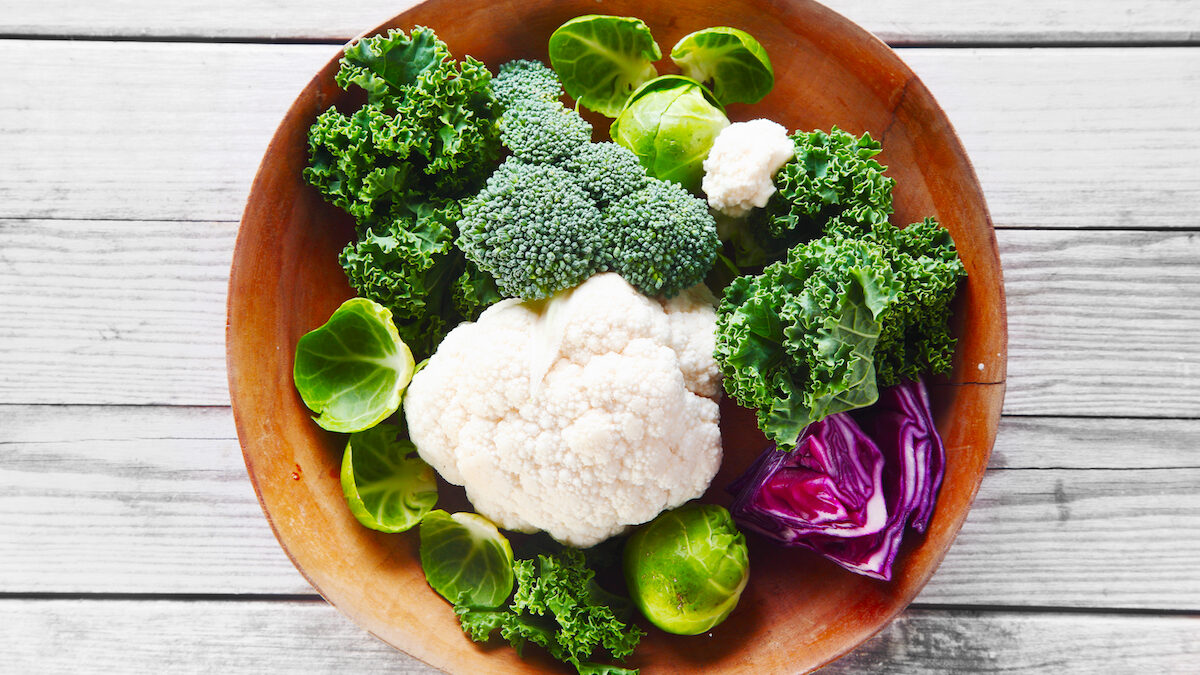
What if a simple dish of cabbage could weigh in against cancer? A team from the Institut Curie and Inserm has just shown, in animals, that a compound naturally present in cabbage and other cruciferous vegetables partly conditions the effectiveness of a form ofimmunotherapy widely used. Their work, published on December 2, 2025 in the scientific journal Nature Communicationsreconnects our plate to the most cutting-edge oncology treatments.
In their tumor models, a simple change in diet increased the proportion of animals responding to treatment from only 2% to 50-60% Enough to take seriously this link between diet, immune system and anticancer drugs. At the heart of this story, a discreet molecule: indole-3-carbinol.
Cabbage and anti-PD1 immunotherapy: what the Curie-Inserm study reveals
The researchers focused on indole-3-carbinol, a nutrient abundant in cruciferous vegetables like cabbage, broccoli or cauliflower. They compared, in mice, the effect of a
anti-PD1 immunotherapy according to two diets: one rich in indole-3-carbinol, the other completely devoid of this compound. With this nutrient, anti-cancer treatment was effective in around 50 to 60% of animals, compared to only 20% when it was missing from the diet. “These results show us that when we remove this compound present in cabbage, there is a drastic reduction in the effectiveness of anti-PD1 immunotherapy.“, summarizes Dr Elodie Segura, Inserm research director at the Institut Curie.
Such a difference is of concern, when we know that these anti-PD1 drugs are used in humans to treat melanomas, non-small cell lung cancers, kidney cancers and even certain Hodgkin lymphomas. “We now know that the response to cancer treatments can be influenced by many environmental factors, such as nutrition. In particular, it has been shown that the composition of the intestinal microbiota, itself modulated by our diet, plays a role in the effectiveness of certain immunotherapy treatments (by anti-PD1 immune checkpoint inhibitor). And it is precisely this link between nutrition and anticancer treatments that we wanted to explore“, explains Dr. Elodie Segura.
In the study, the quantity of indole-3-carbinol given to the animals remained physiological, slightly lower than that of their standard diet, which reinforces the idea that this is not an effect of experimental overdose.
Indole-3-carbinol: the cabbage molecule that wakes up T lymphocytes
A quick reminder of the principle of immunotherapy: Cancer cells have the ability to neutralize cells of the immune system, which allows them to escape the attack of cytotoxic cells, also called “killer” cells. However, immunotherapy treatments using anti-PD1 immune checkpoint inhibitors manage to counter this neutralization, allowing cytotoxic T cells to reactivate. Once reactivated, these cytotoxic T lymphocytes can identify and eliminate tumor cells.
The researchers focused on indole-3-carbinol, often abbreviated to I3C, present in large quantities in cruciferous vegetables: cabbage, broccoli, cauliflower, watercress, turnip, arugula, radish or Brussels sprouts. Once ingested, it is transformed by the acidity of the stomach into derivatives capable of activating a specific receptor, theAryl Hydrocarbon Receptor (AhR), expressed in particular by cytotoxic T lymphocytes, these “killer” cells responsible for eliminating tumor cells. “It is in fact a molecule which forms the link between the environment and the immune system“, specifies Elodie Segura.
The researchers then dissected the mechanism. “Normally, during anti-PD1 immunotherapy, lymphocytes will be stimulated and reactivated to detect tumor cells. However, in the absence of indole-3-carbinol in the diet, lymphocytes are not able to recover their functions.“, describes Elodie Segura. In simple terms, without this signal from the diet, the cytotoxic T lymphocytes struggle to become fully operational again, even in the presence of the drug. The study also shows that a diet rich in cruciferous vegetables promotes the “remobilization” of certain subpopulations of CD8 T lymphocytes and is accompanied by better infiltration of NK cells within the treated tumors.
Food, cruciferous vegetables and cancer: what concrete implications?
For the moment, these results remain preclinical and were obtained in mice. The authors indicate that dedicated clinical studies will be needed to verify whether the same phenomenon is found in cancer patients. “Our work provides a better understanding of the role of nutrients in anti-tumor immune responses. For patients, this data could make it possible to optimize diets to ensure the effectiveness of treatments“, underlines Elodie Segura. This approach is consistent with other observations: a meta-analysis highlighted a reduction in the risk of colorectal cancer of 20 to 26% in people consuming 40 to 60 g per day of cruciferous vegetables, with a protective effect which appeared from 20 g per day. As the authors of this work point out, “These vegetables, which include cabbage, broccoli and Brussels sprouts, are rich in phytochemicals such as flavonoids, fiber, vitamin C and carotenoids, which may help prevent cancer.“.
In practice, these data do not lead to prescribing a “cabbage diet” to people under immunotherapybut they reinforce the advice already given in oncology: a varied diet, rich in vegetables, particularly cruciferous vegetables, to support the intestinal flora and the immune system. While waiting to know more, specialists point out that any significant change in diet must be done in conjunction with the oncologist or a dietician, especially in the case of digestive disorders or weight loss.
There is currently no indication that concentrated indole-3-carbinol supplements should be used outside of a research protocol; On the other hand, regularly integrating cabbage, broccoli or arugula into your meals remains a simple reflex, already associated with benefits for overall health. Cabbages could well become discreet allies in treatments, provided they are part of a balanced diet.