
When we talk about Parkinson’s disease, many people first think of tremors and rigidity. However, in four out of five people, the disease also ends up causing serious cognitive problems: memory that falters, attention that is distracted, difficulty planning or concentrating on two things at the same time. However, no drug treatment currently makes it possible to clearly slow down this cognitive decline. Faced with this threat, researchers and patients are looking for other avenues.
In a study published in 2025 in the Journal of Alzheimer’s Diseaseresearchers at York University followed 43 people with Parkinson’s disease enrolled in weekly dance classes for six years, compared to 28 sedentary patients. While cognition is thought to deteriorate over time, they observed stability, or even slight improvement, in the dancers. “The fact that no member of the dance group showed further cognitive decline over a six-year period is, in our opinion, a very significant result“, explains Joseph DeSouza.
Dance and Parkinson’s: benefits for cognition
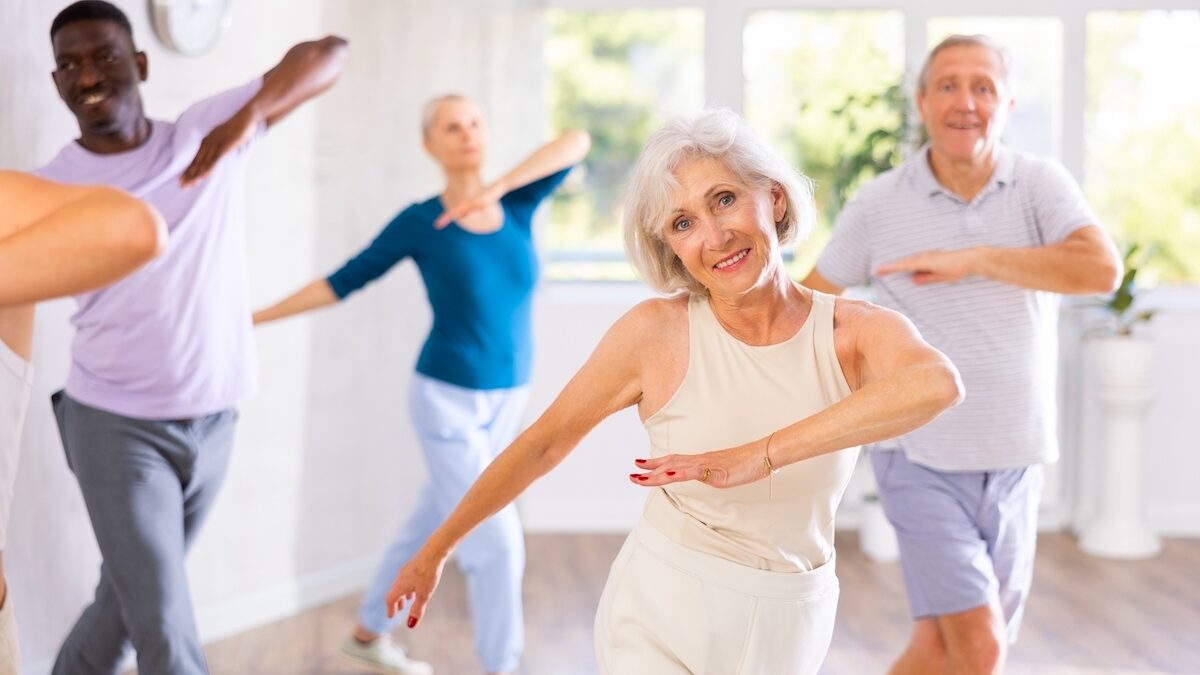
Participants in the dance group took a 75-minute class each week, as part of the Sharing Dance Parkinson’s and Dance for Parkinson’s community programs in Toronto. The session began seated, continued with barre exercises, then ended on the floor; some also learned choreography for a performance. At each session, a global cognitive test and a motor assessment were carried out, then compared to the results of the reference group, via standardized scores.
Result: over the entire period 2014-2019, the cognitive scores of the dancers remained stable or increased slightly, while those of the sedentary group did not change or declined a little. Between 2016 and 2018, the gap even became statistically significant in favor of the dance group. Simran Rooprai, first author, says: “We can’t really repair the brain, but we’re trying to show that with dance we may be able to delay the onset of greater cognitive decline.“. For a pathology where dementia often affects 80% of patients over the years, this preservation effect is far from trivial.
Why does dancing have so many benefits?
To explain these results, the researchers emphasize the profoundly multimodal nature of dance. “Dancing uses many areas of the brain. While dancing, we listen to music, learn new steps, memorize different sequences and interact with other dancers, which makes us attentive to our environment. Dance is physical, mental and social at the same time“, underlines Simran Rooprai. In other words, each session requires memory, attention, planning, balance and connection to others.
This repeated stimulation adds to the known benefits ofadapted physical activity in Parkinson’s disease. France Parkinson reminds that moving generates dopamine, promotes neuroplasticity and can allow, in some people, to reduce treatment doses by around 20%. Neuroimaging work cited by the Canadian team also shows that dancing modifies the activity of regions involved in memory, language and motor control, such as the hippocampus, the prefrontal cortex or the basal ganglia. All together could contribute to strengthening a form of cognitive reserve, that is to say the brain’s ability to resist lesions for longer.
How to dance when you have Parkinson’s disease
In practice, researchers recommend integrating dance into an overall path ofphysical activityjust like brisk walking, cycling or tai chi. In France, Inserm teams are, for example, testing adapted tango in people with cognitive disorders. In total, nearly forty establishments for the elderly have adopted tango therapy: in the context of neurodegenerative diseases, it constitutes an alternative or complement to pharmacological treatments.
Other programs explore other forms of dance, always with the idea of working on balance, coordination and confidence.
Before getting started, a few simple guidelines can help:
- Talk to your neurologist or physiotherapist to choose a course adapted to your level of fatigue and mobility;
- Favor workshops specifically designed for Parkinson’s disease, often offered by partner associations or dance schools;
- Start slowly, one session per week, then increase only if pleasure and tolerance are there.