
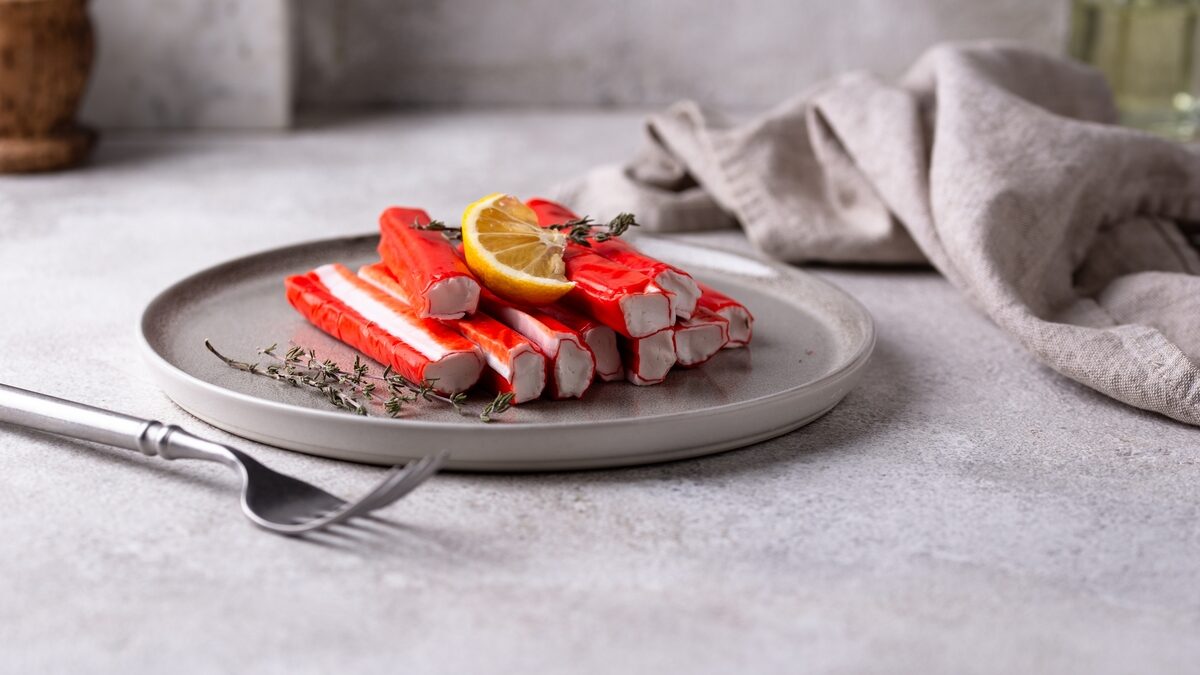
If the French have the reputation of “eating well”, the contents of their fridge are not always balanced. Sodas, industrial cheeses, mayonnaise, cold meats and even “prepared meals”… are present in number. But one food in particular stands out from its comrades, as it is so much debated. This is of course the famous little iodized and orange stick – surimi. Alexandra Murcier, dietitian-nutritionist, deciphers for True Medical its composition.
An ultra-processed food
With nearly 6 out of 10 French people consuming it from time to time according to a CSA survey, surimi is well anchored in our eating habits. However, it suffers from a bad reputation: according to some experts, it is only composed of viscera, additives, sugar and salt… Rightly or wrongly? Does he honestly deserve this “bad student” position?
In reality… yes, believes Alexandra Murcier.
“It is an ultra-processed food, therefore by definition to be limited as much as possible for our health. It does not have at all the other nutritional benefits of fish (high protein, rich in omega 3 and zinc, etc.)”, assures the expert.
Moreover, most commercially available sticks contain only 28 to 46% fish flesh: they are therefore relatively low in protein. The rest of this artificial flesh is made up of water, starch, sugar, salt and sometimes some additives.
Among these additives, we generally find sorbitol accompanied by polyphosphates (up to a maximum of 1%) for better hold of the stick. A “crab” flavor is also present, often 100% chemical.
“Surimi contains at least one ultra-processing marker, such as texturizers, taste modifiers, colorings and flavorings“, would like to specify Anthony Fardet, researcher in preventive nutrition, in the columns of BFM Conso.
Added sugar, always present
Did you think you were done with surimi? Error. The little iodized stick would also contain… sugar.
“Surimi contains a lot of carbohydrates for a food that is made from fish. We often find added sugar in this product.“, alerts the dietitian.
Manufacturers often add starch (a complex sugar) or simple carbohydrates to this orange product in order to improve its texture at lower cost. And even when added sugar is finally absent (as in Fleury Michon sticks), there is always… a little.
“When fishing at sea, the fish are frozen: adding sugar in small quantities is the means used to preserve the fish flesh during freezing.“, specifies the brand on its site.
Surimi: how to choose it better?
If you still wish to occasionally consume surimi, Alexandra Murcier recommends paying close attention to its composition.
- Choose the surimi which is richest in fish flesh ;
- Prefer the one with the shortest list of ingredients, with the fewest additives, avoiding glutamate as much as possible, which is a truly harmful additive for our health.
; - Choose those that contain the least sugar and salt.
“We can therefore consume it from time to time, but never regularly !”concludes the dietitian.