
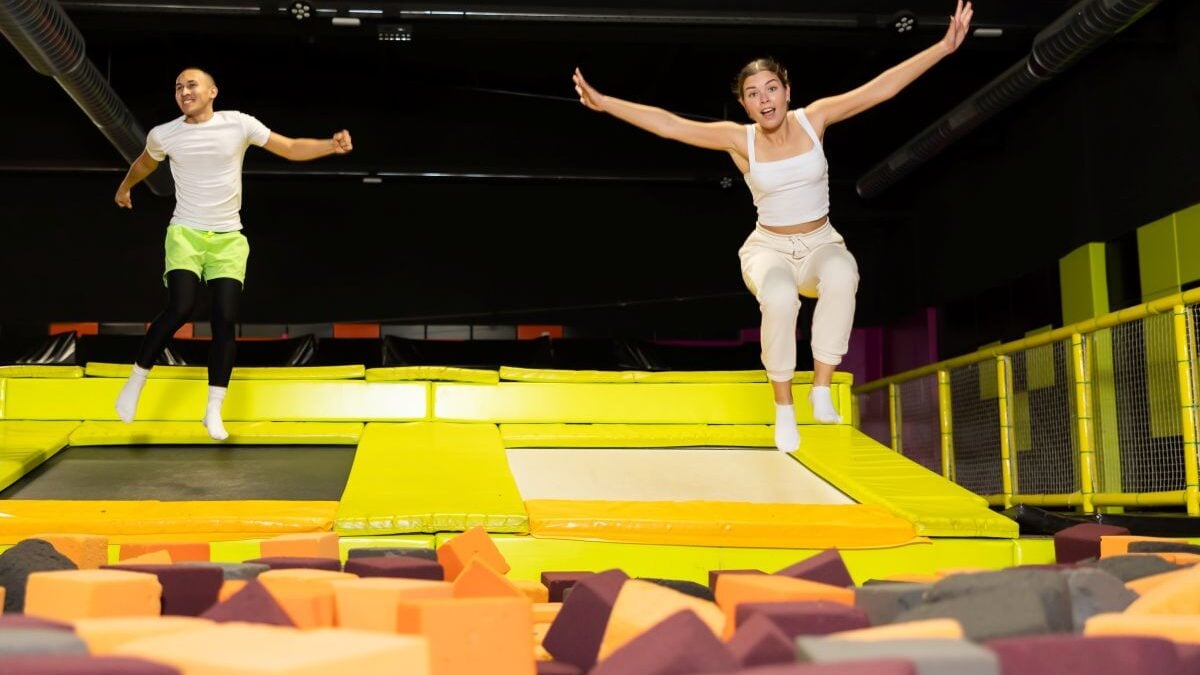
The accident happened at Flip Out Park in Peterborough, England. Contrary to what one might imagine, Eddie was not performing a perilous trick. While walking on a footbridge between two jumping zones, the young boy tripped and collided head-on with a raised block.
A daily life disrupted by quadriplegia
His mother, Stella Costea, says she received an emergency call from Eddie’s cousin. He had blood in his mouth and, above all, “could no longer feel his body”. Transported in absolute emergency, the teenager underwent an operation lasting more than six hours. The diagnosis was clear: a fracture of the C5 vertebra and the bursting of blood vessels in the spine.
Today, Eddie is paralyzed from the chest down, with very limited mobility in his hands. His mother, a nurse by profession, had to stop working to take care of him day and night. “We were told we would never have the same child again. It’s horrible”, she confides with emotion.
The once very active young boy now has to be turned every three hours. This is to avoid complications linked to bed rest. For Stella, this tragedy is proof that these places of leisure hide an underestimated danger. “It was a stupid accident, he didn’t do anything wrong. This shows how dangerous these places are.”
The analysis of Dr Gérald Kierzek: “A risk of irreversible damage”
Asked about the seriousness of this accident, Dr. Gérald Kierzek, emergency physician and medical director of True Medical, underlines the vulnerability of the cervical spine.
“In this young boy’s case, the fracture of the C5 vertebra led to compression or severing of the spinal cord. This explains tetraplegia, i.e. paralysis of all four limbs and the trunk. he explains.
The doctor reminds us that trampoline accidents are not limited to simple sprains. “We of course see fractures of the limbs (wrists, ankles) or head trauma, but spinal injuries are the most dangerous. They often occur during hyperextended falls or violent collisions.
Trampoline park: why is the risk increased?
According to the doctor, leisure parks increase these risks by two or three compared to domestic use, due to the power of the bounces and the promiscuity between the jumpers.
Professional structures allow much higher jumps than backyard trampolines, encouraging teenagers to attempt reckless stunts. Dr. Kierzek points to several aggravating factors:
- Kinetic force: The bounces are more powerful, making the landing more difficult to control;
- Multiple collisions: The risk of hitting another person or an element of the structure (post, separation block) is constant;
- Overconfidence: Adolescents, particularly affected, often feel invulnerable and attempt “flips” without technical supervision.
The essential safety rules to limit drama
For Dr. Kierzek, while pediatricians often advise against the use of the trampoline, absolute vigilance is required if you decide to go there. Here are his recommendations:
- Active surveillance. An adult must monitor at all times, without being distracted by their phone;
- Only one jumper per zone. The majority of serious accidents occur during collisions or rebounds caused by a third person;
- Zero acrobatics. Somersaults and “flips” must be strictly prohibited without professional coaching;
- Establishment Verification. Make sure the park meets safety standards (thick padding, nets in good condition) and that staff are trained in first aid.
Eddie’s tragedy reminds us that a moment of fun can turn into tragedy in a split second. If park managers ensure that they put in place strict procedures, caution remains essential. And at the slightest sign of fatigue or pain, it is imperative to stop.