
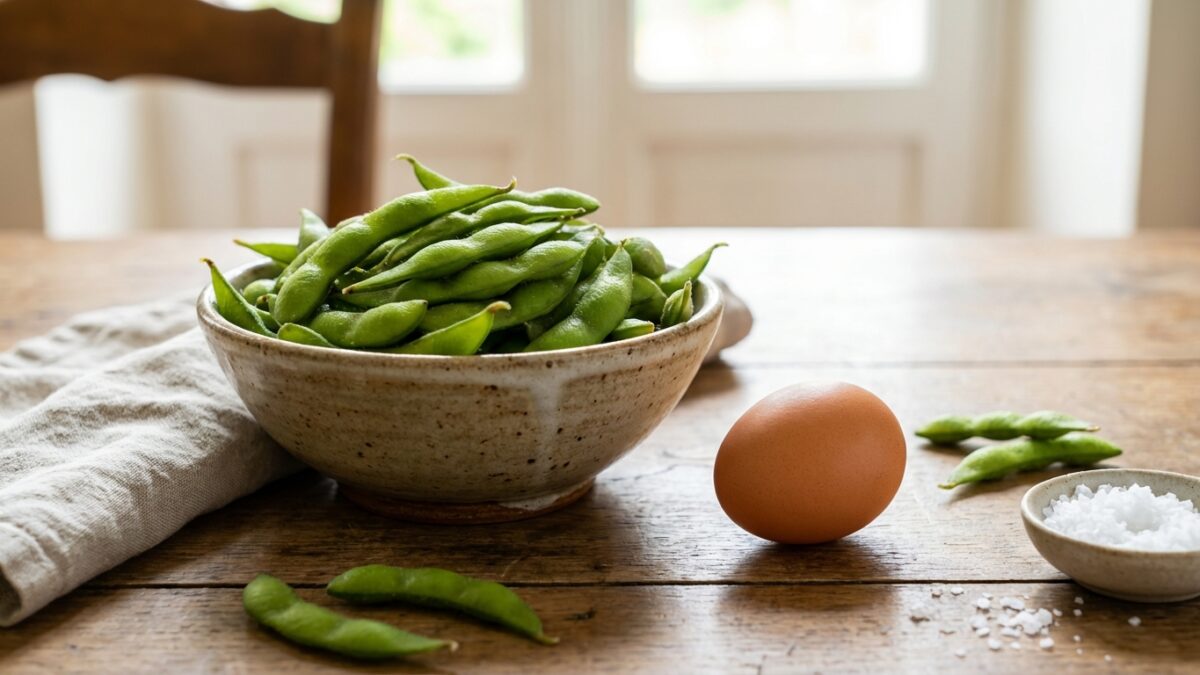
When we think of protein, we imagine steak or eggs. However, a vegetable, often relegated to the frozen food section, almost displays three times more protein than an egg in equal portion. Enough to shake up the habits of those who seek to eat less meat without lacking nutrients.
Edamame: the little soy bean that rivals the egg
This surprise candidate is green soybeans, better known asedamame.
Long confined to Japanese restaurants, it is slowly settling into French bowls and aperitifs.
In Japanese, “edamame” literally means “bean on a branch”, referring to the traditional sale of pods still attached to their stem. And this little bean has more than one asset in its pod.
Edamame is a soy bean harvested very early, still green and tender. Technically, it is not a green vegetable but a legume, like lentils. For 100 g cooked, it provides around 10 to 12 g of proteinsaround 120 to 130 kcal and almost 4.8 g of fiber.
Above all, it is a so-called “complete” protein: it contains the 9 essential amino acids, which remains rare in the plant world.
In Japan, we have been snacking on edamame since the Edo period (1603-1868), a bit like peanuts as an aperitif, often with beer or shochu. In France, it is mainly found frozen, in pods or already shelled, in supermarkets, at Picard or in Asian grocery stores. In other words: easy to find, even far from a sushi restaurant.
Egg vs. edamame: which provides more protein?
One large egg provides about 6.3g of protein, or 13% of the recommended daily intake. A cup of edamame has 18.4 g of protein, the equivalent of almost three eggs. At comparable weight, edamame can therefore provide more protein than an egg, with the added bonus of fiber and very little saturated fat.
This combination of protein and fiber lasts, which helps limit snacking and can support weight management.
Edamame also provides iron, calcium, magnesium, potassium, vitamins B, E and K, as well as isoflavones, plant compounds often mentioned for their potential benefit on hormonal and bone health.
How to Cook Edamame to Easily Boost Your Protein
Good news, it is very simple to prepare. Immerse the frozen pods or shelled beans in a large pot of boiling salted water for 3 to 5 minutes, drain, then add a drizzle of olive oil and a little fleur de sel. We only eat the beans, pressing the pod between our teeth.
To integrate it into everyday life, a few quick ideas can be considered. “Healthy” aperitif with a bowl of well-salted edamame, instead of diced ham in a mixed salad or a poke bowl, added to a wok of vegetables, or mixed with a little garlic, lemon and tahini for an ultra-protein green hummus. A simple way to compete with the egg… without breaking the shell.