
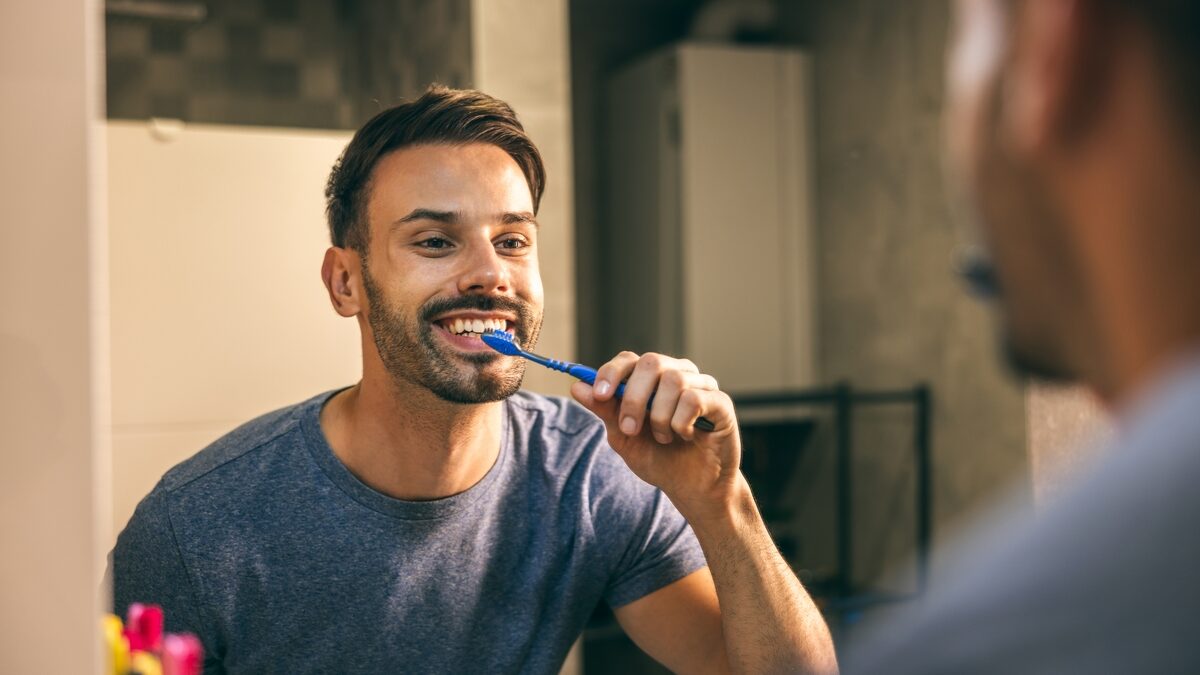
While the toothbrush takes great care of our teeth every day, it is never cleaned. And yet, it too deserves our full attention. Dr. Gérald Kierzek, emergency physician and medical director of True Medical, advises us.
Real nests of bacteria
Unsurprisingly, the toothbrush is an ideal hideout for bacteria. Indeed, after each use, it remains moist and retains food debris as well as micro-organisms. This warm and humid environment favors their proliferation. Added to this is the fact that toothbrushes are often stored in the bathroom, a place where many germs circulate, especially after using the toilet.
“Humidity promotes the rapid proliferation of bacteria – up to 10 million in 24 hours – as well as fungi. Conversely, dry air limits their development by making the environment less conducive to their survival,” confirms Dr Gérald Kierzek.
Over time, bacteria accumulate on the bristles of the brush and can cause various health problems: oral infections, cavities or gum disease. This is why it is recommended to clean your toothbrush regularly and replace it regularly, approximately every three months.
So how do you clean your toothbrush?
To minimize the presence of germs on your toothbrush, “simply rinse the head thoroughly under warm water after each use to remove toothpaste, saliva and food debris, gently rubbing the bristles with your fingers if necessary“, recommends the medical director of True Medical.
Afterwards, “once a week, soak your toothbrush either in a mixture of boiling water and two teaspoons of baking soda (leave it overnight), or in diluted white vinegar (warm water with a tablespoon of vinegar), then rinse it with cold water”, recommends Dr Gérald Kierzek.
For electric brushes, clean only the head (detachable) and wipe the handle with a disinfectant microfiber cloth.
Little bonus tip: To avoid mold, always place the toothbrush head up and vertically, in a ventilated holder, away from other brushes (min. 5 cm) and without a closed case at home.
Soaking the toothbrush: a key step not to be neglected
Two solutions confront each other here:
- 3% hydrogen peroxide (peroxide), which eliminates up to 99% of bacteria and viruses in 10 to 20 minutes. “To do this, immerse the brush head, bristles side down, about once a month, then rinse thoroughly“, explains the medical director of True Medical;
- Antiseptic mouthwash (like chlorhexidine) which acts in 20 to 30 minutes against oral microbes. “But it remains less effective on viruses and can be expensive with frequent use; it is therefore preferable to use it about once a week,” specifies the medical expert.
Some other good tips
Other simple actions can make a real difference on a daily basis to preserve your oral health.
- Replace it every 3 months, or as soon as the hairs become separated or worn, and systematically after an infection (flu, sore throat);
- Avoid sharing it and storing it above the toilet, where bacterial aerosols can be deposited;
- Opt, if necessary, for a UV brush holder or microwave disinfection (3 minutes per week), particularly in the event of recurrent infections;
- Also remember to change your toothbrush after a plane trip.
“Finally, be particularly vigilant in the event of a family epidemic (gastronomic, etc.): toothbrushes can become a vector of contamination when they touch each other in the bathroom”, concludes Dr Gérald Kierzek.