
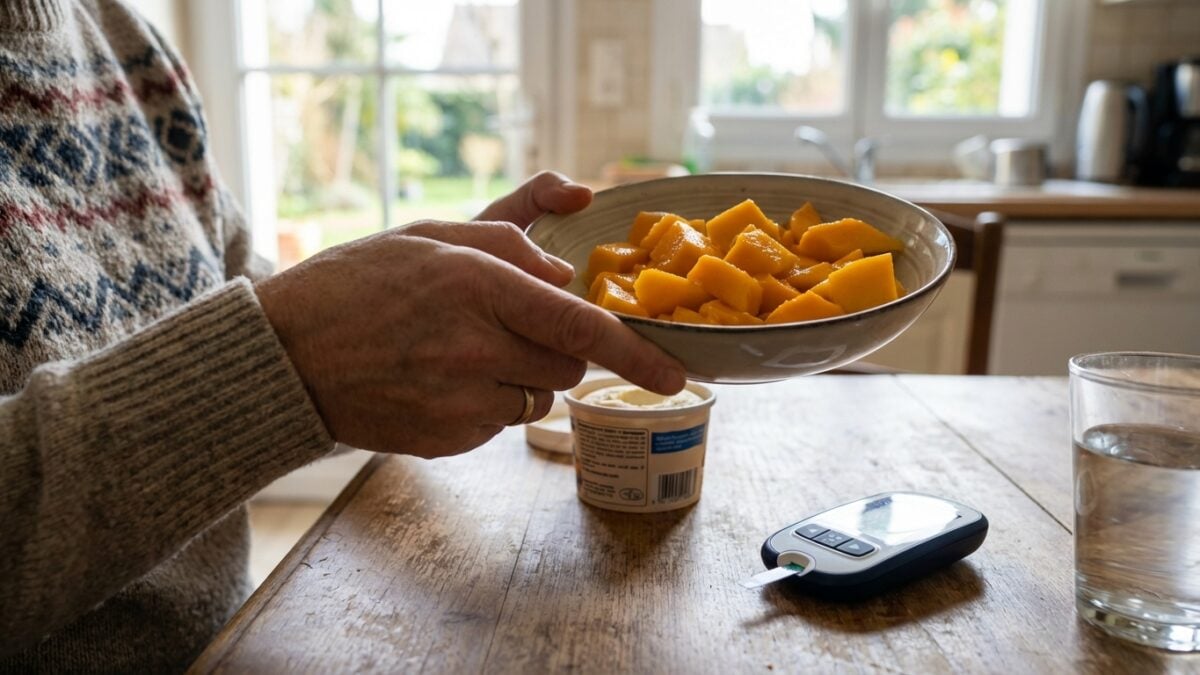
For many people affected by
diabetesthe instructions seem simple: avoid anything that tastes very sweet. In this red list, the
mango often comes first, placed in the same category as frozen desserts or candies, without nuance on the way in which it actually acts on the
blood sugar.
A new study carried out at the Illinois Institute of Technology, published in 2025, however, casts doubt on this reputation. Overweight or obese adults, with the onset of
prediabetesconsumed either two cups of
mango fresh per day, or a dessert such as Italian ice cream providing the same number of calories. The researchers observed surprising differences.
Mango and diabetes: a very sweet fruit that worries
On paper, the mango is enough to frighten anyone who watches his
blood sugar. One hundred grams of pulp provide approximately 55 kcal and 15 g of carbohydrates, including 14 g of sugars, with a glycemic index considered moderate, around 51 to 60, and a glycemic load of approximately 8 per 100 g.
In daily life, this profile is enough for many patients to classify the mango among the foods to avoid, sometimes on advice from those around you.
However, its sugars are integrated into a flesh rich in water, fiber and antioxidants, which limits peaks in
blood sugar compared to ice cream or a sugary drink.
Mango and diabetes: what the American clinical study reveals
The trial conducted by the Illinois Institute of Technology followed 48 adults aged 20 to 60, who were overweight or obese, with low-grade chronic inflammation and high fasting blood sugar. For four weeks, one group added two cups of
mango fresh per day to his usual diet, the other an isocaloric frozen dessert.
After a month, the group mango presented a insulin sensitivity significantly better: fasting insulin was lower and resistance indices, such as HOMA-IR, improved, as did pancreatic beta cell function, while no marked changes were seen in ice eaters.
“Mangoes can be a great addition to a diabetic diet, but they are not the only foods to offer these benefits.”explained Erin Palinski-Wade, a registered dietitian in New Jersey. At the same time, she recalls that “this fruit remains a carbohydrate.
Mango and diabetes: how to consume it without excess
Specialists recommend, for a person with
diabetes Or
prediabetesto stay on small portions of mango fresh, around 80 to 100 g, the equivalent of a portion of fruit providing around 15 g of carbohydrates, integrated into a balanced meal.
Combined with proteins or fats, natural yogurt or a few almonds for example, it leads to increases in
blood sugar softer; juices, smoothies or dried mangoes should be limited in people with fragile diabetes.