
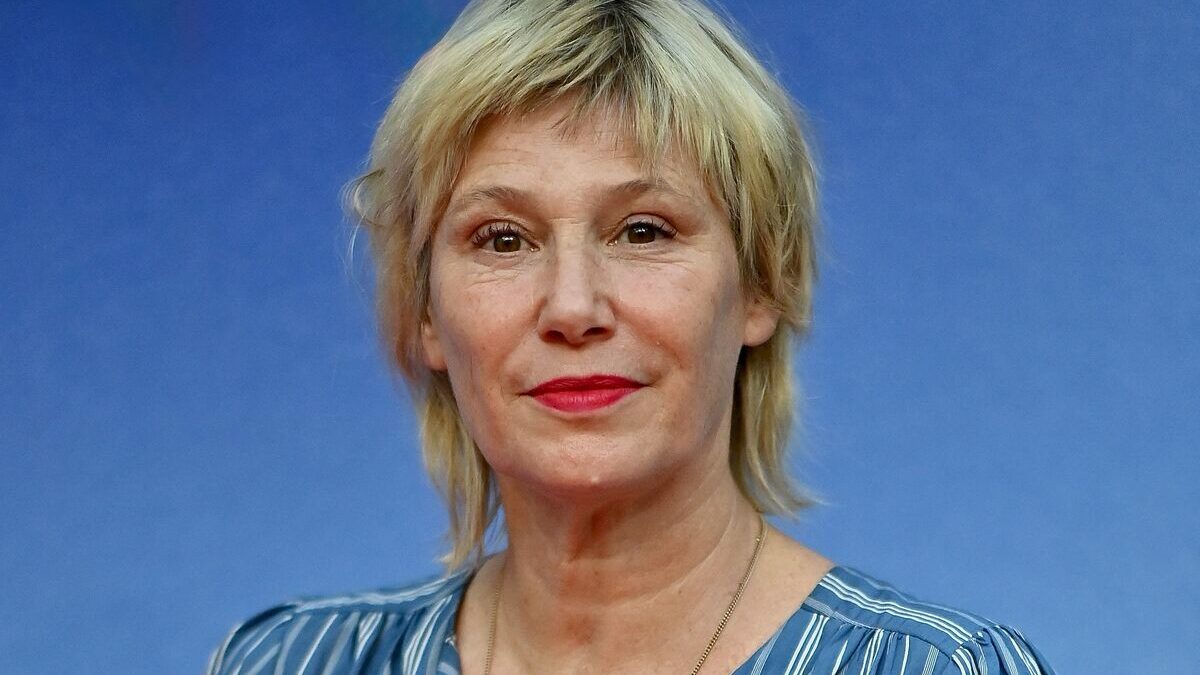
At 57, host Maïtena Biraben discovered she had an autism spectrum disorder. A revelation as late as it is shocking, which highlights the still frequent underdiagnosis of autism – particularly in women. Dr Bruno Falissard, psychiatrist, tells us more about this.
The host finally put words to her woes
It was on her own YouTube channel, called “Mesdames”, that Maïtena Biraben revealed the unthinkable: she has an autism spectrum disorder, high intellectual potential (HI) and ADHD (attention deficit disorder with or without hyperactivity).
She understood this “difference” during an Instagram live. On her Ladies account, an Internet user intervenes. She admits to being autistic and HPI. Everything then becomes clear: Maïtena Biraben recognizes herself in his words, and embarks on a vast quest. Very quickly, the pieces of the puzzle come together.
“I was shattered. Everything I read, everything I found in terms of information, told me, told me who I was. I caught a bus in the face“, admits the former presenter of the Grand Journal.
After 28 years of questioning herself, the author and producer finally understands her difficulties. Creating a bond, integrating, finding her right place: none of this was natural for her.
“I have been trying to understand what is wrong with me for 28 years. I have always, always, always, all my life, had the feeling of being different, of being apart. And over the years that have passed – not as a child, not as a teenager, but as a young adult and adult – I constantly had the feeling that I was unable to reach others. To get in touch”,
she explains.
A late diagnosis, which nevertheless constitutes for the host a starting point towards a new life… and better acceptance of herself. Because, for the majority of women, you will still have to wait: the diagnosis of ASD is generally made after the age of 40.
Autism spectrum disorders (ASD): late diagnosis, a painful reality
Before getting to the heart of the matter, Dr Bruno Falissard would first like to return to a key point: the weight of gender bias.
“In medicine, gender biases still remain marked. Certain pathologies are more associated with women, others with men. For example, migraines are underdiagnosed in men, just like heart diseases in women,” regrets the psychiatrist.
However, unsurprisingly, we also observe biases in the diagnosis of autism; where the womenare most likely underdiagnosed“, recognizes the doctor. “Differences between the sexes are observed very early. Some speak of a different biological impregnation between male and female fetuses, perceptible from birth. Added to this is social reinforcement from childhood: little girls are often expected to listen, while little boys are encouraged to explore and experiment.”
he explains.
Centers of interest also differ: in autistic boys, they are often associated with objects like trains, cars or fire trucks; in girls, they may focus on dolls or other socially valued objects, which makes their “obsessions” less visible.
“As adults, some autistic people also develop significant “compensatory strategies”, mobilizing a strong mental load to adapt socially. This makes, again here, their difficulties less visible”, says Dr Bruno Falissard. For example, a person who appreciates solitude will force themselves to socialize here to be “like the others”.
However, be careful not to fall into generalities: not everyone suffers from an autism spectrum disorder (ASD) simply because they are “different”.
“We all have peculiarities. Some people are hyperactive, others have difficulty moving or adapting.”
But few fall into the field of ASD or “autistic phenotype”. “The broadening of the notion of autism must also raise questions for us. confides the expert.
The spectrum is indeed very vast. On the one hand, we find people who cannot speak; on the other, very autonomous profiles. “This ties in with the notion of neurodiversity: we are all different.”
Autism spectrum disorders (ASD): what signs should really alert you?
To make a diagnosis, there must be a significant impact on daily functioning and life in general.
“Neurodiversity becomes particularly sensitive when it affects socialization. This is where differences can become visible or problematic,” explains Dr Bruno Falissard.
However, a few key signs can guide you: difficulty establishing or maintaining eye contact, difficulties socializing, a different relationship to sensoriality (unacceptable noises, difficult smells, etc.)… All these symptoms should prompt you to consult, especially when they are cumulative.
“But having certain autistic traits does not mean being autistic. These traits can exist in isolation, without constituting a disorder,” calls the doctor again.
Despite everything, the psychiatrist does not wish to condemn everyone in search of answers.
“Recognizing oneself in autism without actually being it is not necessarily problematic if it allows one to give meaning to one’s life. We live in a society marked by a strong injunction to normativity: one must be efficient, present on the networks, conform to high standards. In this context, being “a little different” can be difficult to live with”,
concludes the practitioner.
If in doubt, consider contacting a mental health specialist: only he or she will be able to answer your questions and offer you, if necessary, appropriate support.