
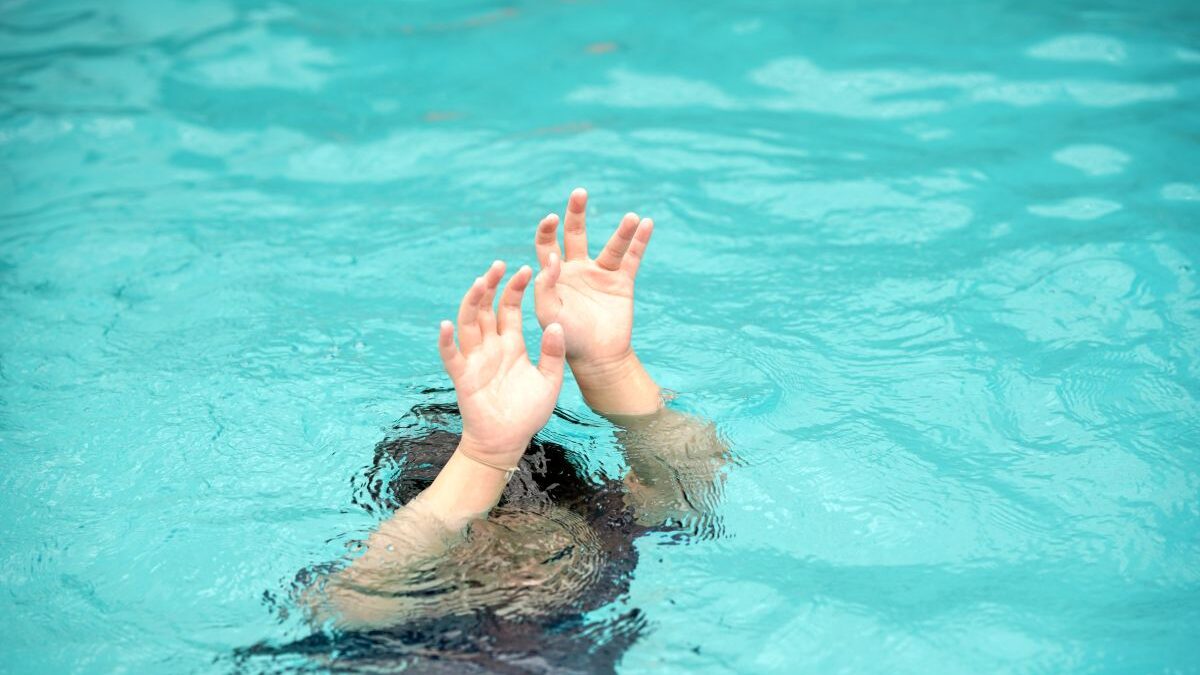
The accident happened around 5:30 p.m. in Gilbert, Arizona. Found unconscious in the family swimming pool, the child was immediately taken care of by emergency services.
A death noted after unsuccessful resuscitation
But despite intensive cardiac massages and extensive resuscitation procedures carried out on site and then at the hospital, the verdict fell at 6:20 p.m.: the child was declared dead.
His heart no longer beats, his breathing has stopped. However, around 11:30 p.m., the hospital staff noticed with amazement that the child was breathing again. A scenario that Dr. Frank LoVecchio, local emergency physician, describes as a “miracle”, while recalling that in medicine, ““You should never say never.”
Hypothermia: the brain’s unexpected shield
How can we explain this “return to life” after five hours of apparent clinical death? The key probably lies in water and body temperature. Dr. Gérald Kierzek, emergency physician and medical director of True Medical, explains this fascinating biological mechanism.
“Deep hypothermia drastically slows down cerebral metabolism. When the body temperature drops suddenly, the brain consumes much less oxygen, which extends the time during which it can survive without blood circulation. In other words: a frozen brain suffers less quickly than a brain at normal temperature.”
This cooling acts as a “pause” mode for the body.
A strict protocol: “Not dead until it’s hot“
In emergency medicine, drowning in cold water requires specific resuscitation rules that differ from classic cardiac arrest.
“Medical teams follow a well-known principle in emergency settings: ‘No one is pronounced dead until they are warm and dead.’ This protocol exists precisely because spectacular recoveries have already been observed after several hours of cardiac arrest in patients with severe hypothermia.“, specifies Dr. Kierzek.
He adds, however, that “several criteria must be met for hypothermia to really play its role“, emphasizing that in children, tolerance to the absence of oxygen (hypoxia) may be slightly higher.
The particularities of drowning in children
Unlike a sudden cardiac event, drowning is primarily a respiratory arrest. The vital prognosis depends on the speed of intervention. Dr. Kierzek reminds us that we should never trust the “inanimate” appearance of a victim.
“Drowning is first a hypoxic respiratory arrest, then sometimes a secondary cardiac arrest; resuscitation must therefore be started immediately“.
In case of cold water, resuscitation must be continued much longer than usual, because the slowed metabolism can leave an unexpected margin of survival until the patient is completely warmed up.
If the story of this little boy from Arizona ends well, it remains a statistical exception. An investigation is also underway to understand whether the protocols were perfectly followed during the initial observation. This extraordinary case must above all serve as a reminder: drowning is quick and silent. Human vigilance and securing water points remain the best weapons to avoid having to rely on a medical “miracle”.