
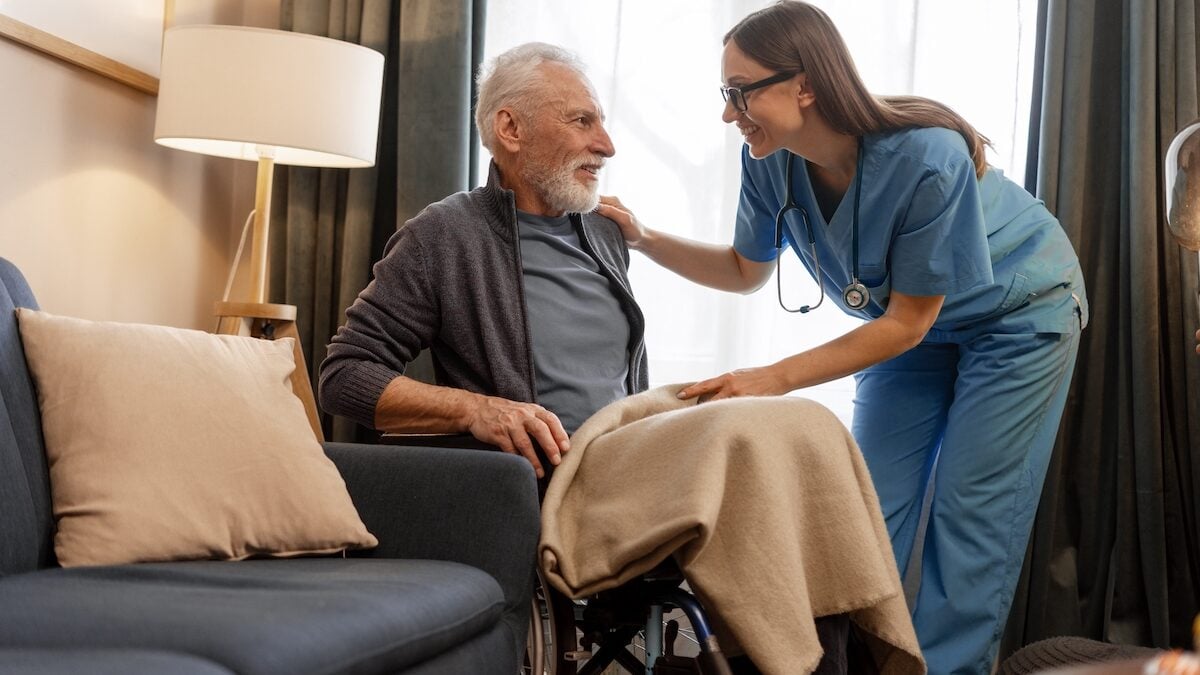
Behind the tensions over fuel lies an often invisible reality: an essential part of the health system relies on mobility. And this crisis, which could last, could well complicate the monitoring of many patients, unless drastic measures are taken.
Home care under pressure
Liberal nurses, home helpers, ambulance drivers… all travel the roads every day to provide sometimes vital care. But when refueling becomes complicated, or too expensive, this entire organization falters. “The impact on the medical world can be real and visible, especially for home care,” explains Dr. Gérald Kierzek.
“Nurses may have to reduce, consolidate or re-territorialize their rounds if fuel becomes difficult to access.“
Same thing for ambulance drivers who spend their day on the roads. In other words, professionals are trying to adapt… but at the cost of an already fragile balance.
Reorganized rounds, patients sometimes waiting
On the ground, the consequences are very concrete. Care does not disappear, but it changes form. Some visits are grouped together, others staggered. And above all, new demands become more difficult to absorb.
“As soon as we commit, we are obliged to follow patients. But I may refuse new patients… and the risk is that they will not find anyone”testifies a nurse on France Info.
Same concern among the paramedics. “If all ambulance drivers optimize their journeys, the most distant transports risk being penalized”alerted one of them in March on France Bleu. “This should not last, for patients first, and for the health of our businesses.”
Little by little, a form of sorting sets in, often implicit: we prioritize emergencies, to the detriment of the rest.
A real risk for certain patients
But if the situation were to persist, the consequences could go beyond simple logistical inconvenience.
The patients most at risk are those who depend on regular home care: elderly people, chronically ill people, convalescent patients, etc. For them, postponing a visit is never trivial.
“The risk is the breakdown of continuity of care”, emphasizes Dr. Kierzek. A delayed dressing, poorly administered treatment, insufficient follow-up… and sometimes complications appear.
“Emergency situations, in principle, remain a priority. But if the entire system is under tension, delays can lengthen” he predicts.
Limited emergency measures at the moment
Faced with these tensions, devices can be activated locally. During previous shortages, certain prefects set up priority access to service stations for caregivers, or special lines, upon presentation of proof.
But for now, the first national responses are mainly targeting the transport or agriculture sectors. Health professionals are still waiting for more specific measures.
“Aid could be considered if the situation continues”however, notes Dr. Kierzek. In the meantime, on the ground, many feel like they have to fend for themselves.
Be informed and anticipate: the right reflexes to plan your follow-up
In this uncertain context, anticipation becomes essential, both for caregivers and patients.
It is therefore recommended to:
- Monitor prefectural decrees, which can change quickly;
- Check the existence of priority lines for health professionals;
- Follow local and health information;
- Anticipate your care when possible.
“For patients, the most important thing remains
keep in touch with their caregivers. A simple exchange can make it possible to adapt appointments and avoid critical situations.”
A revealing crisis
Beyond the shortage itself, this situation highlights a deeper fragility: that of a home care system which depends heavily on material conditions such as fuel. For the moment, no massive rupture is to be feared. But if the crisis were to last, it could well permanently transform access to care, particularly for the most vulnerable.
Because a full tank of gas is not just a full tank of gas. It is also a whole chain of care that holds together.