
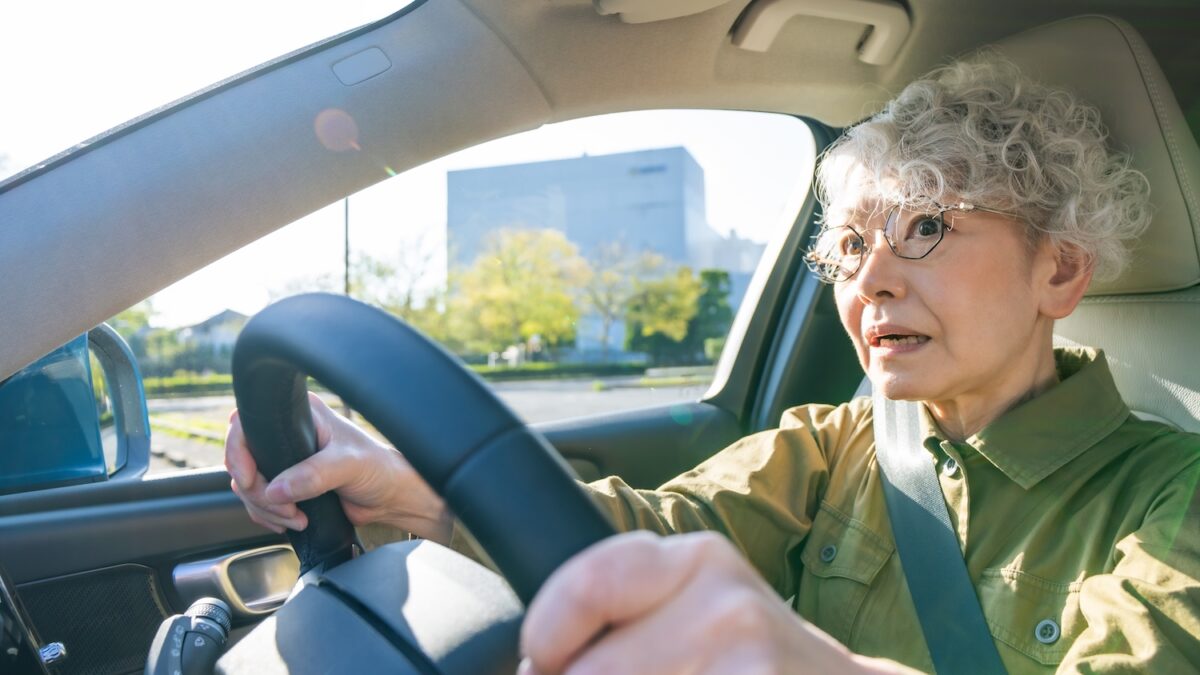
According to a recent “OpinionWay Survey for AsnaV”, the loss of autonomy linked to visual disorders affects a significant proportion of those over 65. Between fatalism, lack of monitoring and under-use of aid, the visual health of seniors is now emerging as a major — and still underestimated — public health issue.
See less, live less? A loss of autonomy that is still invisible
The aging of the French population is reshuffling the public health cards. Before long, more than one in four French people will be over 60 years old. And with age, vision wavers.
The OpinionWay survey for the National Association for the Improvement of Sight (AsnaV), conducted in February 2026, puts figures on a feeling that is often ignored: 14% of people aged 65 and over — or more than 2 million French people — report a loss of autonomy or a limitation of activities linked to their vision.
Behind this percentage, concrete situations. Going down stairs becomes uncertain. Watching TV makes you tired. Driving at night becomes uneasy, or even impossible.
And yet, seeking care remains late. Only 33% of seniors consult before symptoms appear. Nearly a quarter of them believe they do not even need to consult further.
A paradox, when 45% say they consult spontaneously for a simple routine visit. As if prevention was still struggling to find its place in visual health habits.
Silent transition: discomfort sets in gradually, until it becomes debilitating.
When the light dazzles and the night encloses
Age-related visual problems are not just a simple decline in acuity. They are more diffuse, more insidious.
Even equipped with glasses or contact lenses, 36% of seniors continue to experience difficulties. In particular: a reduction in sensitivity to contrasts, which makes reliefs less readable and obstacles more difficult to anticipate.
Light, too, becomes an adversary. 77% of people surveyed say they are bothered by excess brightness. And when daylight fades, the markers fade: 68% encounter difficulties driving at night, compared to 28% during the day.
In addition to these functional disorders, there are well-identified pathologies — cataracts, age-related macular degeneration (AMD), glaucoma. Frequent illnesses, often progressive, but for which treatments or stabilization strategies exist, provided they are diagnosed in time.
The seesaw is there: between discomfort perceived as “normal” and a pathology that requires treatment, the border remains blurry for many.
The trap of fatalism: solutions exist, but remain ignored
Why, then, does this loss of autonomy persist, despite medical and technical progress?
The answer lies partly in an insidious phenomenon: fatalism.
“When an elderly person can no longer see, there is often fatalism. She thinks it’s old age and nothing can be done. However, even in the absence of curative treatment, solutions exist,” explains Véronique Morin, orthoptist and optician, scientific and educational manager of AsnaV.
This fatalism has very concrete consequences. According to the study, 86% of the seniors concerned do not benefit from any additional help for their optical correction.
However, there are many levers: surgical interventions, orthoptic rehabilitation, specific visual aids, adaptation of housing… So many devices capable of restoring, at least in part, autonomy and quality of life.
But you still have to access them, know them, and above all, not give up before even trying.
Preserve sight, preserve the link to the world
Beyond the numbers, the question of vision touches on something essential: the link to the world. To see is to move, to read, to recognize a face, to maintain a social life.
When eyesight declines, interactions, self-confidence and sometimes cognitive abilities also deteriorate.
Strengthening screening, encouraging regular monitoring and combating preconceived ideas then become priorities. Not to promise perfect vision for everyone, but to prevent sometimes avoidable problems from leading to irreversible isolation.
In an aging society, visual health can no longer be relegated to the background. It is already a silent marker of autonomy — and perhaps, tomorrow, one of the great collective challenges of aging.