

Diaper rash is a common condition in infants, often misunderstood by parents. Discover the distinctive signs of this skin irritation, how to differentiate it from a yeast infection, and effective methods to quickly relieve your baby.
Diaper rash in babies: a common but often misunderstood problem
Diaper rash is a common concern among new parents, often prompting worried visits to the doctor. A recent episode of XXL Kindergartensbroadcast on 2026-04-02, Dr Jules Fougère, pediatrician (@ped.urg) addresses this delicate subject by explaining the causes, symptoms, and fundamental differences with other skin conditions such as mycosis.
How to recognize diaper rash?
Diaper rash, or irritant diaper dermatitis, manifests itself as redness and irritation of the areas covered by the baby’s diaper. It affects nearly 10% of infants, particularly between 6 and 12 months. As explained in the video, “It’s just an irritant dermatitis of the seat, that is to say that the skin is attacked.. Humidity, friction and contact with stools and urine (or even diarrhea) promote these burns.
This irritation is most visible on convex areas – the buttocks, around the genital area, and the thighs – but generally spares the folds of the skin, a crucial distinction from fungal infections. The health education segment illustrated with a “W” photo clarifies these nuances for viewers.
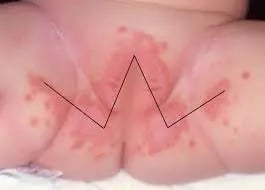 © Doctor Audrey Merckx
W-shaped lesions characteristic of diaper rash.
Differentiate erythema from mycosis
A common mistake is to confuse diaper rash with a yeast infection. Mycoses, mainly affecting the folds of the skin and often presenting the appearance of small plaques with clear edges and satellite lesions, are much less common. As the specialist points out, “fungal infections are quite rare.. Knowing these distinctions is essential to applying the appropriate treatment and avoiding worsening of symptoms.
How to quickly relieve diaper rash?
Preventive measures and remedies are simple but require diligent application. First, frequent diaper changes are recommended to minimize exposure to moisture and irritants. Using highly absorbent diapers and applying protective ointments can also provide an effective barrier against irritation. In the event of more severe erythema, a medical consultation may be necessary for more specific treatments.
In conclusion, although diaper rash can be stressful for parents, with proper understanding and care, this condition can be effectively managed.
There are a variety of creams such as Bepanthen, Avène Cicalfate, Mitosyl, Mustela, Klorane, and Uriage to soothe your baby’s diaper rash. Do not hesitate to seek the advice of your pediatrician or pharmacist to choose the cream best suited to your child.
See a doctor if your child’s rash is severe or gets worse despite treatment. It is also important to seek medical attention if the rash develops blisters, boils, pus or discharge.