
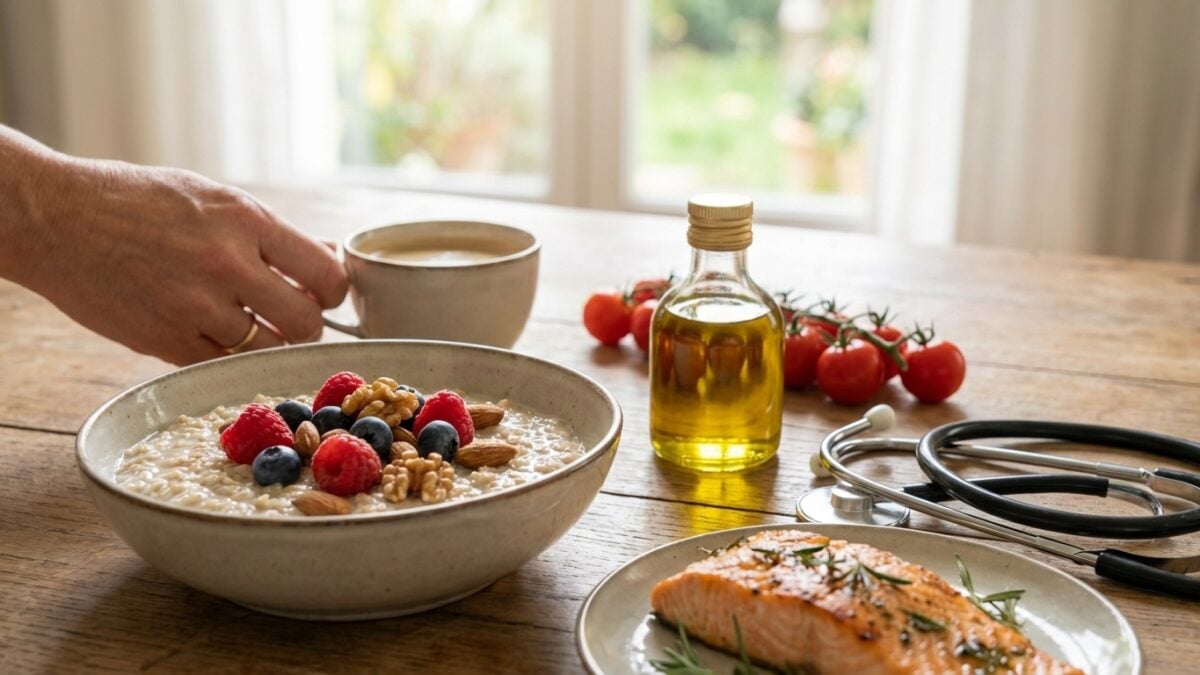
The fight against cholesterol too high often occurs at breakfast time. To limit the risk of heart attack or stroke, cardiologists also emphasize another more discreet enemy:chronic inflammation blood vessels.
Faced with these two threats, some doctors no longer look only at medications. But rather what we put in our bowl every morning.
Several cardiologists place the same food at the top to protect the heart:oats.
Rich in soluble fibers called beta-glucans, it helps to reduce
LDL cholesterol. All this by calming the inflammation that weakens the arteries. And it fits very easily into a breakfast bowl.
Why cardiologists rely on oats against cholesterol and inflammation
L’oats provides a remarkable amount of
soluble fiber. These fibers behave a bit like a sponge: they bind to cholesterol in the intestine, then carry it into the stools before it passes into the bloodstream. By acting mainly on LDL, this mechanism helps prevent atherosclerosis, heart attacks and stroke.
Beyond cholesterol, oats act oninflammation background.
“Whole grains like oats provide complex carbohydrates that help maintain stable blood sugar levels, avoiding inflammatory spikes that can damage blood vessels over time”explained Rosie Carr, dietitian, to the British site Get Surrey.
How many oats should you eat each day to help your heart?
At least two tablespoons of oats per day are necessary to influence the lipid profile. This portion remains modest in calories, especially if you choose plain flakes without added sugar. The goal is regularity: a little oatmeal every morning is better than a large portion every now and then.
“I often suggest overnight oatmeal or porridge with berries as an easy everyday option.”said Dr. Jay Shah, Hilo cardiologist and medical director. You can also mix the flakes with natural yogurt, sprinkle them with red fruits and a few nuts for a complete breakfast.
Foods that further enhance the protective effect of oats
Around oats, cardiologists describe a real protective “combo”. “I recommend including foods like salmon, which is rich in omega-3 fatty acids that can help reduce inflammation and support healthy cholesterol levels.”said Dr Jay Shah. For example, a portion of around 85 g of fatty fish two to three times a week, alternating between grilled salmon, mackerel or sardines.
Extra virgin olive oil and tomatoes complete the picture. “Extra virgin olive oil is rich in monounsaturated fats and powerful antioxidants called polyphenols that reduce oxidative stress and inflammation.explained Rosie Carr.
“Tomatoes are a food rich in lycopene, and lycopene is a powerful antioxidant that reduces inflammation and prevents cholesterol oxidation,” she concluded.