
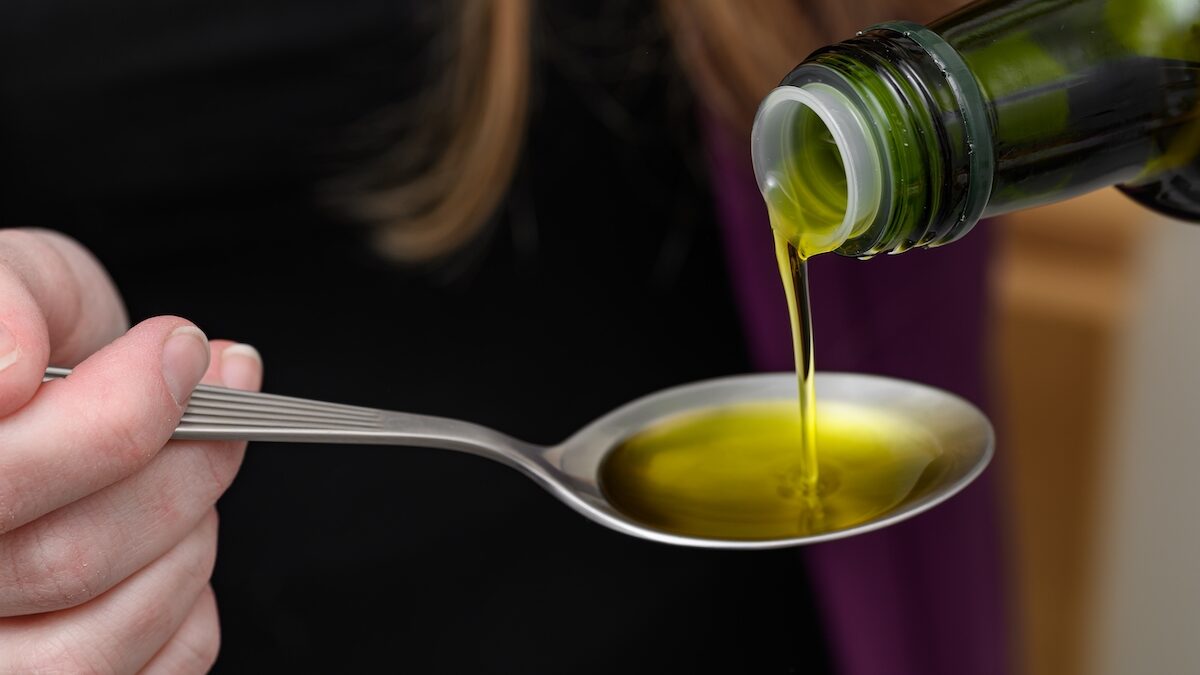
If olive oil is so popular, it is no coincidence. Rich in monounsaturated fatty acids, vitamins and polyphenols, it helps protect the heart, regulate cholesterol and support transit. It is also part of a diet favorable to weight management.
Each oil has its characteristics to respect
But these benefits are based on an essential point: its nutritional quality… which can unfortunately deteriorate during cooking.
As dietician-nutritionist Alexandra Murcier reminds us:
“Each oil has a smoke point, that is to say a temperature at which it begins to smoke. When we exceed this point, the fatty acids degrade and oxidize.”
And the consequences are not trivial: “Potentially toxic compounds are formed, notably aldehydes. We also lose some of the antioxidants, and the taste is altered.”
Why you shouldn’t overheat olive oil
Not all oils react the same way to heat. Extra virgin olive oil, the most nutritionally interesting, is also more sensitive.
“Extra virgin olive oil has a smoke point between 160 and 190°C, while refined olive oil goes up to 200-240°C.” our expert reacts.
Concretely, this means that it cannot withstand overly intense or prolonged cooking. When it is overheated, it can cause, as mentioned above:
- A loss of its nutrients;
- Oxidation of fats;
- The formation of harmful compounds.
With long-term effects on health. “Overheating can lead to inflammation, oxidative stress, and potentially an increased risk of cardiovascular disease.”
Cooking methods to avoid (and therefore the foods concerned)
In reality, it’s not so much the foods that pose a problem… but the cooking methods. But certain dishes, by their preparation, are particularly concerned.
- Fried foods: fries, fritters, breaded fish.
This is the most obvious example. Frying involves very high temperatures, well beyond the smoke point of olive oil. “You should avoid frying with olive oil and cooking for very long periods at high temperatures. confirms our expert; - Grilled meats. Searing a steak over high heat with olive oil is not ideal. At these temperatures, it burns quickly;
- Wok-style stir-fried dishes. Wok cooking also requires very high and rapid temperatures. Olive oil is not suitable for this;
- Scrambled eggs. Here, it’s not just a question of temperature, but also of texture and taste. The olive oil brings too strong a flavor and breaks the creaminess. Butter is often more suitable for a creamy result.
So, how to use olive oil correctly?
Should we therefore ban olive oil from cooking and reserve it for salads? No way.
It remains excellent for:
- Gentle cooking;
- Vegetables over moderate heat;
- Seasonings;
- Stewed dishes.
The idea is not to deprive yourself of it, but to use it at the right time and in the right way. Used well, it enhances dishes and protects the body. Used incorrectly, it loses all its interest. In cooking as in nutrition, everything is a matter of temperature… and common sense.