
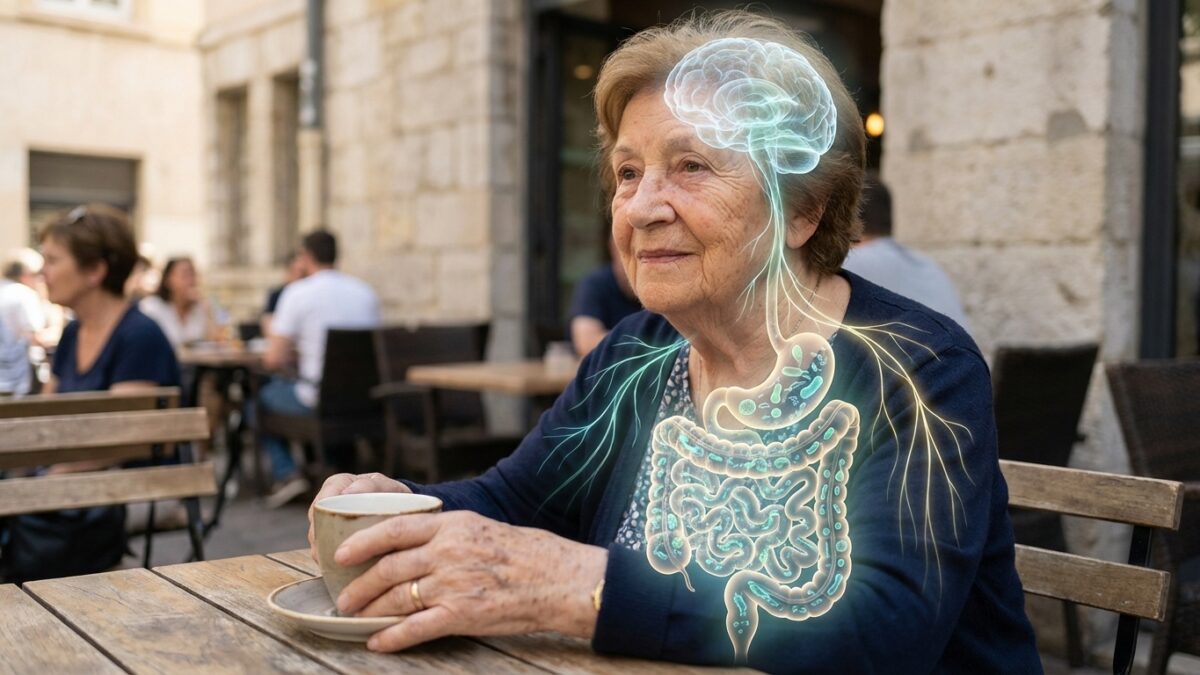
Where does it really begin? cognitive decline related to age? In neurons, most people respond spontaneously. Recent work is shaking up this reflex: the intestine, its billions of microbes and the signals they send to the brain seem to weigh much more than we thought.
The intestine, this invisible conductor of memory
Several teams now describe a real gut-brain axis, where the
intestinal microbiota continuous dialogue with the nervous system via the vagus nerve, neurotransmitters and fatty acids. Based on clinical trials and animal experiments, they suggest that by stimulating good bacteria through targeted interventions, it would be possible to slow down memory loss. Everything is played out in this discreet dialogue.
The intestine, this invisible conductor of memory
The microbiota forms an ecosystem of more than 1,000 species which, with age or a poor diet, can shift towards inflammatory dysbiosis (too little diversity of the microbiota) or an imbalance. This drift weakens the barrier that protects the brain and promotes the accumulation of toxic proteins linked to Alzheimer’s. An analysis of 15 clinical trials involving 4,275 adults aged at least 45 with memory disorders showed that interventions targeting the microbiota (diet, probiotics, supplements, fecal microbiota transplantation) improved memory, executive functions and overall cognition, especially in mild stages.
Diets and probiotics, why everything depends before the advanced stages
The Mediterranean and ketogenic diets, for example, have reshaped the microbiota by increasing the production of short-chain fatty acids and GABA, a calming messenger for the nervous system, while reducing brain inflammation. The authors note that these approaches provided clear benefit when cognitive decline remained moderate but little effect in patients with advanced Alzheimer’s disease, emphasizing the question of when is the right time to act.
72 seniors, twins and a disturbing clue about memory
A randomized trial carried out in 72 people aged 63 to 83, organized into 36 pairs of twins, tested a very concrete strategy: all practiced resistance exercises for 12 weeks and took branched chain amino acids (BCAA), but only one in two twins also received a prebiotic based on inulin and fructo-oligosaccharidesthe other a placebo. The prebiotic did not improve muscle strength, but it did lead to a significant gain in cognitive performance compared to the placebo, particularly on a visual memory test considered to be an early marker of Alzheimer’s disease.
Bifidobacterium, these “allied” bacteria directly linked to cognitive performance
On the microbial level, the researchers observed a clear increase inActinobacteria and above all
Bifidobacteriumbacteria often presented as “gut friendly”, correlated with better cognition scores. These microbes produce short-chain fatty acids that nourish the intestinal wall, modulate immunity, and can influence the brain via the vagus nerve and digestive hormones, providing a plausible mechanism for the prebiotic’s effect.
In mice, a specific bacteria that accelerates brain aging
In mice, a study identified a bacteria from the aged microbiota, Parabacteroides goldsteiniiwhich makes more medium-chain fatty acids. These molecules activate intestinal immune cells via the GPR84 receptor, triggering the release of IL-1β, an inflammatory cytokine that disrupts the sensory neurons of the vagus nerve connected to the hippocampus, a key region for memory. Young mice receiving an “old” microbiota then develop the memory performance of old animals, while the deletion of the microbiota slows the decline.
Targeting a single bacteria, the path that could reverse the decline
By precisely targeting this pathway, a bacteriophage directed against P. goldsteinii, or even stimulation of the vagus nerve with the CCK hormone or GLP-1 receptor agonists, made it possible to restore a memory close to that of younger mice in already declining animals.
Future studies will have to clarify to what extent this type of strategy, transposed early on in humans, will really be able to slow down cognitive degradation. But the idea that memory occurs only in the brain is beginning to falter. Behind still discreet mechanisms, the intestine appears to be a key player, capable of accelerating or slowing down cognitive decline depending on its balance. A decisive question now remains: how to act early enough to transform this invisible dialogue into a real lever for prevention?