
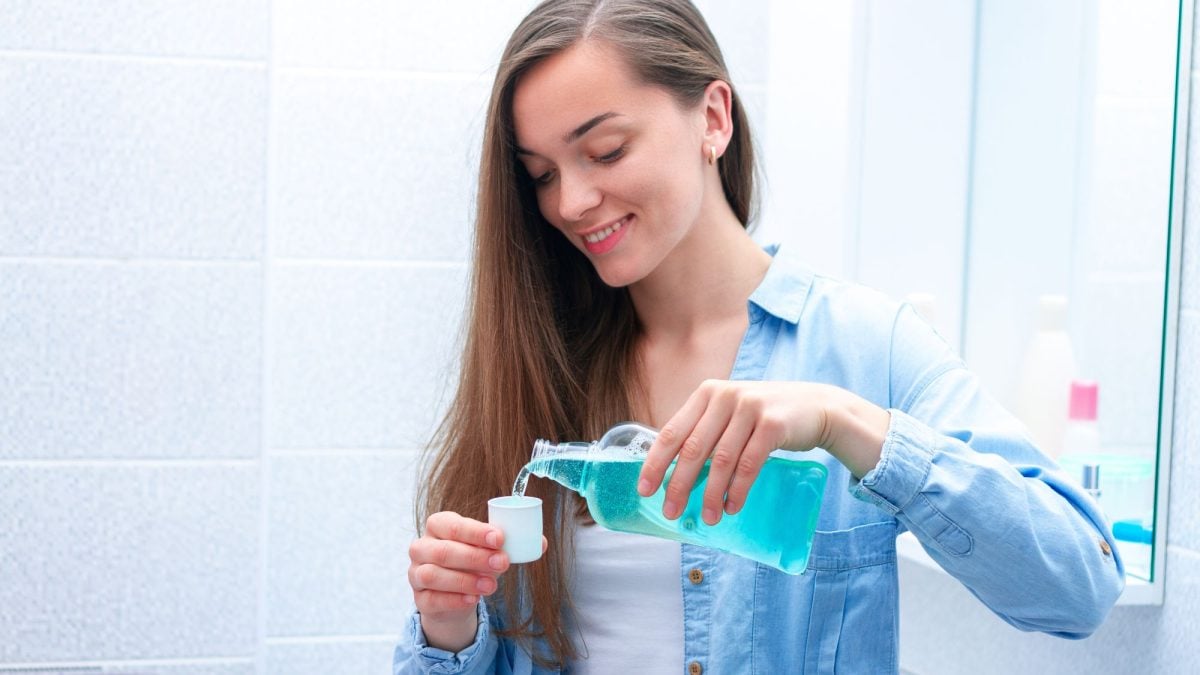
To have fresh breath, slow down the formation of cavities or reduce dental plaque, some people turn (in addition to brushing) to the use of mouthwash.
But you must remain cautious about its use: certain bad habits can in fact reduce its effectiveness or harm the bacterial balance in the mouth. Here are five, according to Dr Tarun Nagpal, dentist interviewed by The Sun.
Avoid using mouthwash immediately after brushing
One of the most common mistakes is using mouthwash immediately after brushing your teeth. According to Dr Tarun Nagpal, this practice is harmful because it eliminates the concentrated fluoride present in toothpaste. Result: this reduces its ability to protect tooth enamel. Instead, the dentist advises using the mouthwash “before brushing or at another time of the day, such as after meals.”
Do not eat or drink immediately afterwards
Some people eat immediately after using the product. However, according to Dr. Nagpal, you have to wait at least 30 minutes. “For mouthwashes containing fluoride, refrain from eating or drinking for at least 30 minutes after use to allow maximum effectiveness.”.
Do not use it excessively
For its freshening effect or its ability to eliminate bad breath, many people use mouthwash excessively. But be careful, warns the dentist, because these products, which often contain alcohol, can unbalance the oral bacterial flora. “This can potentially lead to dry mouth, oral thrush, or other problems.”
In addition, according to the expert, there is no definitive link established between the use of mouthwashes and the appearance of cancers, but he recommends choosing an alcohol-free formula, to minimize any risk. Advice which also applies to pregnant women, as alcohol has the capacity to penetrate the mucous membranes of the mouth.
Opt for therapeutic mouthwashes rather than cosmetic ones
Not all mouthwashes are created equal. There are two categories:
- Cosmetic mouthwashes, which temporarily mask bad breath but do not treat the underlying causes;
- Therapeutic mouthwashes, which contain active ingredients such as fluoride, antimicrobials or moisturizing agents.
“Therapeutic mouthwashes contain active ingredients like fluoride to strengthen teeth, antimicrobials to reduce plaque and gingivitis, or agents to combat dry mouth.” confirms the expert, who recommends favoring them.
Always follow the instructions for use
Certain antiseptic mouthwashes, particularly those containing chlorhexidine, should not be used for too long a period, as this risks staining the teeth.
“These stains are usually superficial and can be removed by professional cleaning. But it is essential to follow the instructions for use and consult a dental professional before prolonged use of such products” he concludes.
How to choose the right mouthwash?
The choice of mouthwash depends on the specific needs of each person.
- For cavity prevention, an alcohol-free mouthwash containing fluoride will strengthen your enamel and prevent cavities;
- For the health of your gums, an antibacterial mouthwash containing cetylpyridinium chloride or chlorhexidine digluconate can reduce your dental plaque and your risk of gingivitis;
- To combat dry mouth, use a mouthwash containing xylitol, which will prevent this effect.
Finally, Dr. Nagpal recommends consulting your dentist “to determine the most appropriate mouthwash for your specific oral health needs”. Without forgetting that the solution never replaces good tooth brushing.