
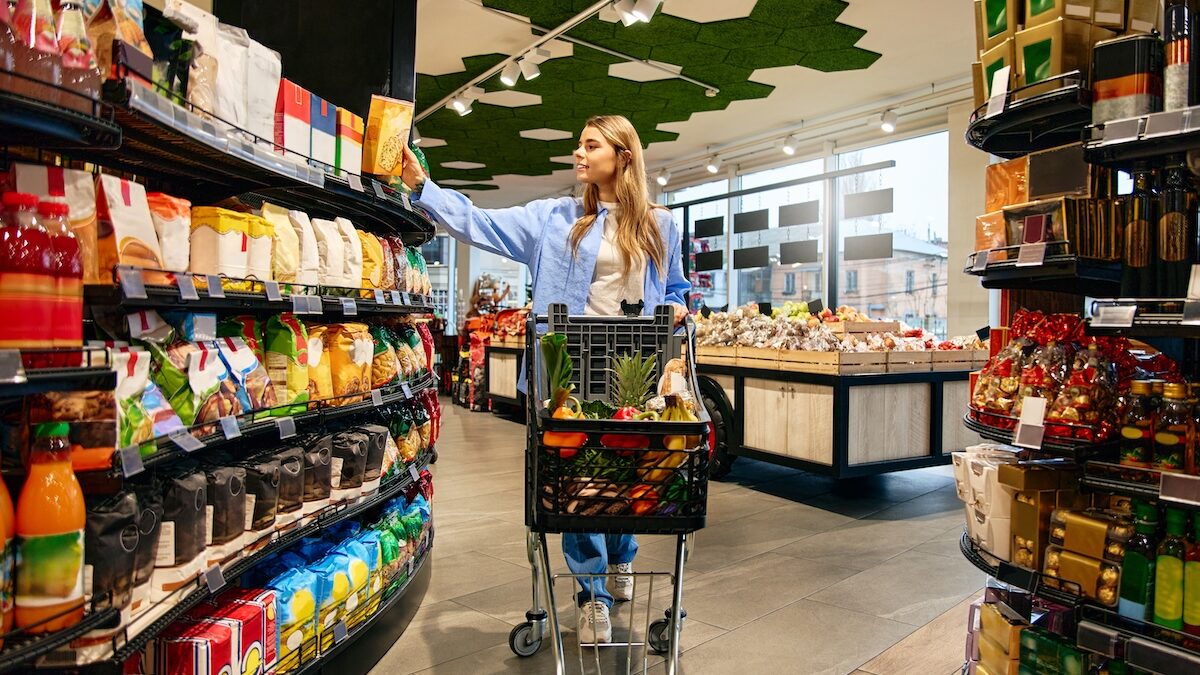
Once again, you come home with a little feeling of guilt: your shopping that you wanted to be minimalist has turned into a little more substantial purchase, of items that you didn’t even think you needed. As clinical psychologist Amélie Boukhobza rightly summarizes: “The classic…! We go for two or three things. We come out with a full bag.”
If it’s any reassurance, you’re not alone. This phenomenon, far from being anecdotal, affects the vast majority of consumers. And above all, it is not simply a matter of a lack of will. In reality, it is explained by a series of well-established psychological mechanisms.
When shopping becomes a mental trap
Shopping seems to be a banal, almost automatic act. However, it constantly mobilizes our brain, our emotions… and our flaws.
Hunger, first of all, plays a major or even “primary” role in your shopping.
“Going shopping on an empty stomach is already skewing the game.”explains Amélie Boukhobza. “We want everything. Everything seems necessary.”
In this state, the brain no longer seeks to respect a list, but to respond to an immediate need. Result: products suddenly become more attractive, and impulsive purchases multiply. But even without hunger, the store environment can be enough to tip our intentions.
The supermarket, a perfectly orchestrated field
Especially since the shelves are not organized randomly. Everything is designed to stimulate desire.
“As long as the rays are well made… then it becomes complicated”, underlines Amélie Boukhobza. “Some stores are formidable. At Grand Frais for example, personally everything makes me want it. We no longer look, we already plan what we could eat.”
Colors, lighting, arrangement of products, sometimes even smells: everything is designed to trigger what we call mental projections. We no longer simply see a product, we already imagine the pleasure it will provide. And this is precisely what takes us out of the initial framework.
The invisible trap of the “good deal”
Promotions further reinforce this phenomenon. When faced with a reduction, our brain focuses on the potential savings rather than the actual need.
“Faced with LA” good deal, you never know… if you missed out? A little supermarket version of FOMO“, describes Amélie Boukhobza. “So we take it. Even without needing it.”
This feeling of “missing out” pushes you to buy not out of necessity, but to avoid future frustration. And there again, the basket fills up… often unnecessarily.
The fear of missing out, a deeply rooted reflex
Behind certain purchases there is also a more diffuse fear: that of not having enough. Particularly right now.
“There can be the fear of missing out. Not having enough. So we anticipate, we fill up, we stock up. That reassures, in the moment”, explains the psychologist.
This reflex can be linked to past experiences, personal or collective. Or even currently when the geopolitical context may raise fears of shortages. The brain seeks to secure the future, even when it is not necessary. Buying then becomes a form of protection.
Stress, fatigue… and “comfort” purchases
Finally, our emotional state also strongly influences our decisions. “Stress also plays a key role. When we are tense, tired, saturated, the brain looks for a quick way out”analyzes Amélie Boukhobza.
In this context, buying becomes a simple and immediate response. “Buying is simple. It’s immediate. It gives the impression of taking back control. Like a little shoot”
explains the expert.
This mechanism relies on dopamine, the neurotransmitter of pleasure and reward. But this effect is short-lived. “A few seconds where it feels good. Except it doesn’t last, it goes away. And you have to start again to get the same feeling again.”
A lack, yes, but of what?
Ultimately, these excessive purchases are not only linked to dietary needs. “So we go home, we tidy up, and we wonder why we took all this”observes Amélie Boukhobza. “The subject is ultimately not a lack of food, it is a lack which speaks of something else.”
This “too much” in the basket can sometimes reflect an emotional need, mental fatigue or a search for comfort.
How to avoid filling your basket without realizing it?
Good news, however, for all those who are self-conscious: when we become aware of all these mechanisms, it is still possible to regain control with a few simple reflexes, without falling into frustration.
- Even before leaving, take the time to eat something can make a real difference. Shopping on a full stomach can significantly reduce impulsive desires and allow you to approach the shelves with more perspective;
- Another useful reflex is totake a look at what you already have at homes. Checking your refrigerator and cupboards not only avoids double purchases, but also allows you to better plan your meals and limit waste;
- The shopping list also remains a valuable ally, provided you really stick to it. It takes a little practice, but the more you get used to it, the more it becomes a reliable reference point in the face of temptations;
- Finally, slow down the pace
while shopping can help. Taking a few seconds before adding an unplanned product, or even deciding to put it in the basket only at the very end, often allows you to distinguish a real necessity from a simple passing desire.