
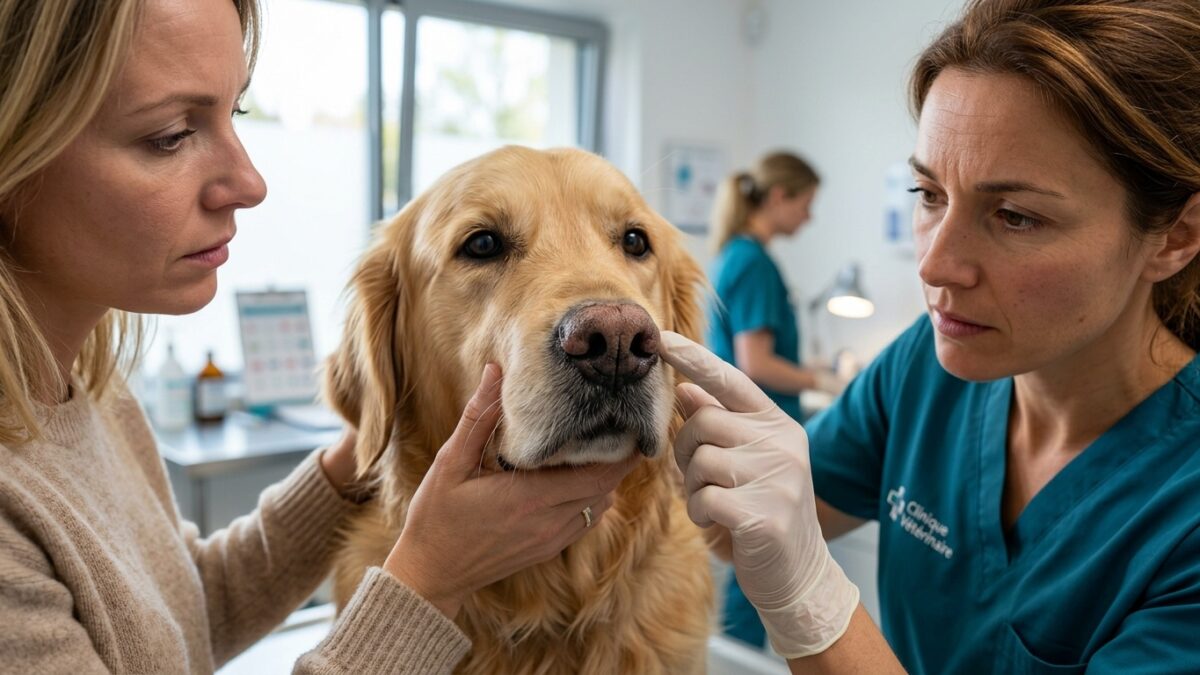
The dog’s nose is often the first place that owners touch for reassurance. Cold, wet, shiny: this little tip of the nose reassures almost as much as an examination at the veterinarian. However, trusting only this index can lead to false certainties. And the opposite also exists, which makes observation more difficult than it seems.
There dog’s nose nevertheless remains a valuable barometer. A key organ of its extraordinary sense of smell, it captures the pheromones of other animals, helps it “touch” its environment and filters the particles that enter its nasal cavities. Its glands produce mucus, very useful for trapping odors and helping to regulate body temperature. It is this mix of roles that turns it into an indicator to watch closely.
Dog’s nose: what does a healthy nose look like?
In a healthy dog, the nose is generally cold, wet and shiny. The mucus it secretes helps to better capture odors and slightly moisten the surface. A slightly drier nose when you wake up, after a nap in the sun or near a radiator, remains common. Certain breeds with flat snouts, such as brachycephals, also naturally have a less humid nose.
It also happens that the nose appears warmer after intense play, a long walk or a stressful moment, for example in the veterinarian’s waiting room. As long as this change remains brief and the dog maintains usual behavior, the alert is not immediate. A normal nose does not guarantee the absence of disease, just as a slightly dry nose does not necessarily mean a sick dog.
Five signs in the dog’s nose that should really alert you
A first signal is the dry truffle permanently. Air that is too hot or dry can dry out the surface, but lasting dryness, combined with decreased appetite, lack of energy or repeated whining, can herald dehydration, heat stroke or certain autoimmune diseases and allergies.
Another important sign, the hot truffle over time: when the body temperature exceeds 39.5°C, the dog has a fever, while normal is around 37.5 to 39°C. If this heat is accompanied by apathy or digestive problems, a rapid consultation is necessary.
Added to the irregular nosewhich has crusts, cracks, cracks or swelling. This picture is often painful and may suggest hyperkeratosis, dermatosis or a foreign body such as a spikelet.
Another sign, the runny nose : a simple damp veil is normal, but a thick, yellow, green or bloody discharge indicates an infection, an allergy or irritation by perfumes or smoke.
Finally, a color change sudden, especially if it is accompanied by other symptoms, should motivate a visit, even if progressive pinking with age, winter or in breeds like the Labrador or the Husky remains common.
Nose and general condition of the dog: when to consult the veterinarian?
The nose acts as a handy indicator, but it should always be interpreted along with the rest of the chart. Vigilant owners also monitor appetite, thirst, energy, breathing and possible digestive or respiratory problems. A clear change in nose associated with listlessness, loss of appetite, difficulty breathing or unusual behavior warrants at least a call to the clinic. If in doubt, it is better to describe these precisely. clinical signs to the vet rather than waiting for the situation to get worse.