
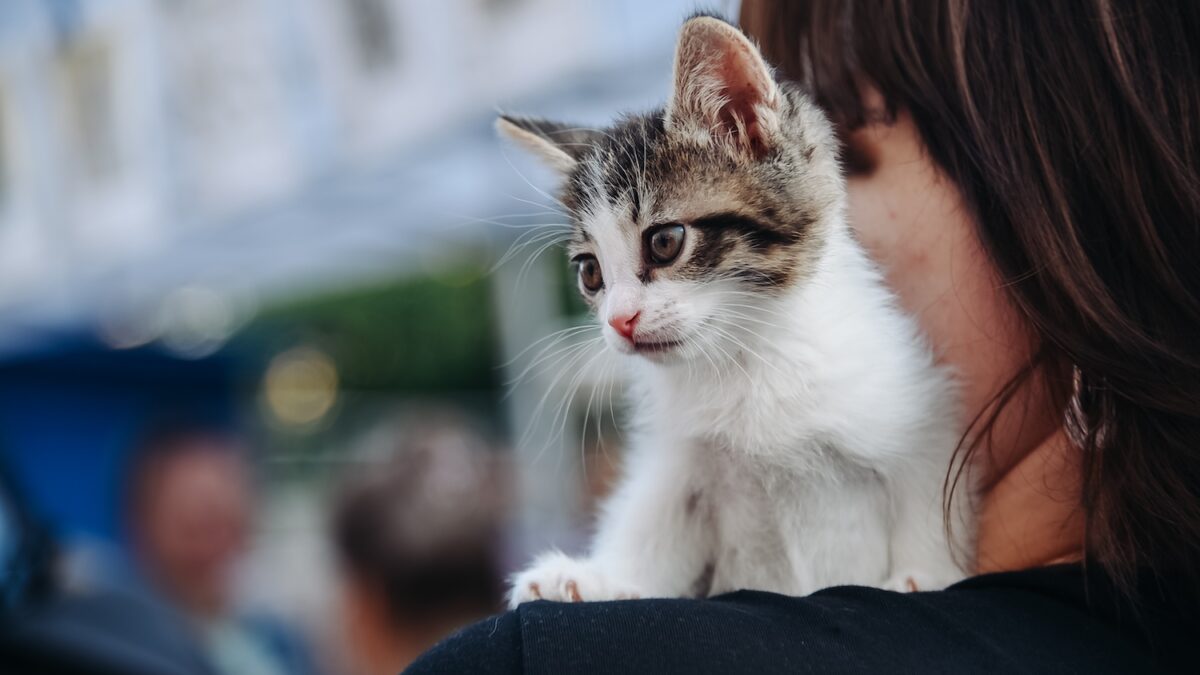
Oops, his shoulder was no longer enough. On TikTok, a young man filmed the metamorphosis of his little gray cat, who in a few months went from the status of a cuddly feather to that of a big feline impossible to lift. The video made thousands of Internet users react, fascinated by this evolution of your kitten almost too fast to be true.
At the heart of the sequence, Nimbus, unexpected star of the account
TheZenBrend. In a few seconds of editing, we see him first tiny, snug on the shoulder of his human, then lying on the ground, massive, spread out like a living cushion. The Web smiles, is surprised, and also wonders: how can a kitten change so much in such a short time?
Nimbus, the evolution of a TikTok kitten that no longer fits on the shoulder
In the first scene, Nimbus looks like a classic kitten. Tiny body, thin legs, it perches on its owner’s shoulder with the confidence of baby cats discovering the world. A blink of an eyelid later, the transition appears: the same Nimbus, but an XXL version, lying on the ground, far too heavy to return to this shoulder.

The comments continue below the video. Many compare this big cat to a loaf that has puffed up in the oven. Others remember their own surprises when faced with a kitten that has become giant, like these Maine Coons or Persians filmed on TikTok, capable of reaching several kilos even before their first birthday.
How fast can a kitten really grow?
Behind the humor, the Nimbus video is based on a very real phenomenon:
kitten growth is one of the fastest in the domestic world. At birth, a baby cat weighs on average between 80 and 120 g. He then gains 10 to 15 g per day, doubles his weight in a week, then triples it around two weeks. Between two and six months, his skeleton, muscles and teeth develop at full speed.
From the start of its life until the end of weaning, a kitten’s development takes place at a frenetic pace, marked by several key stages:
- From five to fifteen days: his eyes and ears develop fully and he begins to stand up;
- From fourteen to twenty-five days: his teeth erupt, preparing him to consume solid food;
- From twenty to thirty days: he masters walking and learns to urinate independently, whereas previously, it was his mother who stimulated him for his needs;
- Sixty to eighty days: weaning ends, making the kitten independent of its mother.
Between two and nine weeks of age, the kitten improves its social skills by playing with its peers. At around four months, sexual behaviors begin to appear.
At around six months, a kitten has already reached around 75% of its adult size, with an average weight of 2.5 to 4 kg, while large breeds can exceed 5 kg. A Maine Coon or Ragdoll sometimes continues to grow until three or four years old. There is a clear difference between a large, slender cat and an animal in obesity : hanging stomach, shortness of breath, difficulty jumping. The trap is confusing “big cute cat” with real excess weight.
Preventing cat obesity
Obesity in cats is a progressive but frequent drift, often underestimated by owners. It results from an imbalance between food intake and energy expenditure, favored in particular by a sedentary lifestyle, sterilization, age or even a diet that is too rich and left freely available. Repeated treats or table scraps, perceived as harmless, also play a key role. However, the consequences are far from benign: reduced life expectancy, joint disorders, metabolic or cardiovascular diseases… all complications which permanently alter the animal’s quality of life.
Faced with this risk, prevention is based on daily and early vigilance: the importance of a strictly adapted diet (controlled quantities, rationing rather than self-service), associated with regular stimulation of physical activity, even indoors. Rewards must remain exceptional and integrated into the overall ration. Finally, any change in weight should raise awareness: in the event of overweight, veterinary support is essential to implement a progressive strategy and avoid errors, which are sometimes harmful to the cat’s health.