
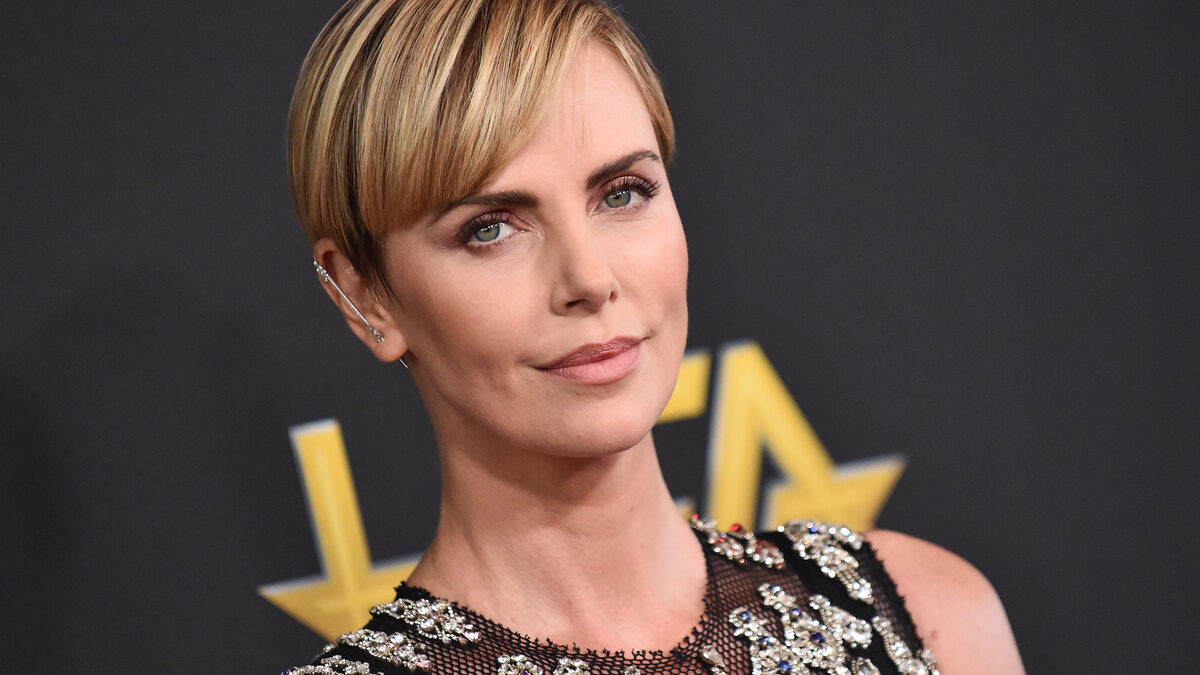
It is in a long interview given to New York Times that Charlize Theron confided. She recounts the painful episodes of her childhood, marked by psychological violence. A story, a thousand miles from the smooth image that we often associate with celebrities.
A chaotic childhood
Charlize Theron hasn’t always been bathed in the spotlight. The shadow and the suffering inhabited her for a long time. The South African actress has in fact revealed to New York Times having grown up with a violent and alcoholic father.
“He was scary. He didn’t hit me, he didn’t throw me against a wall, but he did things like drive drunk. There was a lot of verbal abuse, a lot of threatening language. It was my normal“, she explains.
Like many children confronted with domestic violence, little Charlize learned very early on to anticipate her parent’s reactions. This constant vigilance, called hypervigilance, can help protect oneself in the moment, but also keeps one in a constant state of tension.
“I could tell his level of anger (…) by the way he was driving home,” specifies the actress.
One evening, his father commits the irreparable: he opens fire in the family home.making it clear to us that he was going to kill us“Faced with danger, her mother reacts and kills her partner. But she does not let this destabilize her and sends Charlize to school, as if nothing had happened. “She just said to me, ‘We’re going to move on,’ says the actress. “It wasn’t necessarily the healthiest thing to do, but it worked for us.”
A feeling of shame that predominates
For the actress, this story has long been extremely heavy to bear. Because domestic violence is often accompanied by a feeling of guilt.
“I carried a lot of shame. Nobody helped us and yet everyone knew. (…) I had the impression that I always had to find excuses for my father (…) So, I said for a long time that he had died in a car accident…”, admits the actress, who now wishes “that people feel less alone. (…)”.
If the actress therefore finally seems free from her demons, through her story, she wishes to help as many people as possible. Because the simple act of putting words to your experience can be a first, saving step.
Charlize Theron reminds us that difficult beginnings in life exist
“Obviously, when Charlize Theron speaks about a childhood marked by violence, it is not just another testimony. It is still a public figure. However, we tend to freeze them in a smooth, almost untouchable image. As if such a story could not have happened to them. Because it is beautiful, recognized, powerful… Well yes! And this reminds us that we can come from chaos, from trauma, from fear… and not accept it reduce”, analyzes Amélie Boukhobza.
In other words, by sharing her story, Charlize Theron reminds us that difficult beginnings exist, that they can be said without shame, and that they do not condition your entire existence.
“Obviously, it feels good. It opens up a possibility… and breaks the illusion that certain lives would be spared. Or better constructed than others. And suddenly, we can identify. Allow ourselves to say. To think. To no longer minimize. Allow ourselves, above all, to emerge from the silence. This silence brandished as protection… but which also confines”, confides the expert.
So when a media figure like her puts words to what she experienced, it moves the lines, shows that these experiences exist. That they can be named. “And that they do not cancel a trajectory. That they do not prevent”, continues the practitioner.
Freeing speech is not always enough to repair
Despite everything, freeing up speech is not always enough to repair… because speaking does not heal in itself. But it can support and give the impetus to do something.
“Because we see a possible outcome, and a positive one at that. The interest is there, in my opinion. In breaking isolation, putting complexity back where we imagine simple lives. And to remember that what has been experienced, even at its worst, can be thought about, worked on, transformed. It’s not a model. It’s not a magic solution either. But it can be a point of support”, concludes Amélie Boukhobza.