
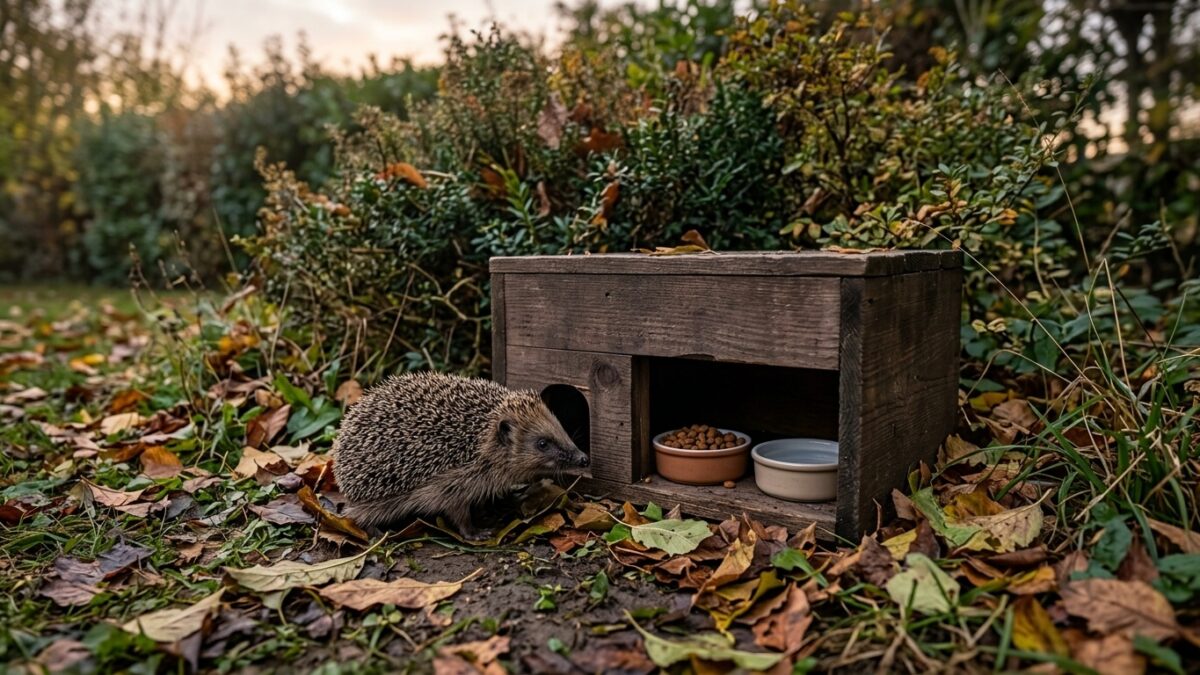
In many French gardens, a small back studded with quills is enough to trigger a reflex: take out a bowl of food, sometimes a bowl of milk or a leftover meal. The gesture has a good intention, but it can make the hedgehog sick, or even be fatal. This small insectivorous mammal has an organism very different from ours and its populations are declining sharply under the effect of pesticides, roads and the disappearance of hedges. The good news is that a simple DIY can provide a real boost, without putting it in danger.
This solution is hedgehog feeder : a small protected canteen where the animal finds suitable food in spring and autumn. Made with a rigid plastic box or an untreated wooden crate, it limits access to cats and foxes, avoids toxic food placed randomly on the terrace and remains a one-off complement to the natural hunting of the European hedgehogwhich is a
protected species In France.
Making a hedgehog feeder step by step
Choose a rigid plastic box or wooden crate approximately 60 cm long, 40 cm wide and 30 to 40 cm high. The material must resist humidity and not be treated with toxic products. Using a cutter or saw, cut out an entrance measuring approximately 13 x 13 cm on one side. Protect the edges with strong tape to avoid injury when the animal walks by.
Place a small bowl of food at the very bottom, out of sight from the entrance, to discourage predators who would try to grab the ration with their paw. Add, if possible, a second bowl for the water. Cover the box with a lid or a board, place a brick on top to weigh it down, then camouflage the whole thing under branches or dead leaves. By slightly offsetting the entrance in relation to the bowls, you create a small corridor which makes access more difficult for cats.
What to put, or not, in a hedgehog feeder
In the feeder, especially offer cat food or dog, rich in animal proteins and not very salty, possibly good quality mash. You can add dried insects or a few mealworms, close to its natural diet, and from time to time a little scrambled egg without salt or fat. Fresh water, in a shallow container, remains essential. This assistance must remain moderate, especially useful in the spring after hibernation, in the fall before hibernation, or during periods of heatwave or exceptional cold.
Conversely, absolutely ban milk: the hedgehog is completely lactose intolerant, which causes severe diarrhea, rapid dehydration and can kill it. Bread, cheese and table scraps that are too salty or too fatty tire your body without giving it what it needs. Also avoid chocolate, grapes, avocado, onion, garlic or macadamia nuts, linked to heart, kidney or neurological problems in animals.
Where to install the hedgehog feeder, and with what precautions
Place the feeder in a quiet area of the garden, in the shade, near a hedge, a bush or a pile of leaves which serve as a natural refuge. Avoid places lit at night, the immediate surroundings of the house or passages frequented by dogs. Every morning, remove leftover food, rinse bowls and throw away soiled food to limit bacteria and not attract rats or foxes.
The hedgehog remains a wild animal: the feeder must not make it dependent. If you see an injured, very thin or active hedgehog in broad daylight, do not multiply the rations, instead contact a wildlife rescue center. And to help it sustainably, a garden without pesticides, with hedges, slightly tall grass and piles of wood, will always remain its best natural larder.