
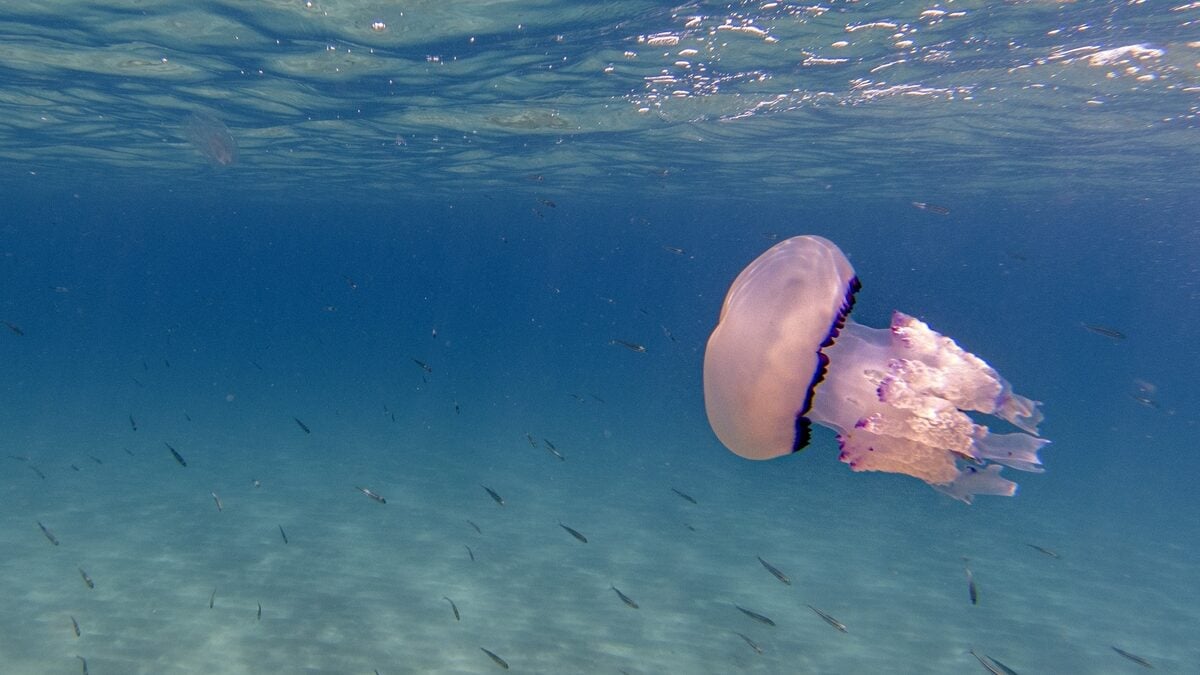
Off the coast of Lorient, in Morbihan, strange marine organisms have been spotted…: “cauliflower” jellyfish – which can reach one meter in diameter and 80 kilos! But should we be wary of it and set off at high speed at the slightest sight of tentacles? Dr. Gérald Kierzek, medical director of True Medical, enlightens us.
Should we fear these cauliflower jellyfish?
Coming from Atlantic waters, the “Rhizostoma pulmo” – commonly called cauliflower jellyfish – is anything but discreet. With a diameter of one meter, it can weigh up to 80 kilos. Its whitish bell with bluish reflections, thick and rounded, is just as impressive… and gives it an almost unreal appearance. But unlike its more feared cousins, its short, fringed arms greatly limit stinging contacts. This explains why it is considered not very dangerous for swimmers and vacationers, despite its impressive size.
An opinion shared by Dr Gérald Kierzek: “Giant but harmless, they can reach up to 1 m in diameter and 80 kg. They do not have long tentacles, and their rare stings are not very stinging,” underlines the doctor.
And if we usually observe this jellyfish later in the summer, it has been noticed in recent days off the coast of Lorient, according to Ouest France. Enough to worry the first swimmers of the year, surprised by these sea monsters.
Be careful, even if it is not dangerous, “any contact with a cauliflower jellyfish may cause mild itching“, recalls the medical director of True Medical.
So what to do in this situation? Dr Gérald Kierzek answers you.
What to do if you have been bitten?
Even though the “cauliflower” jellyfish is not very stinging, any contact with it can cause a skin reaction. The pain generally remains moderate, but worsening and/or prolonged irritation should be avoided. The objective here is therefore twofold: limit the diffusion of venom and soothe your skin.
Without further ado, here are some good reflexes to adopt:
- Rinse the wound thoroughly with sea water (never fresh water or urine, which activate the venom);
- Remove the filaments without rubbing: apply dry sand, then scrape gently with a card or shovel;
- Apply heat (hot water or a hairdryer from a distance) to neutralize the venom, then an antihistamine cream or painkiller;
- Then disinfect at home and see if severe pain persists beyond 48 hours.
Jellyfish risk zone: the correct behavior to adopt
If you are currently on vacation in Morbihan, between Gâvres and Groix, be careful: you may encounter the cauliflower jellyfish there, particularly under the effect of currents and slightly higher temperatures this year (the warmer water stimulates the development of plankton, on which it feeds).
Fortunately, a few simple reflexes are enough to enjoy the joys of swimming with complete peace of mind – and thus avoid any contact with a “Rhizostoma pulmo”:
- Check local signs and alerts before swimming;
- Wear lycra or an anti-UV t-shirt;
- Avoid areas where jellyfish are numerous and visible.
“In case of contact, get out of the water calmly without panicking, rinse immediately with sea water and supervise children and vulnerable people. Remember: really stinging jellyfish (Pelagia noctiluca) have long tentacles, unlike the “cauliflower”, concludes the medical director of True Medical.