
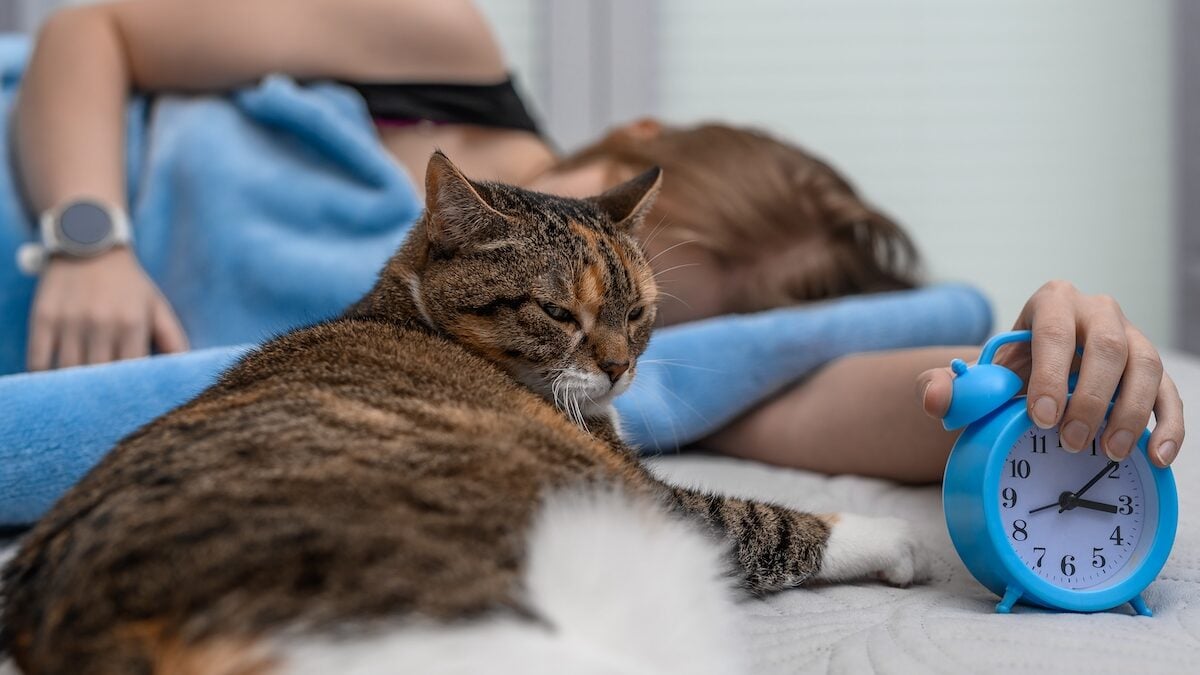
For a few weeks, a young woman had been waking up with the strange sensation that her hair was shrinking. Shorter locks, wobbly bangs, then a small pile of clean-cut hair in the middle of the bed. It’s hard not to think of a worrying fall. Until the morning when, opening her eyes to the muzzle of her ginger cat lying next to her pillow, she understood the real culprit.
Told on TikTok by its owner, known under the pseudonym @maymaymoonpieprincess, this scene has already garnered more than 700,000 views and has caused many Internet users to react. Behind the laughter, a real question remains unanswered: why does a cat cut its owner’s hair, and to what extent does this behavior remain safe?
Why this cat cuts his owner’s hair at night
For feline behavior experts cited by Wamizthis is not hair sabotage, but social grooming. Many cats lick, chew or pull their human’s hair: the fine texture is reminiscent of fur and this grooming strengthens the bond or soothes. On TikTok, a user nicknames him “the midnight barber! It does its best work while you sleep“.
Specialists suggest other causes. Wamiz quotes the pica, “a disorder that causes the cat to ingest inedible substances“. Stress sometimes transforms this chewing into a gesture of comfort, while boredom often plays the role of agitator: a cat that gnaws hair in the early morning is sure to get a reaction, and therefore a wonderful source of attention.

Swallowed hair, fur and trichobezoars: what are the risks for the cat?
On Radio Franceveterinarian Dr Pierre Fabing recalls that “hair loss in spring is a normal phenomenon“. The cat then renews its coat and, while licking itself, swallows a lot of dead hair. These hairs accumulate in the stomach and form balls called trichobezoars, most often eliminated by vomiting. These accumulations can also cause digestive discomfort, or even an intestinal obstruction requiring intervention.
When a cat also swallows human hair, the risk remains the same. Santévet to consult “if the cat vomits more than twice in twenty-four hours or several days in a row“. Dr. Fabing adds other warning signs: constipation, painful stomach, weight loss, depression or attempts to vomit without anything coming out.
A veterinary consultation is necessary if your little companion’s behavior changes.