
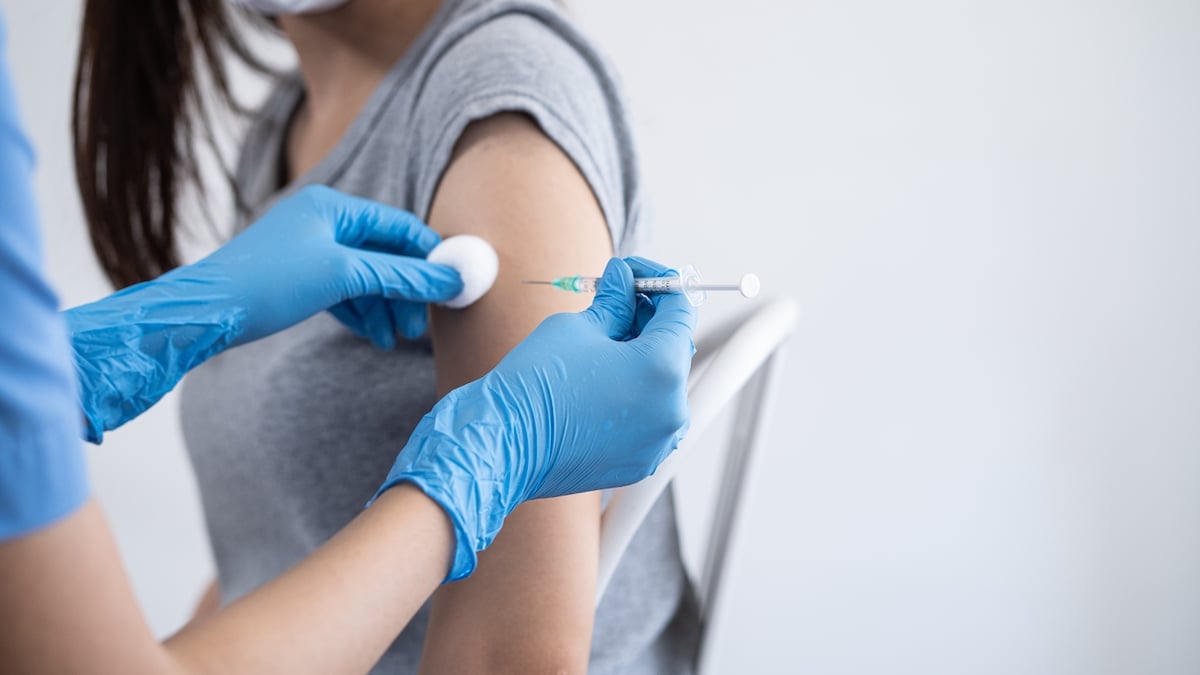
It is a key annual meeting for health professionals and health authorities. The 2026 vaccination calendar and vaccine recommendations have just been posted online by the Ministry of Health. This official document defines the vaccination strategies applicable in France based on age, patient profile and exposure risks. As in 2025, it covers 25 infections, from influenza to Covid-19, including measles and human papillomavirus infections.
Targeted adjustments to HPV and meningococci
Among the main new features of this 2026 edition are important developments in terms of vaccination catch-up. Catch-up against human papillomavirus (HPV) infections is now extended to young women and men up to the age of 26 when they were not vaccinated as adolescents.
Another notable point: the clarification of the recommendations concerning ACWY and B meningococci. Vaccination is compulsory for all children born after January 1, 2023, with a transitional catch-up planned for children aged 2 to 4 years not vaccinated according to the initial schedule.
In adolescents, vaccination against ACWY meningococci is recommended between 11 and 14 years of age, with catch-up possible up to 24 years of age.
New vaccines and expanded recommendations
The 2026 calendar also includes several recently marketed vaccines, notably against influenza and pneumococcal infections. In people aged 65 and over, influenza vaccination should be given as a priority with specific high-dose or adjuvanted vaccines.
Concerning pneumococci, the strategy is extended to all seniors, with new vaccines that can be used according to a simplified single-dose schedule.
On the Covid-19 side, the recombinant protein vaccine can now be used in the same way as messenger RNA vaccines, particularly for people at risk, depending on its adaptation to circulating variants.
A reference tool set to evolve
Beyond the new developments, the vaccination schedule remains a structuring tool for public health policy. It specifies obligations, recommendations and vaccination schedules depending on the situation, including for specific populations such as pregnant women, immunocompromised people or healthcare professionals.
The document also includes synoptic tables intended to facilitate its application in the field and to guide professionals in complex situations (catch-up, contraindications, supply tensions).
Finally, like every year, this calendar will be updated during the year in order to incorporate new recommendations from the High Authority for Health and developments in the epidemiological situation.
Recommended vaccines for adults (France, 2026)
| Vaccine / Disease | Population concerned | Pattern/Frequency | Main remarks |
|---|---|---|---|
| Diphtheria – Tetanus – Poliomyelitis – Pertussis (dTcaP) | All adults | Reminders at 25, 45, 65 years old then every 10 years | Pertussis valence is systematic in recalls |
| Seasonal flu | ≥ 65 years + people at risk | 1 dose each year | Specific vaccines recommended for seniors |
| Covid-19 | ≥ 65 years + people at risk | 1 annual dose (fall) | Reminder possible in spring for the most fragile |
| Pneumococcus | ≥ 65 years + adults at risk | 1 single dose | New vaccines available (simplified schedule) |
| Human papillomavirus (HPV) | Unvaccinated adults ≤ 26 years old | Possible catch-up | Women and men concerned |
| Hepatitis B | People at risk / exposed professionals | 2 or 3 dose schedule | Compulsory vaccination for certain professionals |
| Hepatitis A | People at risk | 2 doses | Recommended depending on exposure (travel, profession, etc.) |
| Meningococci ACWY | 11–24 years (catch-up) + special situations | 1 dose | Recommended for adolescents and young adults |
| Meningococcus B | 15–24 years (depending on situation) | According to vaccination schedule | May be offered to young adults |
| Measles – Mumps – Rubella (MMR) | Non-immune adults | 1 to 2 doses | Objective: coverage ≥ 95% |
| Shingles | ≥ 65 years old | According to vaccine | Recommended to prevent complications |
| Tuberculosis (BCG) | Adults at risk | Special cases | Depending on professional or geographic exposure |
| Varicella | Non-immune adults | 2 doses | Especially women of childbearing age |
| Yellow fever | Travelers/residents at risk areas | 1 dose | Mandatory in Guyana |
| Rage | Exposed professionals / travelers | Preventive or post-exposure regimen | Specific cases |