
THE
tinnitus Chronic conditions affect approximately 14.4% of the world’s population, and for 2.3% of people, they disrupt daily life. However, there is still no treatment capable of making these phantom noises disappear, only approaches to reduce the distress they cause. It is in this therapeutic void that a new
therapeutic application for tinnitustested in Japan, is starting to attract attention.
The team of Doctor Koichiro Wasano, from the Faculty of Medicine at Tokai University in Japan, has designed a
cognitive behavioral therapy (CBT) for tinnitus and evaluated it in a randomized, double-blind trial against a fake app. In a context where CBT is recommended as a first-line treatment but remains difficult to access due to a lack of specialists, the authors see it as a real
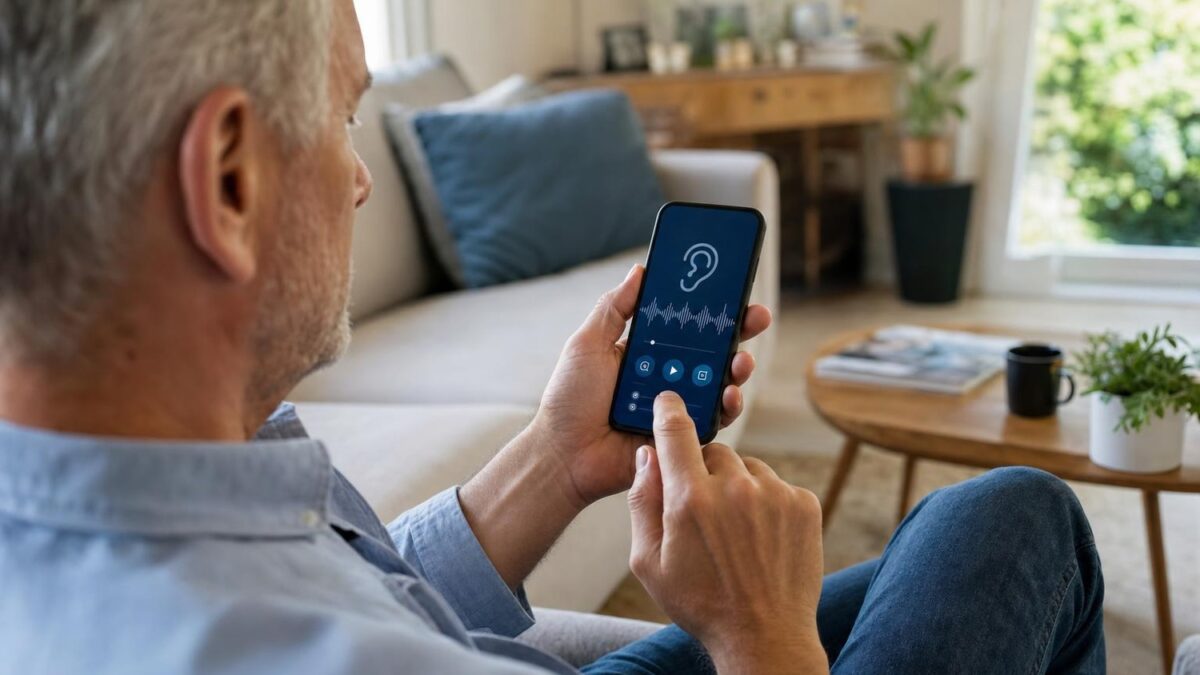
digital therapeutics capable of broadcasting a standardized program via the smartphone.
How the app was tested in patients with tinnitus
In this trial conducted in three Japanese hospitals, 60 adults aged 18 to 75, with chronic tinnitus for at least three months and a score of at least 18 on the Tinnitus Handicap Inventory (THI), were randomly distributed between active app and control app. They used the app for 16 weeks, then only the tracking feature for an additional eight weeks.
The therapeutic content combined education about the disease, relaxation exercises, cognitive training and behavioral activation, fully automated in the form of guided daily sessions with reminders, describe Professor Koichiro Wasano and his colleagues. The control app only retained the symptom log, and adherence remained high in both groups.
Marked clinical benefits on the discomfort linked to tinnitus
At 16 weeks, the THI score decreased by an average of 16.8 points with the active app, while it increased by 3.6 points with the control app, a difference of -20.4 points between the groups, according to data published in JAMA Otolaryngology–Head and Neck Surgery. A drop of at least 7 points being considered clinically important, 70% of users of the active app reached this threshold compared to 27% in the control group, and 40% of them no longer presented a disability (THI less than 18), compared to 7% with the control app.
The authors report that the benefit of the active app persisted eight weeks after discontinuation, with a mean THI difference of -18.3 points at 24 weeks and no serious adverse events observed. As the authors summarize, “This application could constitute an effective intervention for people suffering from chronic tinnitus, by offering a standardized therapeutic approach.“.
A promising lead, but which still needs to be confirmed
Researchers point out that chronic tinnitus tends to persist without treatment and that CBT remains poorly available, particularly in ENT settings. They note that Germany and South Korea have already approved CBT apps for tinnitus as digital therapies, but the trial in 60 Japanese patients will need to be replicated on a larger scale.