
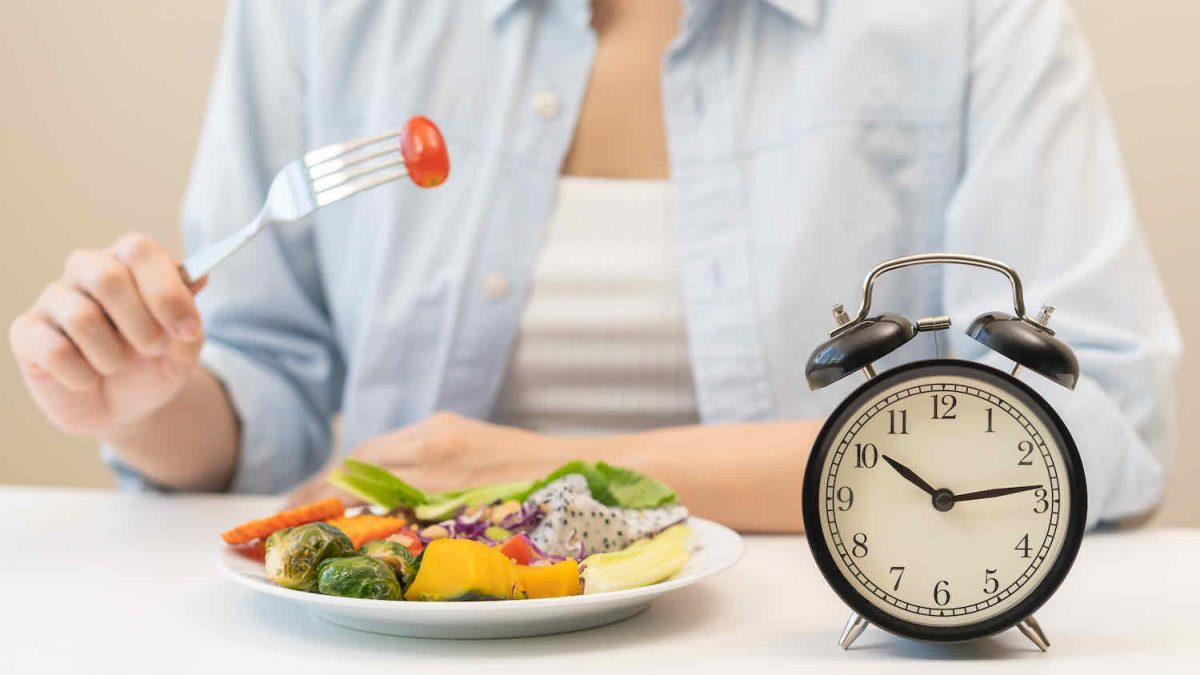
For a long time, researchers and doctors around the world focused solely on the contents of our plates. Except that in reality, when you eat is just as crucial as what you consume. And this way of eating has a name: chrononutrition. Julie Boët, dietitian-nutritionist, tells us more about this concept.
What is chrononutrition?
Skipping breakfast, having a (very) late meal… The time at which you eat your fried eggs – or your favorite pasta dish – greatly influences the way in which nutrients are assimilated. The same meal can thus be perfectly digested or, on the contrary, make you “store”. A fact confirmed by Julie Boët, dietician-nutritionist.
“When you eat can play just as important a role as what you eat, especially when it comes to losing weight or simply feeling better.
Our body has its own rhythms, a bit like an internal clock which influences our desires, our energy, our digestion. This is called the circadian rhythm. He is not there to complicate our lives, but on the contrary to guide us. At certain times of the day, our bodies are more efficient at processing and using what we eat. At others, it is slower, more “sleeping”, and it will tend to store more easily. she relates.
The idea of chrononutrition is therefore simply to adapt our diet to these natural variations, “without falling into rigidity”specifies the expert. We know, for example, that fats and sugars consumed in the evening will be more easily stored while they represent an essential source of energy in the morning.
Chrononutrition therefore suggests distributing meals according to the body’s hormonal and energy needs. Typically:
- A hearty, fatty breakfast to start the day off right;
- A lunch rich in proteins and starchy foods to support physical and mental activity;
-
A light snack but with quality carbohydrates and proteins, to respond to a natural insulin peak around 4-5 p.m.;
- And a light dinner, even optional, because the body needs rest and not an influx of calories.
Please note: chrononutrition does not exclude any food, since what matters is consuming the right food groups (proteins, lipids, carbohydrates, vitamins and minerals) at the right time.
Aim for balance throughout the week
Did you eat dinner at 9:00 p.m. and not 7:00 p.m.? No worries.
The main thing is to listen to yourself and your needs.
“It’s not about following rigid rules. If you have an irregular schedule, if you skip a meal due to lack of appetite or eat later one evening, this will not have a significant impact in the short term. The main thing is to aim for balance over the week, or even the month. The body is resilient: it’s the overall habits that count”,
reminds the dietitian.
To implement chrononutrition without pressure, start by observing your sensations: when are you really hungry? What types of foods keep you full for a long time? Then, gradually adjust your schedule and portions. “Remember: it’s not about changing everything overnight, but about learning to live better in accordance with your biology.”
concludes Julie Boët.