
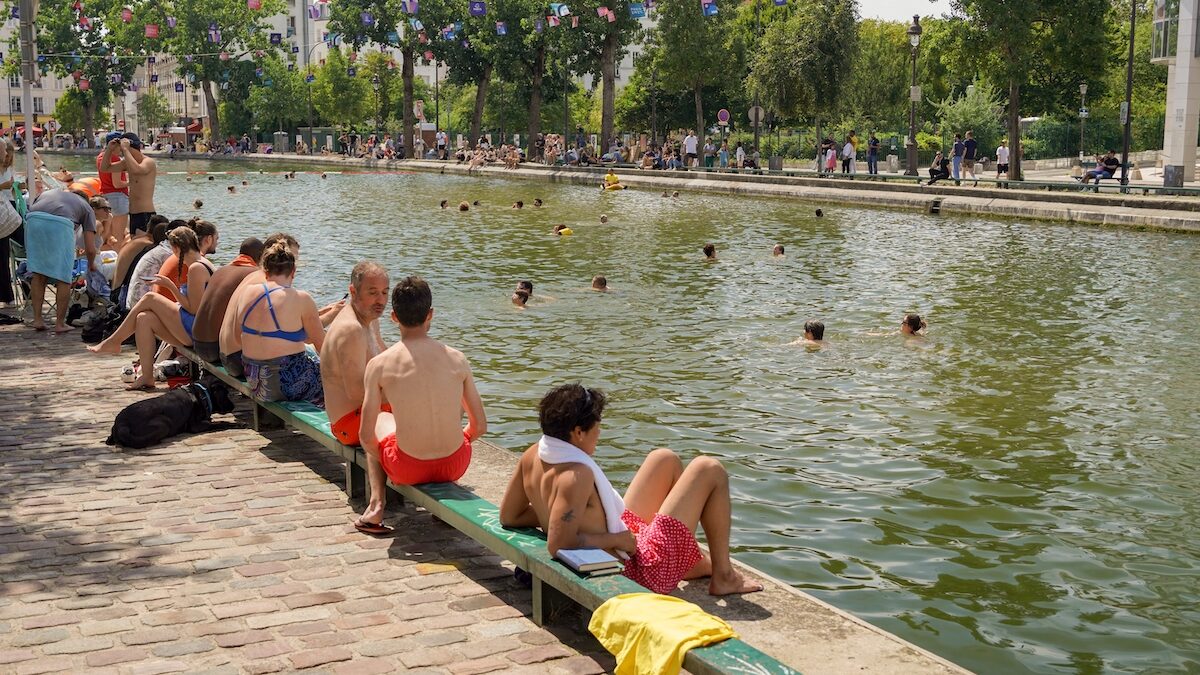
With each episode of extreme heat, the same carefree scenes return. Groups of young people dive into canals, settle on river banks or jump from bridges to escape the sweltering temperatures. In Paris, the Saint-Martin canal has become, in recent days, a real improvised swimming spot.
A way to cool off that can seem festive and harmless. However, this practice is far from trivial.
“Even good swimmers can find themselves in danger”
Dr. Gérald Kierzek, emergency physician and medical director of True Medical, prefers to point out: swimming outside developed areas is particularly risky, including for people who know how to swim very well.
“Rivers, canals and streams are not swimming pools. They are unpredictable and potentially deadly environments”he warns.
The first danger obviously remains drowning. More than one in two drownings occurring in rivers or canals results in death. Children and adolescents are particularly affected: it is even the leading cause of accidental death in certain age groups.
Invisible traps underwater
The problem, explains the emergency doctor, is that these waters often hide many dangers that are impossible to see from the surface.
Underwater can be found:
- Concrete blocks;
- Stakes;
- Metal debris;
- Abandoned objects;
- Or even extremely shallow areas.
A simple dive can then cause serious trauma, particularly to the head or spine.
Another major risk: suction currents, particularly present near locks or dams, such as in certain sectors of the Saint-Martin canal or the Saint-Denis canal. Even an experienced swimmer can find themselves caught and unable to get back up.
Aquatic vegetation also constitutes a formidable trap. Some plants can trap legs or arms underwater and cause rapid panic.
The little-known danger of thermal shock
Temperature is also a factor. When it is very hot, many suddenly plunge into much colder water. However, this contrast can cause hydrocution.
Concretely, thermal shock can lead to sudden discomfort, loss of consciousness or cardiac arrest.
“The overheated body sometimes reacts very badly to sudden immersion in cold water”recalls Dr. Kierzek.
Slippery banks also make it difficult to get out of the water, while barges represent another major danger: these boats are heavy and cannot brake quickly.
As for jumping from bridges, they are strictly prohibited, even when the height seems low.
Water that is sometimes very contaminated
In addition to the risk of drowning, there is another less visible problem: water pollution.
In urban areas, rivers and canals can be contaminated by human or animal waste. Result: swimming exposes you to numerous infections.
In the hours or days that follow, some people develop:
- Gastroenteritis;
- Diarrhea;
- Vomiting;
- Urinary infections;
- Ear infections;
- Skin irritations;
- Conjunctivitis.
Bacteria such as E. coli or salmonella may be present in the water.
Leptospirosis, the disease transmitted by rat urine
Dr Gérald Kierzek also warns of a disease still little known to the general public: leptospirosis.
This bacterial infection, transmitted in particular by rat urine present in certain stagnant or polluted waters, can cause fever, muscle pain, digestive disorders and, in the most serious cases, damage to the liver or kidneys. This is called Weil’s disease, a potentially fatal form.
“After swimming in fresh water, if you develop fever, diarrhea or unusual symptoms, you should consult a doctor quickly and report this swimming”he insists.
Swimming prohibited in most urban areas
In Paris in particular, swimming is strictly prohibited on the entire river network, outside of a few specifically authorized and supervised sites.
The Seine remains generally too polluted to allow free and safe swimming.
As for the Saint-Martin canal, its water quality is monitored regularly and certain areas may be closed in the event of pollution.
Precautions to follow during hot weather
Faced with the heatwave, doctors remind us that there are much safer ways to cool down:
- Favor supervised swimming pools;
- Avoid wild swimming;
- Never jump from a bridge;
- Never swim near a lock or dam;
- Avoid swimming after heavy rain, when the water is even more polluted;
- Enter the water gradually to limit the risk of hydrocution.
Because if the heat pushes you to seek a little freshness at all costs, certain impromptu swims can transform a simple moment of relaxation into a real life-threatening emergency.