
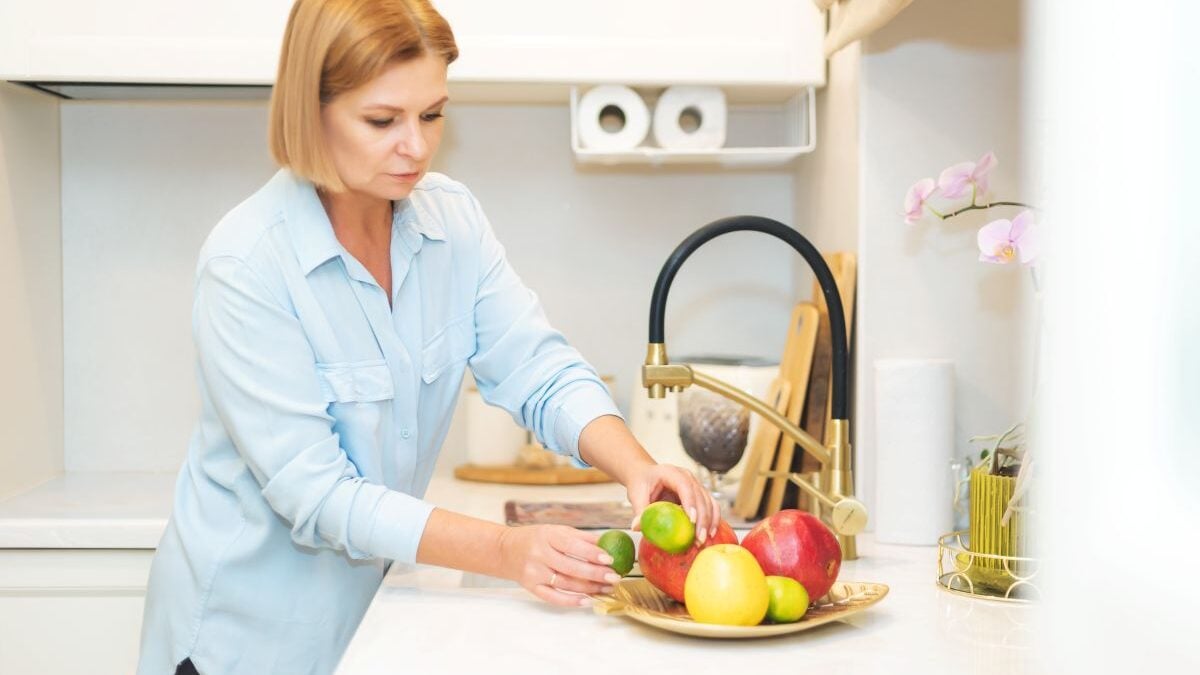
Cleaning your fruit carefully as soon as you return from the market seems to be the perfect hygienic reflex. In theory, this allows you to have a healthy, clean snack ready to eat at any time of the day.
Yet, if your goal is to maximize the shelf life of your food, this habit is completely counterproductive. By adding humidity, you risk condemning your fruit to early mold.
Focus on 5 varieties that must be left dry until ready to eat.
Berries and small fruits: real humidity sponges
Strawberries, blueberries, raspberries and blackberries have an extremely porous structure. When they come into contact with water, they absorb it instantly. This residual humidity then becomes the ideal playground for the development of fungi.
Simply rinsing prematurely can cause these fruits to lose several days of freshness in your refrigerator. Pauline Pied, dietitian-nutritionist, confirms this observation:
“In reality, you have to wash these fruits when you are going to eat them. if you wash them and store them in your fridge, you accelerate their ripening and they end up rotting. This is particularly true for strawberries, which will spoil the same evening.
Instead, to maximize their lifespan, store the berries in the refrigerator in a single layer in a ventilated container or lined with paper towels to absorb ambient humidity.
Apples: a natural protective barrier that should not be eliminated
Although they appear sturdy and less delicate than berries, apples should not be washed in advance either. They are naturally covered with a fine waxy cuticle which acts as a shield. This coating allows the fruit to retain its internal moisture and maintain its legendary crunch.
Going underwater breaks this barrier. “If you wash your apples, you remove this layer, they will dry out and rot more quickly” assures Pauline Pied.
To store them best, leave them at room temperature, especially if you plan to consume them quickly. Also be sure to isolate them from other plants, because apples release ethylene, a gas that accelerates the ripening of neighboring products.
Peaches, nectarines and cherries: very vulnerable thin skins
Summer stone fruits are distinguished by their extreme delicacy. Whether it is the downy skin of the peach or the smooth skin of the nectarine, washing with water easily penetrates their covering.
And more particularly the friction of the skin, recalls Pauline Pied: “Peaches and nectarines have extremely thin skins that are easy to break. This will encourage it to rot. And that goes for grapes and cherries too.”
So let your peaches and nectarines ripen at room temperature, then place them in a cool place without washing them. For cherries, always store them with their stems in the refrigerator to preserve their freshness.
When it comes to grapes, you have probably already noticed this slight white or dusty veil that covers the bunches. Far from being dirt or pesticide residue, this natural film is called bloom (or flower). It is a wax self-produced by the fruit to protect against insects and dehydration. Running the grapes under the tap as soon as you return from the supermarket eliminates this protection and accelerates their decomposition.
Favor minute washing, instead
To preserve your finances and avoid food waste, the key word is patience. Washing your fruit at the last minute maximizes its nutrients and prolongs its freshness for several days.
“We wash our fruits before eating them. summarizes our expert. “The rest of the time, we store them appropriately in the fridge or in the open air. Because otherwise, it’s tens of euros wasted, for a stupid mistake. And that’s a shame” she concludes.