
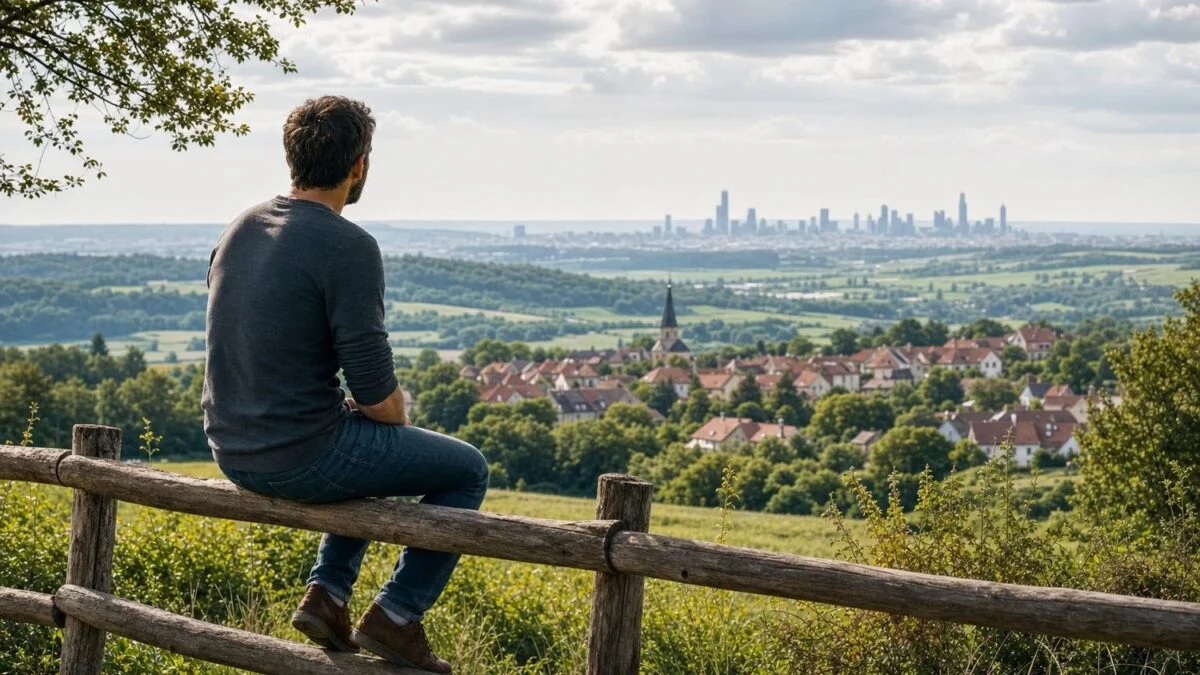
When faced with consultations for anxiety, depression and lack of self-esteem, many psychologists ask the same question: what if it wasn’t you who was the problem, but your environment? World Health Organization studies indicate that living in a city increases the risk of anxiety and depressive disorders by 20 to 40%. This reality opens up a simple avenue: change of scenery.
Living in the countryside, or in a green rural area, then appears to be a protective factor for mental health and self-esteem. A Japanese study shows that a weekly or monthly connection with nature helps you maintain mental balance while working. Less comparison, more self-presence, a renewed sense of usefulness: this is often what patients describe after leaving the city.
City, stress and self-esteem: why the urban environment is so fragile
Large cities concentrate noise, pollution, pressure to perform and permanent social comparison. Scientific work shows that people in metropolitan areas have a 20 to 40% increased risk of depression and anxiety, and almost double the risk of schizophrenia compared to rural areas. When the brain remains on maximum alert, self-criticism explodes and confidence crumbles.
Added to this are fatigue from journeys, higher air pollution in cities, with up to 30 to 40% more fine particles, and sleep disrupted by noise and light. The less we sleep, the more irritable and less focused we feel. Many end up telling themselves that they are weak or “not good enough”, which damages their self-esteem.
Living in the countryside: what nature actually does to your self-esteem
Choosing to live in the countryside reduces many of these risk factors at the same time. Inserm and the WHO report that regular exposure to green spaces reduces the risk of anxiety and depressive disorders by around 10 to 15%. The cleaner air, the relative silence and the sight of trees or fields create a calming background against which the ego relaxes.
Psychologists talk about biophilia, this natural tendency to feel better when in contact with living things. In rural areas, we live more in the present and compare ourselves less, which increases satisfaction with who we are. Gardening, walking, taking care of animals give a feeling of usefulness and autonomy which nourishes a more stable self-esteem.
Leaving the city: powerful asset, not magic wand
However, mental health specialists repeat it: living in the countryside does not replace psychological follow-up in the event of severe depression or trauma. The change of setting can even awaken a feeling of isolation if you leave without a network. Many therapists therefore advise preparing the project and maintaining support during the transition.
One option proposed is to gradually test rural life: long weekends without screens in a village, a period of teleworking in the countryside, a notebook in which we note sleep, mood and self-confidence before then after. Some discover that simple regular contact with nature is enough for them, while others will feel that a move becomes consistent with their deep needs.