
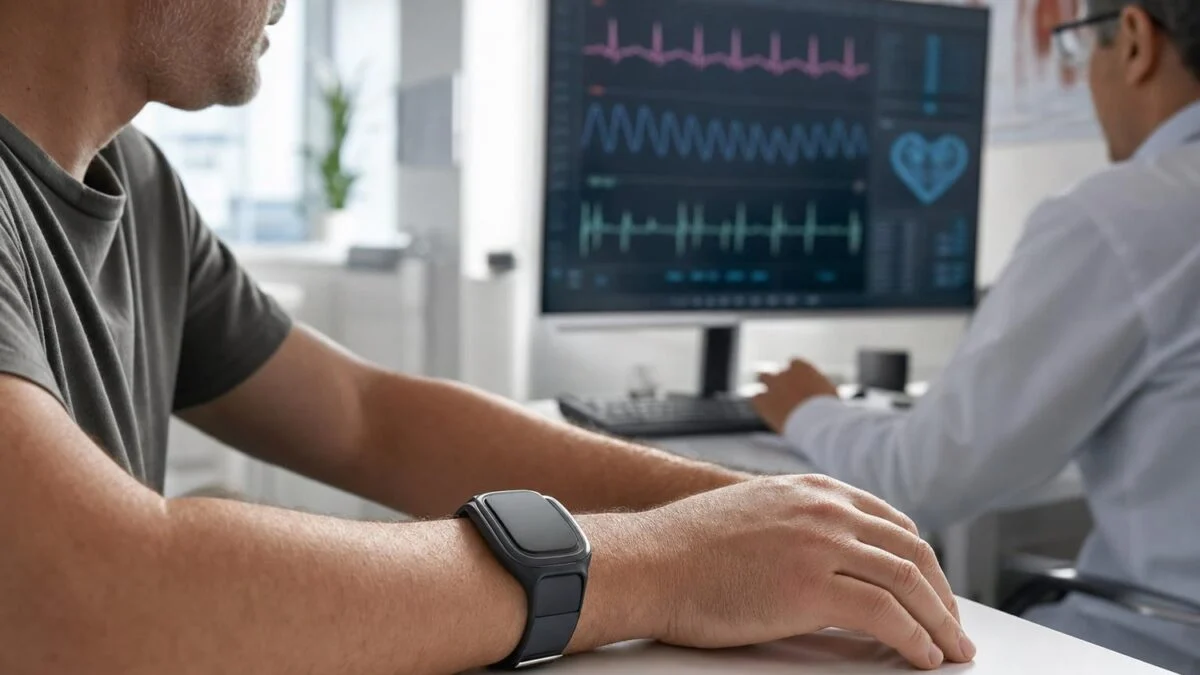
Developed by teams at the University of Utah and the University of Illinois Chicago, this experimental device tracks blood pressure throughout daily activities, from walking to sleeping. Behind this technological feat, a simple objective: to better understand what is really happening in the arteries, far from the one-off measurements taken in consultation.
What if a single measurement only tells part of the story?
For millions of people, taking blood pressure has become a familiar ritual. A few seconds of waiting, a cuff which inflates around the arm, then two numbers appear. A snapshot of cardiovascular health. But is this image enough?
High blood pressure remains one of the main risk factors for heart attacks and strokes. However, it often progresses without symptoms for years. Between two medical consultations, blood pressure constantly fluctuates, under the effect of stress, physical activity, sleep or even emotions.
It is precisely this gap between biological reality and current measurement tools that pushed researchers from the University of Utah and the University of Illinois Chicago to imagine another approach. Described in the review Nature Communicationstheir experimental connected watch aims to transform the measurement of tension into permanent monitoring, carried out in the real conditions of daily life.
“High blood pressure is considered a silent killer because it leads to heart attacks, aneurysms and strokes. It represents a burden on global health systems and constitutes a major research challenge.” explains Benjamin Sanchez Terrones, researcher at the University of Illinois Chicago and designer of the device.
The ambition is considerable: to move from one-off measurement to continuous monitoring, capable of revealing invisible variations which today escape most examinations.
A technological feat that discreetly listens to the passage of blood
At first glance, the device looks like a classic smartwatch. However, its operation differs radically from sensors using light usually used in healthcare objects. These devices frequently rely on machine learning algorithms, comparable to a “black box,” to estimate blood pressure. This complicates the interpretation of their results and makes them unreliable in a clinical context. This limitation represents a significant obstacle to their integration into medical practice.
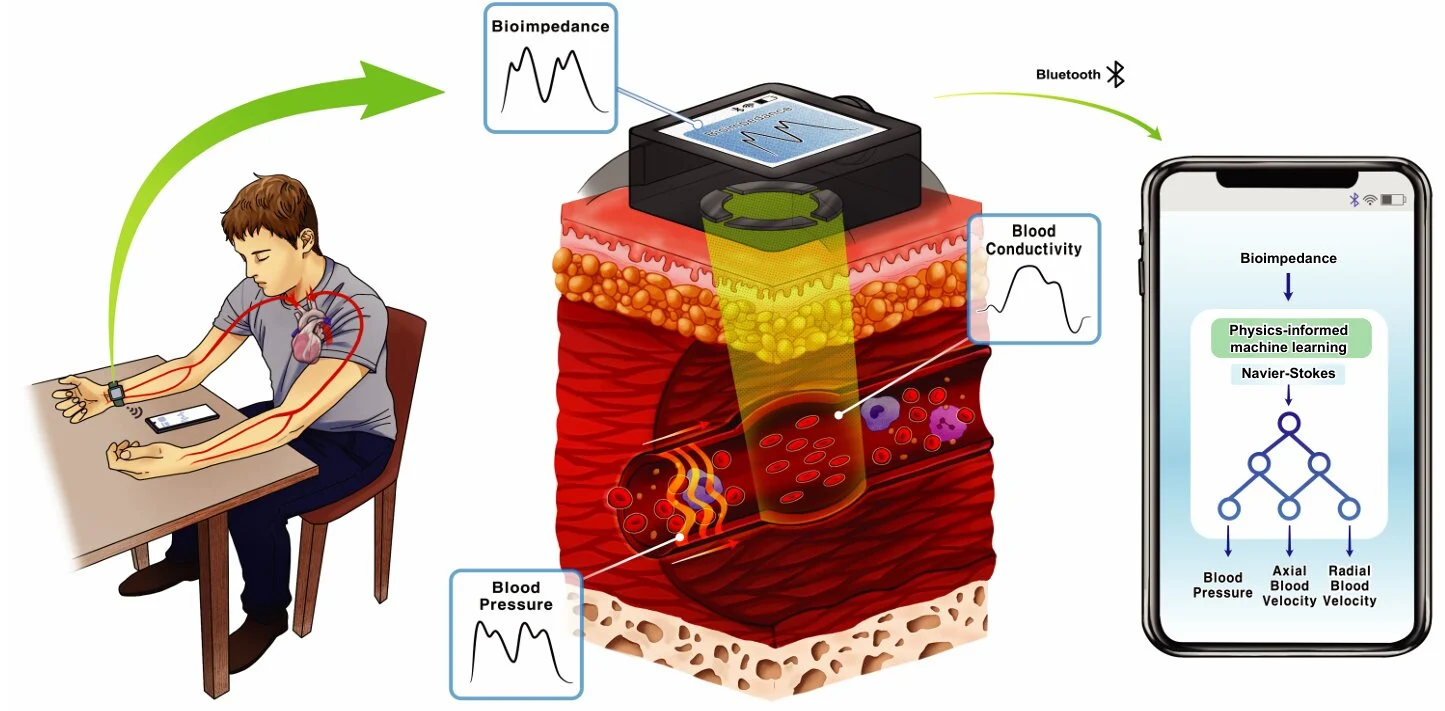 © Nature Communications (2026). DOI: 10.1038/s41467-026-72693-1
Instead of analyzing light passing through the skin, as many current watches do, the device uses a technique called bioimpedance. Concretely, tiny electrodes placed in contact with the wrist send an imperceptible electric current. When blood circulates through the vessels, it very slightly modifies the electrical properties of the tissues. These variations are recorded in real time and analyzed by the system. The result is a wearable device capable of continuously monitoring cardiovascular health, both at rest and during activity, without requiring calibration for each user.
The scientific challenge was immense: to manage to collect reliable data while the person walks, runs, cycles or sleeps, without being disturbed by body movements. According to the University of Utah, the prototype has already been tested with approximately 150 participants, including patients hospitalized in intensive care as well as people followed in outpatient clinics in Salt Lake City. A choice intended to confront technology with varied clinical situations close to everyday life.
This desire to leave the laboratory marks an important step. Because measuring blood pressure in real conditions constitutes precisely one of the great challenges of modern cardiology.
Finally see the complete blood pressure “movie”
The originality of the project does not lie only in its sensors. It also depends on the way in which the data is interpreted. The researchers developed an artificial intelligence model combining machine learning and fundamental principles of physics, including the laws of fluid dynamics and electromagnetism. This approach makes it possible to reconstruct not only blood pressure values, but also their continuous evolution over time.
The issue is far from being anecdotal. Today, most blood pressure measurements come down to two numbers: systolic pressure and diastolic pressure. However, for researchers, the physiological reality is much more complex.
“Blood pressure is more than just two numbers; it varies over time. The mathematical challenge was to reconstruct the full waveform from indirect electrical measurements taken at the wrist – a classic inverse problem.”explains Braxton Osting, professor of mathematics at the university and co-author of the study. “Directly integrating the physics of blood flow into the model makes the prediction more reliable.”.
Benjamin Sanchez Terrones uses a particularly telling image to describe this difference:
“Our blood pressure changes throughout the day like a film, but when we use a blood pressure monitor, we only have a snapshot. The blood pressure monitor is very useful, but also limited: it only provides the minimum of useful information due to its operation: the systolic pressure is related to the diastolic pressure, which corresponds to the maximum and minimum pressure values recorded. In the end, we’re missing 99% of the film that explains how a patient’s blood pressure varies throughout the day as they walk, run, or climb stairs.”.
This ability to monitor variations in blood pressure hour after hour could, in the long term, considerably enrich the care of hypertensive people. Doctors would then have a much more accurate view of what really happens between two consultations. However, caution remains in order. The researchers are now planning larger clinical trials to confirm the precision and reliability of the device over the long term.
The watch is therefore not yet ready to replace the cuff in medical offices. But it illustrates a profound evolution in cardiovascular medicine: that of more continuous monitoring, more personalized and closer to real life. A development which could make it possible to detect silent disturbances in blood pressure earlier and, ultimately, better prevent cardiovascular accidents which continue to affect millions of people around the world.