
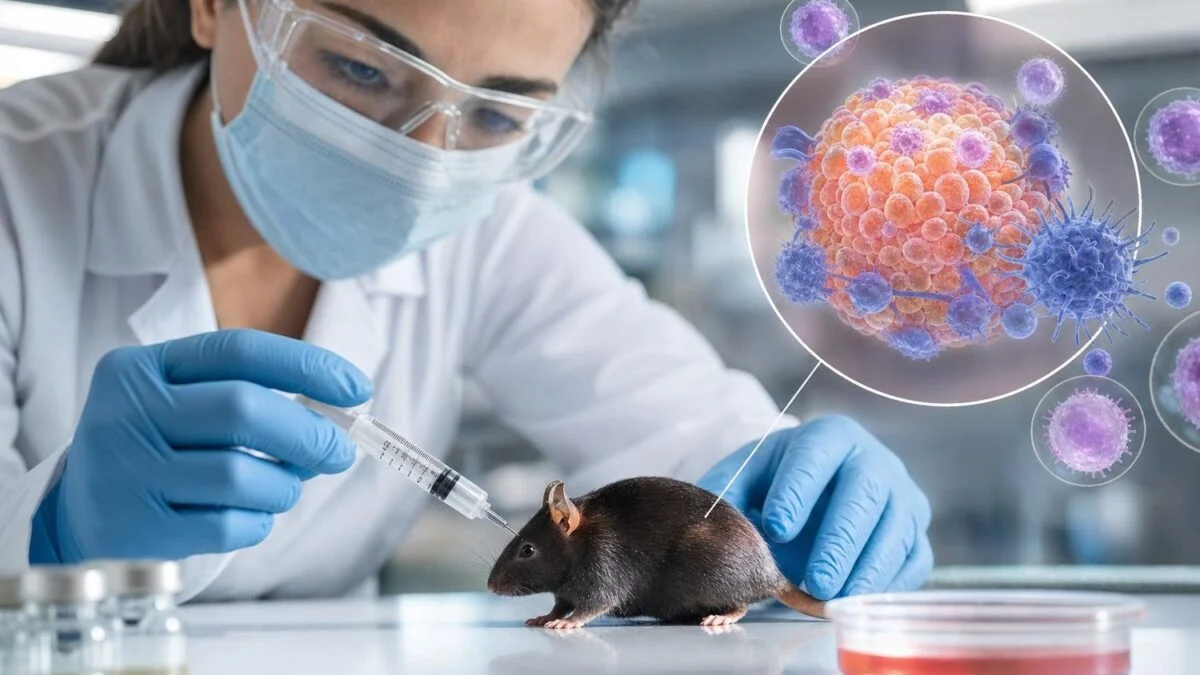
Published in the journal Molecular Therapythis research carried out at the Medical University of South Carolina explores an ambitious strategy: reprogramming the immune defenses responsible for the destruction of insulin-producing cells. A promising avenue which will now have to overcome the most difficult test: that of trials in humans.
What if we finally stopped chasing illness?
For people living with type 1 diabetes, daily life is often punctuated by constant vigilance. Calculating carbohydrates, monitoring your blood sugar, adjusting your insulin doses, anticipating hypoglycemia: so many actions that allow you to control the disease without ever making it disappear. For a century, insulin has saved millions of lives. But it does not correct the origin of the problem.
In type 1 diabetes, the immune system turns against the body itself and gradually destroys the beta cells of the pancreas, responsible for producing insulin. It is precisely this mechanism that researchers at the Medical University of South Carolina sought to stop. Their approach is based on mesenchymal stem cells* genetically modified to produce alpha-1 antitrypsin, a protein with anti-inflammatory properties. Called “AAT-MSCs”, these cells were administered to mice suffering from recent type 1 diabetes.
Results: More than 50% of treated female mice returned to normal blood sugar levels after a single infusion. Conversely, untreated animals remained diabetic.
The timing of treatment appears to have played a key role. The researchers intervened just after diagnosis, at a period when some of the beta cells were still capable of producing insulin. By quickly stopping the immune attack, these remaining cells were able to resume their function. Beyond blood sugar control, the issue is much broader.
“Although insulin injections save lives, they cannot stop attacks on the immune system and they do not prevent long-term complications. This study suggests a new way to treat type 1 diabetes by addressing the root cause, immune system dysfunction, rather than just managing blood sugar.”emphasizes researcher Hongjun Wang, deputy director of the pilot program at the South Carolina Institute for Clinical and Translational Research (SCTR) and co-scientific director of the Center for Cellular Therapy.
This distinction is fundamental. Where current treatments compensate for the consequences of the disease, this strategy seeks to interrupt the process that causes it.
Reprogram the immune system rather than shutting it down
The idea may seem counterintuitive. To protect the pancreas, researchers did not seek to suddenly suppress immune defenses. They tried to re-educate them.
Through in-depth analyzes of thousands of immune cells, the team observed a profound change in the immunological balance in the treated animals:
- Certain cells, called regulatory T lymphocytes, increased significantly. Often described as the “guardians of immune tolerance”, they play an essential role in the prevention of autoimmune reactions;
- At the same time, CD8+ T lymphocytes, responsible for a large part of the destruction of beta cells, adopted a much less aggressive behavior. Researchers speak of a state of “exhaustion”, in which these cells gradually lose their ability to attack the tissues of the pancreas;
- Another particularly intriguing observation: the injected stem cells do not stay long in the body. In a few hours or a few days, they disappear. Yet their effects persist.
“To impact or cure type 1 diabetes, stem cells themselves do not need to be present“, explains Hongjun Wang. The researcher continues: “This means that when you give cell therapy to patients, the effect can last from six months to two years, as has been observed in clinical trials using mesenchymal stem cells for a wide range of diseases.”
This hypothesis of lasting reprogramming of the immune system constitutes one of the most promising aspects of this work today. It suggests that a one-time treatment could potentially produce prolonged benefits, without the permanent presence of therapeutic cells. A perspective that nourishes hope, while still raising many scientific questions.
Between hope and caution, the long road to patients
As is often the case in biomedical research, enthusiasm must be tempered by an unavoidable reality: the results observed in mice do not systematically translate into humans. The history of diabetes research is punctuated by very promising treatments in animals which have never demonstrated their clinical effectiveness.
At this stage, AAT-MSCs have not yet been tested in people with type 1 diabetes. In contrast, clinical trials are already evaluating more conventional mesenchymal stem cells in recently diagnosed patients. The objective now is to take a new step.
“If the preliminary trials are conclusive, we want to conduct a large multicenter trial in type 1 diabetes.”says Hongjun Wang.
Another observation fuels the interest of researchers. Contrary to long-held belief, some people living with type 1 diabetes for many years still retain a small number of functional insulin-producing cells.
“The good news is that there are studies showing that even if you have lived with type 1 diabetes for many years, you still have functioning insulin-producing cells. So hopefully we can apply this also to people who have had it for a long time.” says Hongjun Wang.
For the millions of people affected around the world, this research does not herald an imminent cure. However, it opens a different path, based no longer on the permanent replacement of insulin, but on an attempt at “reconciliation” between the immune system and the pancreas. A considerable ambition, still strewn with uncertainties, but which continues to advance step by step towards what remains one of the great challenges of modern medicine.