
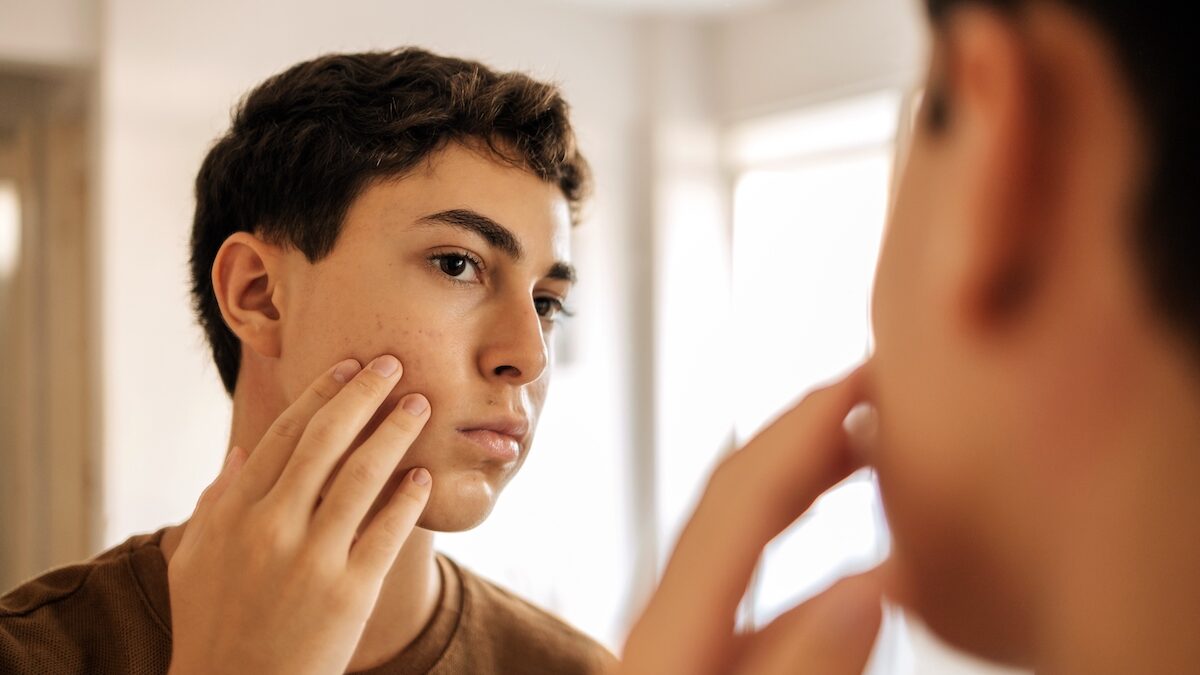
For a long time, aesthetic pressure seemed to mainly affect young girls and women. But things have changed. On TikTok, Instagram or YouTube, thousands of teenagers now share their quest for the perfect face, the ideal jawline or the most attractive body possible. This trend has a name: “lookmaxxing”.
Behind this term lies the idea of optimizing one’s physical appearance by all possible means in order to become more attractive. A phenomenon which is gaining ground among young men, to the point of worrying some specialists.
A beauty routine taken to the extreme
Originally, lookmaxxing was based on relatively classic principles: improving your lifestyle, practicing regular physical activity, taking care of your skin or adopting a hairstyle more suited to the shape of your face.
“Taking care of yourself, playing sports or adopting a balanced diet can obviously have positive effects on both physical and mental health”recalls Dr. Gérald Kierzek, emergency physician and medical director of True Medical.
The problem is that this search for improvement often no longer stops there. On social networks, certain influencers present techniques supposed to modify facial features or accelerate physical transformation, without any scientific validation and sometimes in disregard of the risks involved.
Hammer blows, forced jaw: dangerous practices
Among the most concerning methods, some involve deliberately striking the cheekbones or jawline in the hope of reshaping the face.
For Dr Gérald Kierzek, the danger is obvious: these practices can cause jaw fractures, irreversible bone damage or even serious injuries requiring medical treatment.
Another widely reported trend: constantly chewing very hard chewing gum in order to develop the jaw muscles and obtain a more angular face.
Here again, the consequences can be significant: joint pain, jaw cracking, difficulty opening the mouth, tooth migration or even dental occlusion problems.
Methods that endanger health
Lookmaxxing is also sometimes accompanied by more discreet but equally problematic practices.
For example, some adolescents stick an adhesive to their mouth while they sleep to encourage exclusively nasal breathing. A method popular on social networks but which can cause breathing difficulties or promote nighttime anxiety in some people.
Others impose extremely restrictive diets on themselves to lose weight quickly. According to Dr. Gérald Kierzek, these deprivations can lead to a loss of muscle and bone mass, weaken the kidneys, heart and skeleton, while increasing the risk of weight regain and depression.
Strength training also sometimes becomes excessive. When practiced compulsively and without supervision, it exposes you to joint injuries, tendinitis or even a growing obsession with your appearance.
The risk of questionable supplements and surgery
In this quest for rapid transformation, some young people are turning to food supplements or products presented as capable of accelerating muscle gain or fat loss. The problem is that these products are sometimes purchased on the internet without any health checks. They may contain dangerous substances and sometimes cause serious side effects.
Cosmetic surgery does not escape this logic either. Injections, contouring of the chin or jaw, procedures intended to further masculinize the face: so many interventions which carry risks when they do not meet any medical necessity.
For Dr Gérald Kierzek, medical ethics should also lead practitioners to refuse to intervene when the request is motivated by a distorted perception of one’s appearance or unrealistic expectations.
A threat to mental health
Beyond the physical risks, the psychological consequences of lookmaxxing are of particular concern to specialists.
By comparing themselves to retouched faces or to often unattainable beauty standards, some adolescents develop permanent dissatisfaction.
Dr. Gérald Kierzek particularly warns against dysmorphophobia, a disorder which pushes a person to focus obsessively on physical defects that are sometimes non-existent or minimal.
This spiral can be accompanied by a significant drop in self-esteem, anxiety disorders, obsessive behaviors or even depressive episodes. The constant search for external validation, through comments or “likes”, often reinforces this discomfort.
In the most severe situations, this psychological suffering can even be accompanied by suicidal thoughts.
Find a healthier vision of your image
For specialists, the problem is not wanting to take care of yourself. Quite the contrary. Playing sports, adopting a balanced diet or improving certain lifestyle habits can contribute to well-being and self-confidence.
The danger appears when this approach turns into an obsession and appearance becomes the main criterion of personal value.
Faced with the rise of lookmaxxing, health professionals are therefore calling for the critical thinking of adolescents to be developed when faced with content disseminated on social networks and to remember that no perfect jawline or no ideal face guarantees happiness, self-confidence or relational success.