
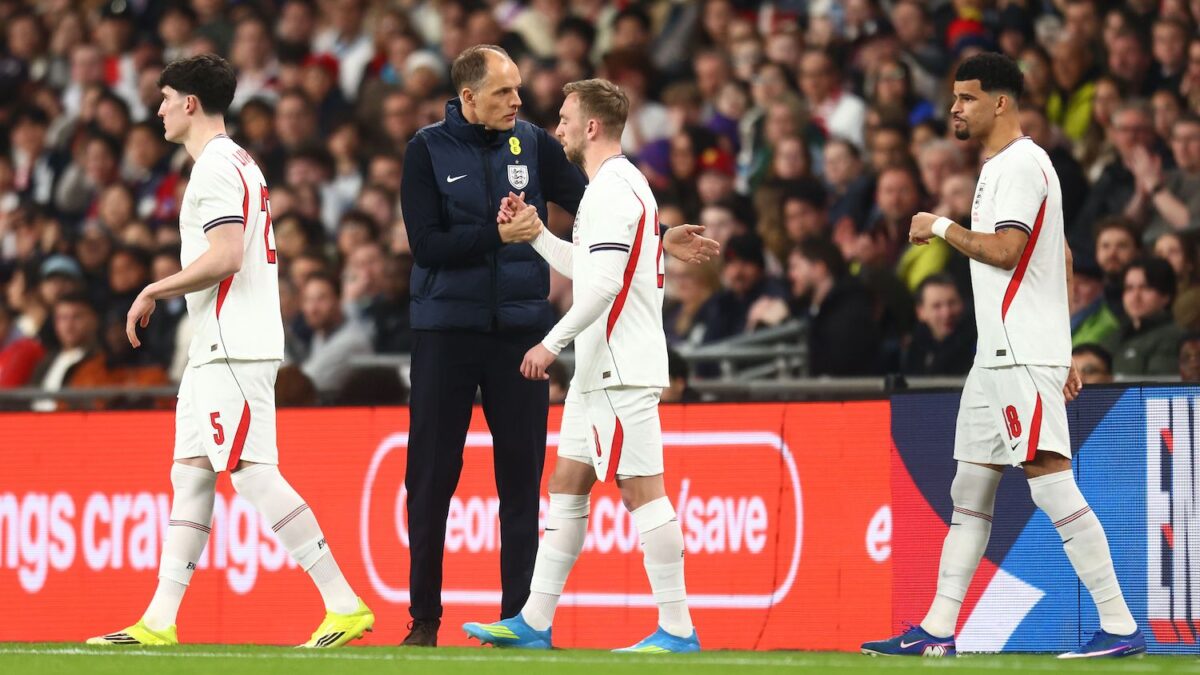
In training in Florida, under 32°C, the England internationals all wear the same black bracelet, thin and without screen. In the photos, we can barely make out this new object which could count during the 2026 World Cup. It is neither a classic connected watch nor a simple accessory, but a sensor designed to continuously monitor the players’ bodies.
This bracelet is signed by the American start-up
Whoopwhich sees its trackers arriving on the wrist of players of theEnglandthe Netherlands or Portugal during the World Cup. Sold for £349, it replaces the connected rings worn at the Euro and measures stress, recovery, heart rate and sleep quality. For many coaches, these numbers become as important a compass as the match sheet.
Why England is betting on Whoop trackers
Coach Thomas Tuchel knows that his team can exceed 750 minutes of play if they reach the final. Under the leadership of Chief Medical Officer Steve Kemp, England has been working with Whoop for a year to tame heat and travel. Load, recovery and sleep data are used to adapt sessions and decide who should take it off before an injury occurs.
The base camp in Kansas, chosen to limit flights to 3.5 hours without changing zones, is part of this same logic. Some internationals even installed red light saunas in their homes before the course to speed up recovery. The scores provided by Whoop guide the use of these tools and help Tuchel to spare both the legs and the head.
Whoop also seduces the stars of the other selections
For the Netherlands, Virgil van Dijk and Cody Gakpo were seen in training wearing a Whoop bracelet to track their preparation. In Portugal, Cristiano Ronaldo became in 2024 the first big name in football to invest in the brand and be its ambassador.
All this remains governed by the regulations of the
FIFA. This indicates that teams can use their own “portable tracking system” provided that it has “been tested and certified in accordance with the Laws of the Game”. Whoop must therefore go through the EPTS program which already validates GPS vests. The media also point out that the brand is not an official partner of England, the players remaining free to accept the bracelet or not.
How far can these trackers influence the 2026 World Cup?
For staff, these daily figures become a decision-making aid. A low recovery score can lead to a lighter session or less time during a group match in the American heat. Crossed with the reduced flight times from Kansas and the red light sessions, this data draws a fatigue dashboard.
There remains the question of privacy. Whoop has already experienced a controversy in tennis when Jannik Sinner, Carlos Alcaraz and Aryna Sabalenka, although ambassador of the brand, had to remove their bracelets before their matches. Between sporting advantage and exposure of ultra-sensitive biometric data, the border is becoming one of the hot topics of this World Cup.