
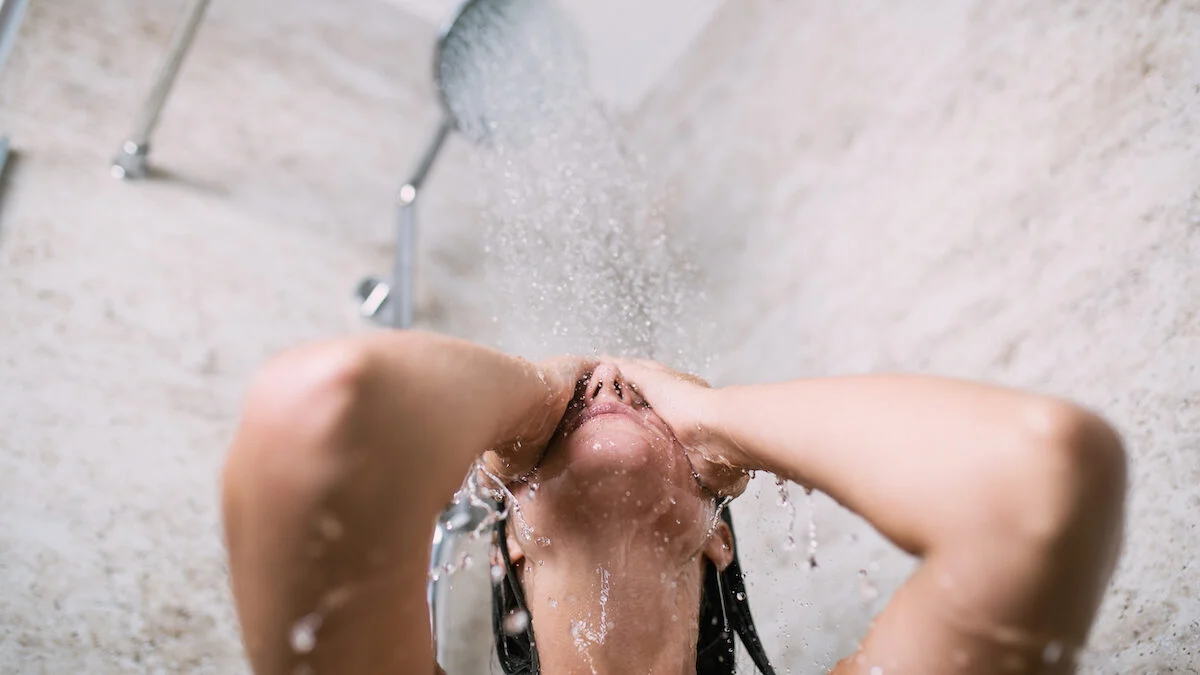
When the mercury rises and the air becomes difficult to bear, many instinctively rely on a cold shower to find a little freshness. This gesture seems logical: a few seconds under icy water are often enough to provide an immediate feeling of relief. However, according to Dr. Gérald Kierzek, emergency physician and medical director of True Medical, this habit can produce the opposite effect. Faced with the heatwaves that regularly affect France during the summer, the doctor recommends favoring more progressive methods to help the body regulate its temperature.
Why cold showers are not recommended during heatwaves
The first pitfall of a cold shower is its impact on the natural functioning of the body. According to the doctor, “cold showers risk worsening body overheating.“
“In fact, the body will compensate for the sudden cooling by producing more heat to maintain its internal temperature: this is what we call the thermal rebound effect.“
Added to this is another risk. Suddenly going from an environment where temperatures sometimes exceed 30°C to very cold water can create significant thermal shock. The specialist recalls that “this brutal contrast between external heat and cold water can cause circulatory stress, especially in fragile or elderly people.“
Cold water also causes vasoconstriction, which is a tightening of blood vessels. This phenomenon then limits the evacuation of heat accumulated in the body.
The lukewarm shower, the solution recommended by Dr Gérald Kierzek
To better cope with heat episodes, the doctor recommends a lukewarm shower between 32 and 35°C.
“At this temperature, we promote progressive vasodilation of the blood vessels, which allows effective evacuation of body heat. The water which then evaporates on the skin provides a pleasant feeling of freshness.“
The specialist also advises not to dry yourself completely after showering. Skin that is still slightly damp encourages the evaporation of water and naturally prolongs the feeling of freshness.
Heatwave: other actions that really help to cool down
A lukewarm shower is not the only recommended reflex when temperatures become difficult to bear.
Dr Gérald Kierzek advises in particular to spray water at room temperature on the face and wrists, to place a damp cloth on the back of the neck or to drink water regularly without waiting to feel thirsty.
The doctor also recommends avoiding physical exertion during the hottest hours of the day. At night, he recommends ventilating homes when temperatures drop and keeping shutters and windows closed during the day to limit the entry of heat.
To get through heatwave episodes, he summarizes his recommendation in a simple formula: “The key word is progressiveness“. And added: “The body must be allowed to adapt gently, rather than rushing it with extreme temperature variations.“