
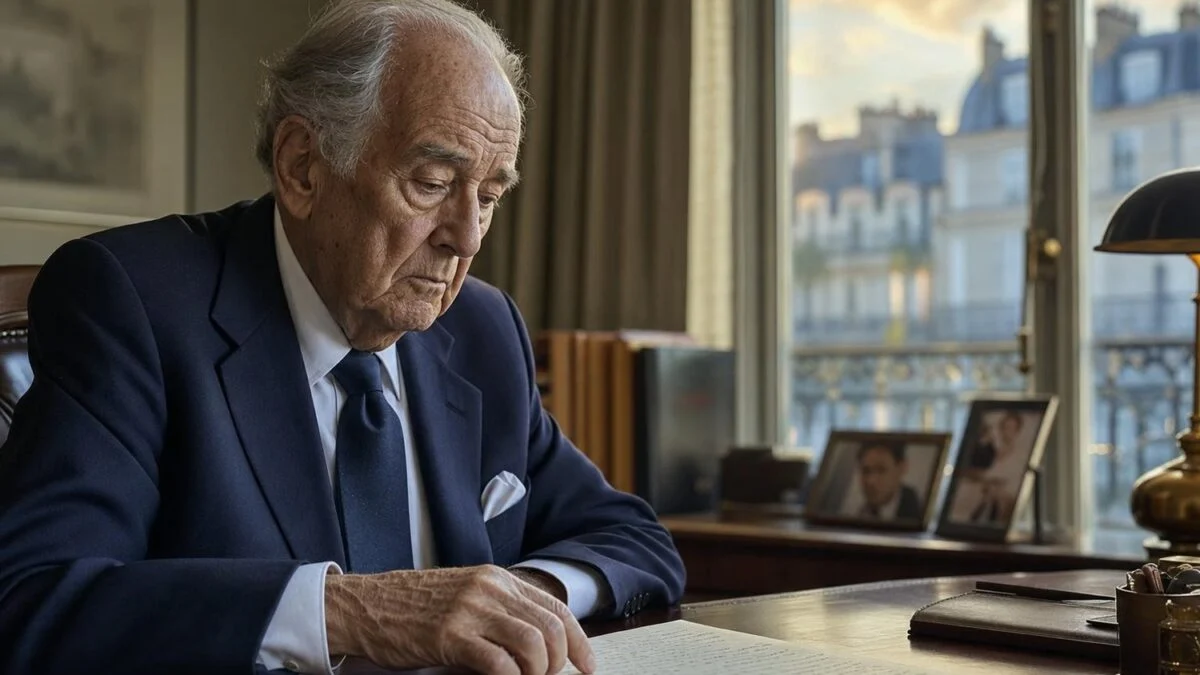
When a boss whom an entire country associates with strength, control and hard work admits in writing that he tried to end his life, the image of the “invulnerable male” cracks. The announcement came from a German clinic, after the arrival of a rescue helicopter on its grounds and rumors of a gunshot. In the center, a handwritten letter about depression and the desire to die, made public.
The author of this letter is Wolfgang Grupp, historic manager of the textile company Trigema, who recently handed over management to his children. In this letter, he writes:
“I am in my 84th year and I suffer from so-called age-related depression, so I tried to end my life.” He adds that it will take time for him to get healthy again. For many men, these sentences resonate like an unimaginable confession.
When Wolfgang Grupp’s letter puts depression into words
For decades, Wolfgang Grupp embodied total discipline: omnipresent boss, slim figure, suit and tie in all circumstances. He said: “I don’t wear a suit for myself, but out of respect for the person in front.” Even at home, he explained, he felt “obligated” to remain impeccable in front of his wife and his staff.
His identity was intertwined with the company. Asked about retirement, he cited the film Papa ante portas without having seen him, and assured that he would continue to come to the office. Then came hospitalization and a sentence that contrasts with this posture of control: “I deeply regret what happened and wish I could undo it.” In his letter, he also thanks doctors and relatives, and invites those affected to seek professional help.
Male depression, Altersdepression and intimate mirror
Wolfgang Grupp talks about Altersdepression, this late-onset depression that arises when one’s social role is reduced. Among men shaped by performance, retirement, loss of authority or illness create a void. The Deutsche Gesellschaft für Suizidprävention warns: silence, lack of diagnosis and isolation significantly increase the risk of suicide among these elderly people.
In the daily Welt, a depressive author describes this discrepancy between external success and internal chaos: “I lie in bed and hate myself and the world.” He describes resuming an antidepressant, sertraline, after months of stopping, out of pure concern to protect his loved ones. His text joins Grupp’s letter when he states: “That’s why I find it important to speak, write and discuss depression and also suicide. The worst thing, in any field, that you can do is: keep silent and do nothing.”
Talking, asking for help: a strength shared by Wolfgang Grupp
Prevention organizations point out that the risk of contagion is mainly linked to sensationalist stories which detail the methods used, and not to sincere testimonies which emphasize the suffering experienced, the recourse to help and the journey towards recovery. As the Swiss organization Reden kann Retten points out, talking openly about suicide is one of the most effective ways to prevent others from committing suicide. When a public figure speaks of his or her own distress, this speech can also contribute to questioning the injunctions to silence and virility which sometimes slow down the request for help.
Another lesson emerges both from the article by World and the letter from Wolfgang Grupp: there are spaces in which to express one’s suffering. In Germany as elsewhere, listening devices, helplines and professionals are available to support people in difficulty. Asking for help or contacting a support service can be a decisive first step in breaking isolation and getting through a period of distress.
- In July 2025, Wolfgang Grupp, ex-boss of Trigema, revealed in a letter his age-related depression and a suicide attempt.
- His testimony challenges the ideal of the strong man, sheds light on male altersdepression and underlines the importance of seeking professional help.
- Between shame, silence and the quest for support, this story sketches an intimate look at male depression and prevention, leaving many questions open.