
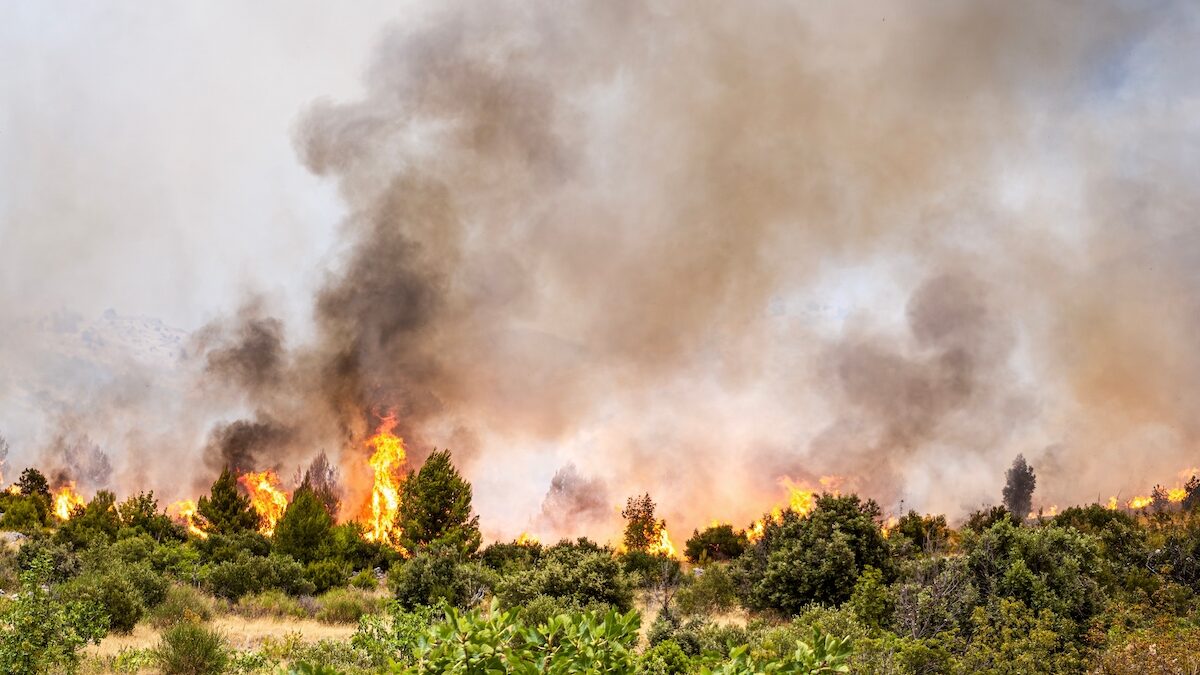
While firefighters estimate that “the fire will last several dayss”, the danger remains very present. In Seine-et-Marne, a fire continues to affect the forest of Fontainebleau, the smoke represents a sometimes invisible threat for residents and people passing through.
In just 24 hours, the fire covered 1,000 hectares. Around fifteen homes had to be evacuated in Vaudoué. While nearly 400 firefighters, supported by 84 engines, are fighting the fire, emergency doctor Gérald Kierzek reminds us that breathing the fumes of a fire can have serious consequences for health.
Fumes can have immediate effects on health
Breathing the smoke released by a forest fire is not just a simple respiratory problem. Dr. Gérald Kierzek recalls that “Fires release toxic fumes, including fine particles, carbon monoxide, hydrocarbons among others, which present immediate and long-term dangers to health, especially for vulnerable people.“
These substances can cause irritation of the eyes, throat and respiratory tract, but also cause persistent coughing, wheezing or aggravate diseases such as asthma and bronchitis.
The doctor also points out that inhaling carbon monoxide can cause headaches, nausea and “worsen heart disease“. In the longer term, he also warns against “an impairment of lung function and an increased risk of cancer, particularly because of benzene or dioxins.“
What are the symptoms that should alert you?
The risk concerns the entire population, even if some people are more fragile.
According to Dr. Gérald Kierzek, “children, the elderly, pregnant women, as well as patients with COPD, asthma or heart failure are most at risk.“
Faced with certain signs, you should not wait. The doctor recommends consulting quickly in the event of “feeling of suffocation, chest pain, palpitations, confusion, dizziness, loss of balance or sudden worsening of a chronic condition“. These manifestations may reflect smoke intoxication or a significant inflammatory reaction.
What can you actually do to protect yourself?
To limit exposure, confinement remains the first measure to apply when the authorities recommend it. Dr. Gérald Kierzek specifies: “Close windows and vents, use a damp cloth to block air inlets, avoid using air conditioning and fans that suck in outside air.“
When the accommodation is located less than 500 meters from the disaster or when symptoms already appear, it reminds that “evacuation is necessary“. In the event of essential travel, wearing an FFP2 mask is recommended and it is preferable to avoid any physical exertion outdoors. Sports activities and long walks should be postponed as long as the air quality remains poor.
Finally, before opening the windows widely, the doctor insists on one last point: “Finally, ventilate only when the authorities announce that the air has become breathable again.“.