
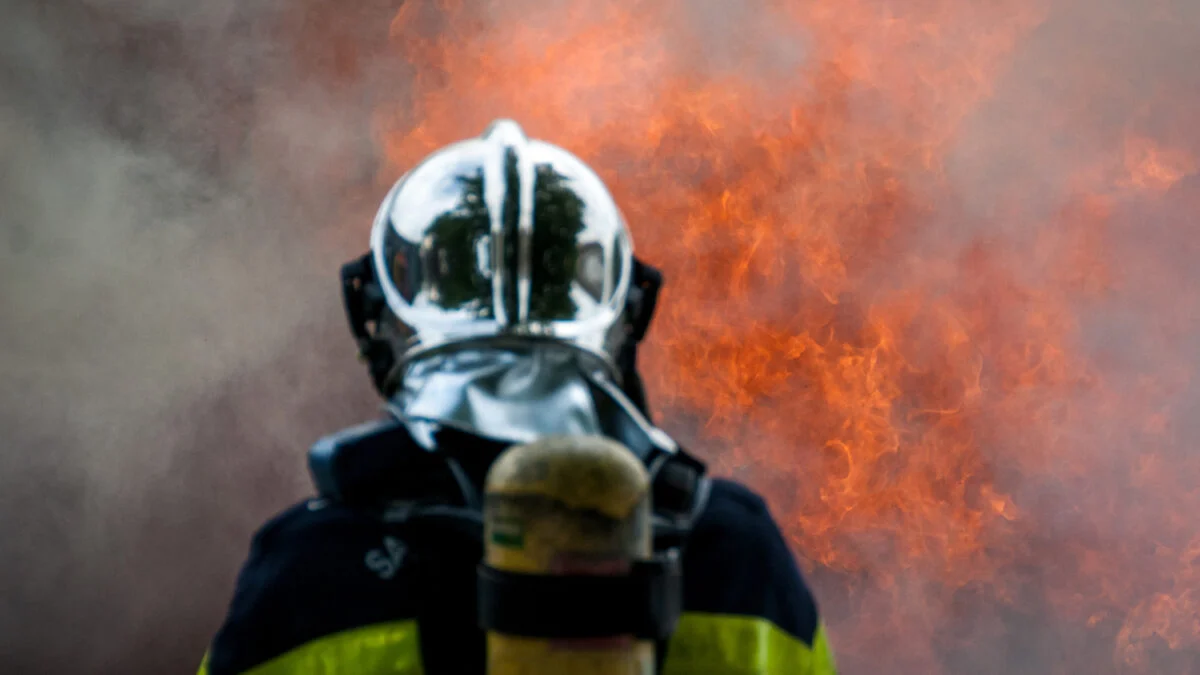
Persistent cough, breathing difficulties, eye irritation… The consequences of wildfire smoke are now better documented. While some effects are well established, others are still poorly understood and require further research.
When the fire goes out, pollution continues to act
When a fire ravages a forest, attention naturally focuses on the flames. However, another threat sometimes spreads well beyond the fire zone: smoke.
Loaded with fine particles and numerous chemical compounds, they can travel several tens, or even several hundred kilometers depending on weather conditions. Invisible to the naked eye when they disperse, they nevertheless continue to be inhaled by people living nearby.
Faced with the increase in vegetation fires due to climate change, the National Health Security Agency (ANSES) reviewed the available scientific data in order to better understand their consequences on health.
Firefighters pay the highest price in this exhibition
It is the women and men engaged in the field who concentrate the most significant exposures.
The ANSES analysis shows that the acute respiratory effects are the best documented today. Studies report an increased frequency of coughing, respiratory tract irritation, shortness of breath as well as a temporary decrease in lung function after exposure to fumes. In some cases, respiratory symptoms can persist for two to three years after fire seasons.
Researchers also point out that these fumes can cause irritation to the nose, throat, eyes or skin. The cardiovascular effects also seem essentially acute, favored by the combination of several factors: extreme heat, intense physical effort, dehydration, fatigue and inhalation of fumes.
On the other hand, knowledge still remains limited regarding the consequences of repeated exposure over several years or the risk of developing certain cancers specifically linked to vegetation fires. ANSES considers that the available scientific data does not yet allow a conclusion to be drawn.
Local residents may also be affected, especially the most vulnerable.
Even without participating in firefighting, breathing smoke is not trivial.
ANSES recalls that certain populations are particularly vulnerable : children, the elderly, pregnant women as well as people suffering from respiratory or cardiovascular diseases.
In these people, exposure, even short-term, can promote the appearance or worsening of respiratory or cardiac symptoms. Episodes of pollution linked to fires then add to air quality that is sometimes already degraded by other sources of pollution.
Experts emphasize, however, that the available data still remains insufficient to precisely measure the health impact of these episodes on the entire population, particularly in France. Knowledge is progressing, but many questions remain.
A public health issue set to grow with climate change
For Anses, one observation is clear: the smoke from vegetation fires now constitutes a real health issue.
The agency insists on the need to strengthen the surveillance of firefighters, whose respiratory effects are the best established, but also to continue research on the cardiovascular, neurological, psychological consequences and possible long-term effects.
As fires become more frequent and more intense due to global warming, better understanding the effects of their smoke becomes a priority. Because behind the spectacular images of the flames lies another reality, less visible but just as worrying: that of air pollution capable of continuing to affect health long after the fires have disappeared.