
When the hot weather sets in, it’s hard to resist summer fruits. Full of water, they quench your thirst as much as they delight. But to benefit from everything they have to offer us, the choice of seasonality and product remains essential.
Treasures of nutritional and ecological benefits
Favoring ripe, local fruits guarantees optimal taste pleasure while preserving our health and the environment.
“Fruits harvested when ripe generally develop more flavors and retain certain vitamins and antioxidant compounds better than fruits picked prematurely to withstand long transport.” explains Julie Boët, dietician.
These summer fruits are real everyday allies. “Rich in fiber, water, vitamins, minerals and polyphenols, they contribute to a varied diet and contribute to the prevention of many chronic diseases. Their high water content also helps maintain good hydration, particularly important during heat episodes..
To get the most out of it, simplicity is good. “Eaten raw you can benefit from all their benefits. And above all their vitamin C content which does not like heat.
In addition, consuming locally also allows you to make a concrete gesture for the planet. “Choosing locally produced and seasonal fruits also helps reduce the environmental footprint of our diet. Transport distances are often shorter, refrigerated storage requirements are limited and crops respect the natural rhythm of the seasons more closely.
How to choose and store your peaches and nectarines?
In front of the greengrocer’s stall, a few simple reflexes allow you to find the best specimens.
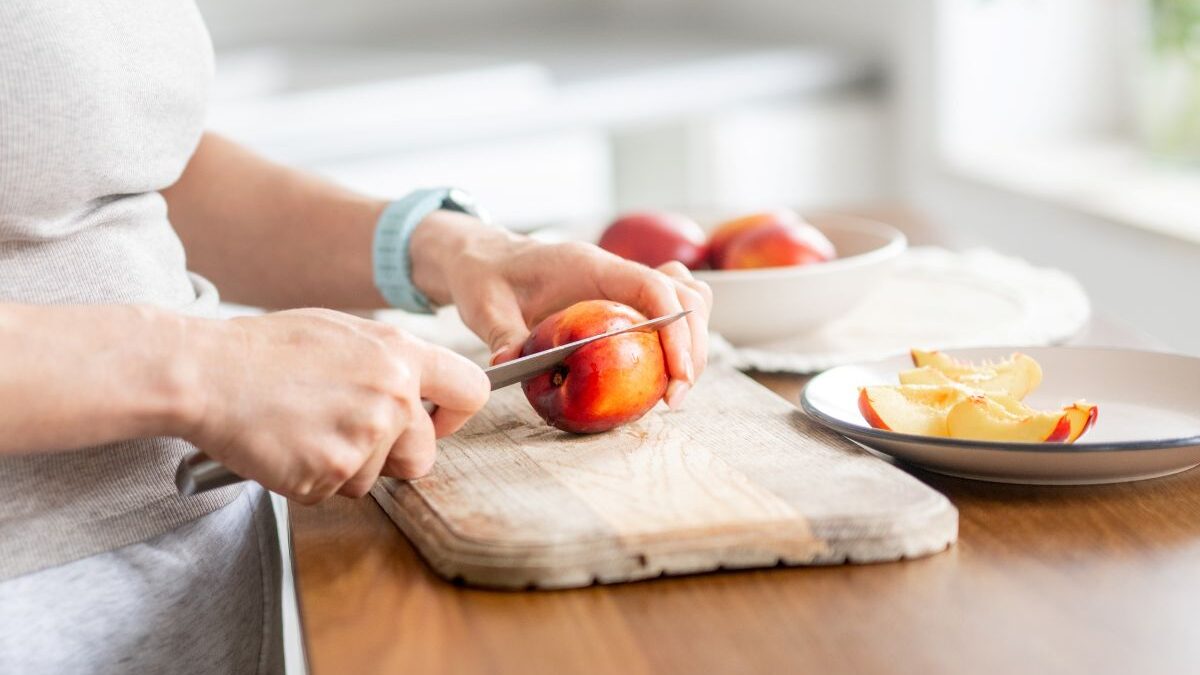
“A seasonal fruit must have a uniform color, characteristic of its variety, an intact skin and a pleasant scent when ripe.indicates Julie Boët. For peaches and nectarines, touch is decisive. “They should be slightly supple under light pressure from the fingers, without being too soft. explains our expert.
Once purchased, watch out for heatstroke!
“With summer temperatures, the fruits ripen much more quickly. It is therefore best to avoid leaving them for several days in a car or in direct sunlight after shopping.”
Concerning the organization at home, the dietician specifies that “peaches, nectarines, apricots or melons can finish ripening at room temperature. And this, before being placed in the fridge a few hours before consumption“.
Finally, be careful after cutting. “Once cut, all fruits must be stored in the refrigerator in an airtight container and consumed quickly in order to limit the development of bacteria and preserve their nutritional qualities.
Spice up the plate: include fruit in savory meals
Fruits aren’t just for breakfast or dessert. They bring real added culinary value to your everyday dishes.
“They easily find their place in balanced preparations throughout the meal. They bring a touch of freshness to mixed salads, enhance the flavors of certain meats or cheeses“, underlines Julie Boët. Cooking them at home allows you to vary the pleasures while maintaining control over the ingredients: you can integrate them into “homemade tarts with little sugar, clafoutis rich in fruit, compotes without added sugar, frozen infusions, summer skewers and even homemade ice creams.
According to the dietician, “This diversity allows you to naturally increase your fruit consumption while limiting ultra-processed products that are often rich in sugar and fat.
Two balanced and refreshing recipe ideas for summer
To move from theory to practice, the dietician offers us two easy and nutritious preparations.
Sweet and sour summer salad with grilled nectarines
Julie Boët suggests preparing a complete plate. “Mix arugula and young shoots, raw vegetables of your choice, with wedges of grilled peaches or nectarines with a drizzle of honey and spices.
Add a few cubes of lightly browned halloumi to the pan, some chickpeas, a few chopped walnuts or pistachios and a vinaigrette made from olive oil, lemon and fresh mint..
This dish brings together “proteins from halloumi and chickpeas, fiber from vegetables, legumes and fruits, quality lipids from oilseeds and olive oil. As well as carbohydrates naturally present in fruits and legumes. It constitutes a complete, satisfying meal and perfectly suited to summer days.“.
Express ice cream without added sugar
For a healthy sweet touch, “Simply mix a previously frozen banana with a handful of frozen red fruits or frozen peach pieces and a skyr or natural Greek yogurt.
You can add “a few drops of vanilla extract, cinnamon or a few mint leaves.” The nutritional benefit is unbeatable: “This preparation requires no added sugar, the banana providing natural sweetness. The skyr enriches the recipe with protein, while the fruits provide fiber, vitamins and antioxidants. We thus obtain an ice cream that is creamy, refreshing and much more nutritionally interesting than most industrial ice creams.
she concludes.